Get A Free Quote

2026 Best Wear Resistant Solid Wheels for Global Buyers

Choosing the right Wear Resistant Solid Wheels can protect equipment, floors, and operating budgets in demanding workplaces. In 2026, global buyers face many options, from polyurethane and rubber compounds to engineered thermoplastic designs. Each material behaves differently under load, heat, moisture, and repeated impact.

This guide examines wheel performance through practical purchasing criteria. Load capacity matters, but it is not the only concern. Tread hardness, rolling resistance, floor protection, noise, and chemical exposure also influence long-term value. A wheel carrying 500 kilograms may still fail early on rough concrete or uneven warehouse joints. Real operating conditions deserve more attention than catalogue claims. That is where product testing, manufacturer documentation, and field experience become essential.

Look closely at the details. Check dimensions, bearing design, axle compatibility, and temperature limits before ordering. Ask suppliers for test data when applications involve heavy carts, automated systems, or continuous movement. Independent certifications can support confidence, but buyers should verify their relevance for each market. Standards and import requirements may vary by country.

No wheel is perfect.

This review compares leading solutions for warehouses, factories, hospitals, workshops, and logistics facilities. It also considers maintenance effort and replacement frequency. Some conclusions may change after longer field trials. That limitation matters. A promising product on paper may deliver different results in dusty aisles or humid ports. Careful selection combines measurable specifications with honest evaluation of actual working conditions. The goal is dependable mobility, safer handling, and better value for buyers worldwide.
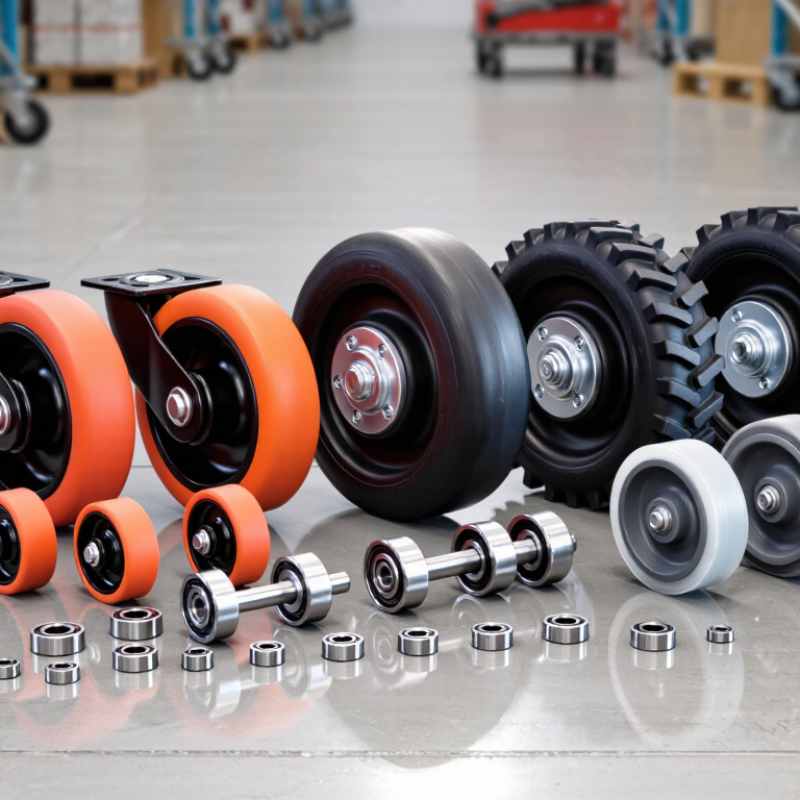
2026 Best Wear Resistant Solid Wheels for Global Buyers

What Wear-Resistant Solid Wheels Are and How They Work

2026 Best Wear Resistant Solid Wheels for Global Buyers

What Wear-Resistant Solid Wheels Are and How They Work

Wear-resistant solid wheels are non-pneumatic wheels made from dense rubber, polyurethane, or layered elastomers. Unlike air-filled tires, they cannot suffer punctures or sudden pressure loss. Their material carries the load through compression, while the tread absorbs abrasion from concrete, steel plates, and warehouse debris. The design is simple. The selection is not.

The Global Industrial Tires Market Report 2024, published by Grand View Research, identifies material handling as a major application segment for industrial tires. This reflects a practical reality: forklifts often operate for long shifts on hard floors. Solid wheels reduce downtime, but they can transmit more vibration to the chassis and operator. That trade-off is sometimes underestimated. A softer compound may protect floors and improve grip, yet wear faster under heavy loads. A harder compound may last longer, but it can slide on dusty surfaces.

According to ISO 3691-1, industrial truck stability depends on operating conditions, load handling, and equipment design. Wheel choice should therefore match load capacity, speed, floor condition, temperature, and turning frequency. Measure tread wear regularly. Check for chunking, flat spots, exposed inserts, and unusual heat. In field inspections, small cracks are easy to dismiss. That can be a mistake. A wheel that looks usable may already have reduced traction or uneven load distribution. Global buyers should request test methods, hardness data, and application limits before comparing prices.

2026 Best Wear-Resistant Solid Wheels for Global Buyers

What Wear-Resistant Solid Wheels Are and How They Work

Wear-resistant solid wheels use dense, non-pneumatic tread materials to reduce punctures, deformation, and downtime. The chart shows representative Shore A hardness ranges commonly used for industrial polyurethane, solid rubber, and thermoplastic rubber wheel treads. Higher hardness can improve abrasion resistance and load stability, but actual performance also depends on compound formulation, wheel diameter, load, floor condition, temperature, and operating speed.

Key Materials Used in Long-Lasting Solid Wheel Construction

Solid wheel durability begins with the materials hidden beneath the tread. A tough polyurethane layer resists cuts, oils, and repeated impacts on warehouse floors. Its hardness must match the load and surface conditions. Excessive hardness can increase vibration and damage delicate flooring.

Natural or synthetic rubber offers better shock absorption and quieter movement. It performs well on uneven concrete, ramps, and areas requiring operator comfort. However, rubber may wear faster under heavy loads, sharp debris, or high temperatures. It is not always the strongest choice.

The wheel core also deserves careful attention. Cast iron provides high load capacity and strong dimensional stability. Steel cores tolerate demanding service, but they may add weight and transmit more noise. Nylon cores resist corrosion and reduce rolling resistance in cleaner environments. Moisture matters. Poor material selection can cause swelling, cracking, or premature tread separation.

In practical inspections, I check tread wear, core alignment, and surface damage together. A wheel can look sound while its bond is weakening. My own material choices have not always been perfect; temperature and floor contamination are easy to underestimate. Testing should include the real load, travel speed, turning frequency, and operating temperature. Laboratory figures alone can mislead buyers. Reliable construction comes from matching every material to the actual working conditions.

2026 Best Wear Resistant Solid Wheels for Global Buyers - Key Materials Used in Long-Lasting Solid Wheel Construction

Material / Construction Typical Hardness Wear-Resistance Characteristics Typical Temperature Capability Key Advantages Main Limitations Recommended Applications
Cast polyurethane solid tread About 80–95 Shore A Very good abrasion resistance; suitable for frequent rolling on smooth industrial floors and moderate debris. Approximately −30°C to +80°C, formulation dependent High load capacity, low rolling resistance, quiet operation, and good resistance to oils and many chemicals. Can be damaged by prolonged heat, steam, strong acids, or sharp floor obstacles. Material-handling carts, warehouse equipment, conveyors, and indoor industrial trolleys.
Polyurethane tread on steel core About 90–98 Shore A Excellent resistance to chunking, abrasion, and tread deformation under high static loads. Approximately −30°C to +80°C, depending on polyurethane grade Combines a rigid load-bearing core with a resilient, floor-protective tread; long service life on hard floors. Less suitable for very rough floors; high hardness may increase noise and vibration. Heavy-duty carts, automated guided vehicle systems, industrial platforms, and production lines.
Thermoplastic polyurethane (TPU) About 85–95 Shore A Strong resistance to abrasion, tearing, and repeated flexing; performance varies significantly by TPU chemistry. Approximately −20°C to +80°C for common grades Good elasticity, low noise, clean appearance, and potential for thermoplastic processing and recycling. May hydrolyze in hot, humid conditions when an unsuitable polyester-based grade is selected. Medical carts, light industrial equipment, clean indoor environments, and precision transport systems.
Phenolic resin solid wheel Typically Rockwell M 80–100 Good wear resistance on smooth surfaces and strong resistance to many oils, solvents, and cleaning chemicals. Approximately −40°C to +150°C, grade dependent Handles elevated temperatures better than many elastomeric treads; relatively low rolling resistance. Brittle under impact, noisy on hard floors, and unsuitable for uneven surfaces or sharp edges. Ovens, bakeries, food-processing areas, hot industrial equipment, and chemical-handling environments.
Nylon / polyamide solid wheel Typically Rockwell R 100–120 Good abrasion resistance on smooth floors; resists gouging better than many softer rubber compounds. Approximately −40°C to +80°C for common grades Lightweight, non-marking, moisture resistant, and generally resistant to oils and many chemicals. Hard tread can create noise; moisture absorption may affect dimensional stability and rolling performance. Pallet trucks, food and pharmaceutical facilities, warehouse carts, and wet indoor areas.
Solid rubber / vulcanized rubber About 65–85 Shore A Good resistance to impact and surface irregularities; wear life depends on compound, floor condition, and load. Approximately −30°C to +80°C for general-purpose compounds Quiet running, excellent shock absorption, strong floor protection, and good traction. Higher rolling resistance; may swell or degrade when exposed to oils, solvents, ozone, or excessive heat. Indoor carts, hospital equipment, warehouse platforms, and applications requiring low noise.
Cast iron solid wheel Typically about 180–300 HB Very high resistance to compression and tread wear under heavy loads and moderate speeds. Suitable for high-temperature environments; exact limit depends on bearings, grease, and wheel design High load capacity, good dimensional stability, and strong resistance to heat and many industrial contaminants. Heavy, noisy, prone to floor damage, and vulnerable to impact fracture or corrosion if unprotected. Heavy machinery, foundries, steel plants, rail-guided equipment, and smooth concrete floors.
Forged or machined steel solid wheel Typically about 180–350 HB; higher with heat treatment Excellent resistance to heavy-load wear, rolling contact fatigue, and impact when correctly heat treated. Suitable for high-temperature service; bearing and lubricant limits must be checked separately Highest structural strength among common wheel materials; suitable for severe loads and demanding industrial duty. High weight, high noise, possible corrosion, and substantial risk of damaging unprotected floors. Heavy transport systems, rail transfer equipment, steel mills, shipyards, and outdoor industrial yards.
Stainless steel solid wheel Typically about 150–300 HB, alloy dependent Good wear resistance with superior corrosion resistance compared with ordinary carbon steel. Suitable for elevated-temperature and washdown service within the selected alloy and bearing limits Resists rust, frequent washing, and many corrosive environments; suitable for hygienic areas. Higher cost and weight; hard tread may be noisy and can damage tiles, resin floors, or concrete. Food processing, pharmaceutical plants, laboratories, marine environments, and clean washdown areas.

Note: Hardness, temperature capability, load capacity, and service life are typical engineering ranges rather than universal ratings. Actual performance depends on wheel diameter, tread thickness, core design, bearing type, speed, duty cycle, floor condition, chemicals, and installation quality.

How to Compare Load Capacity, Tread Life, and Floor Protection

Choosing the best wear-resistant solid wheels starts with the real working load, not the advertised maximum. Add the cart, equipment, cargo, and uneven weight distribution. Then include a practical safety margin. A wheel rated for 500 kilograms may perform poorly when four wheels share the load unevenly. Check operating speed, floor joints, turning frequency, and temperature before comparing models. These details often matter more than a large capacity number.

Tread life depends on contact pressure and daily movement. A hard tread may resist cuts, but it can mark delicate floors or transmit vibration. A softer compound protects polished concrete, yet it may wear faster near metal ramps. Inspect the tread after several weeks. Look for chunking, flat spots, edge cracking, and embedded debris. My experience is that published life estimates are useful, but they rarely match every warehouse. Real traffic patterns can change the result.

Tips: Compare wheels on the same floor and under similar loads. Record distance, noise, rolling effort, and visible floor marks. Ask for test data, temperature limits, and wheel hardness. Do not select solely by price. Also, do not assume the largest wheel always protects floors better. Diameter, tread profile, bearing quality, and installation alignment can influence performance. A slightly lower capacity may be acceptable for light-duty carts, but only after a careful risk review.

Best Solid Wheel Types for Warehouses, Carts, and Industrial Equipment

For warehouses, carts, and industrial equipment, solid wheels must match the working environment. A polyurethane wheel suits smooth concrete floors and frequent indoor traffic. It rolls quietly and resists abrasion from long shifts. Phenolic wheels handle heavier loads and moderate heat, but they may mark weak flooring. Cast iron wheels support extreme loads and resist deformation. They also create more noise.

In warehouse inspections, I check load capacity, wheel diameter, floor joints, and turning frequency. Larger wheels pass over cracks more easily. Swivel wheels improve maneuverability around shelving, while fixed wheels help carts track straight. A sealed bearing reduces dust entry and keeps rolling movement consistent. However, no wheel performs well when its rated load is misunderstood. Divide the total load across the wheels, then allow extra capacity for uneven floors.

My first selection mistake was focusing only on hardness. The wheels lasted, but operators complained about vibration and noise. That experience changed my evaluation process. I now consider floor protection, temperature, moisture, and cleaning chemicals. Polyurethane often balances wear resistance and comfort. Cast iron remains practical for compact industrial machines with stable floors. Before purchasing, test a sample under real conditions. Watch its tread after several shifts. Check whether the cart drifts, rattles, or needs excessive pushing. These small observations reveal problems that catalog figures cannot show.

How Global Buyers Can Select, Install, and Maintain Solid Wheels

2026 Best Wear Resistant Solid Wheels for Global Buyers

How Global Buyers Can Select, Install, and Maintain Solid Wheels

Choosing solid wheels starts with the working environment, not the catalogue image. Check load weight, floor condition, travel speed, temperature, and exposure to oil or moisture. Polyurethane suits many indoor floors, while rubber may reduce vibration on uneven surfaces. High-temperature areas need specially rated materials. Ask for tested load data, dimensional drawings, and traceable quality records. In practice, perfect data is rare. Measure carefully.

Installation errors can shorten wheel life within weeks. Confirm the wheel diameter, tread width, axle size, bearing type, and mounting clearance. The wheel should rotate freely without side pressure. Tighten fasteners evenly and use the specified torque. Do not hammer directly on bearings or tread surfaces. A clean, level mounting surface matters. Small errors matter.

Maintenance should follow actual use, not only a calendar. Inspect tread cuts, flat spots, loose hardware, bearing noise, and uneven wear. Remove metal chips, stones, and hardened debris from travel paths. Record inspection dates, operating hours, and replaced parts. This simple log helps global teams compare performance across sites. If wear appears on one edge, check alignment before replacing the wheel. Replacement may solve the symptom, not the cause. Verify local safety requirements and installation procedures before operation.

crossmenu linkedin facebook pinterest youtube rss twitter instagram facebook-blank rss-blank linkedin-blank pinterest youtube twitter instagram