Get A Free Quote

7 Tips for Buying Aluminized Steel Coil?

Buying an Aluminized Steel Coil requires more than comparing prices on a supplier’s quotation. The right choice depends on coating type, steel grade, thickness, width, surface finish, and expected service conditions. A coil for exhaust components faces heat and vibration. A coil for roofing may face moisture, salt, and repeated temperature changes. These applications need different performance priorities.

This guide presents seven practical tips for evaluating suppliers and coil specifications. It considers coating weight, dimensional tolerance, forming performance, surface quality, certifications, packaging, and delivery reliability. Ask for mill test certificates and verify whether the reported values match recognized standards, such as ASTM or EN requirements. Small details matter. A scratched edge can become a handling problem. An unclear coating designation can create production delays.

Real factory experience also shows that the cheapest coil is not always the lowest-cost option. Poor flatness may increase scrap. Weak coating adhesion may appear only after bending. I have seen purchasing decisions focus heavily on price while overlooking storage conditions and transport protection. That mistake deserves attention.

Check the evidence.

Reliable suppliers should explain their inspection process, traceability system, and claim procedure clearly. Samples can reveal surface defects, but they cannot replace complete documentation or application testing. Conditions also vary between manufacturers, so every specification should be reviewed against the actual production line. These seven tips are designed to support careful decisions, reduce avoidable risk, and help buyers select an Aluminized Steel Coil with dependable performance.
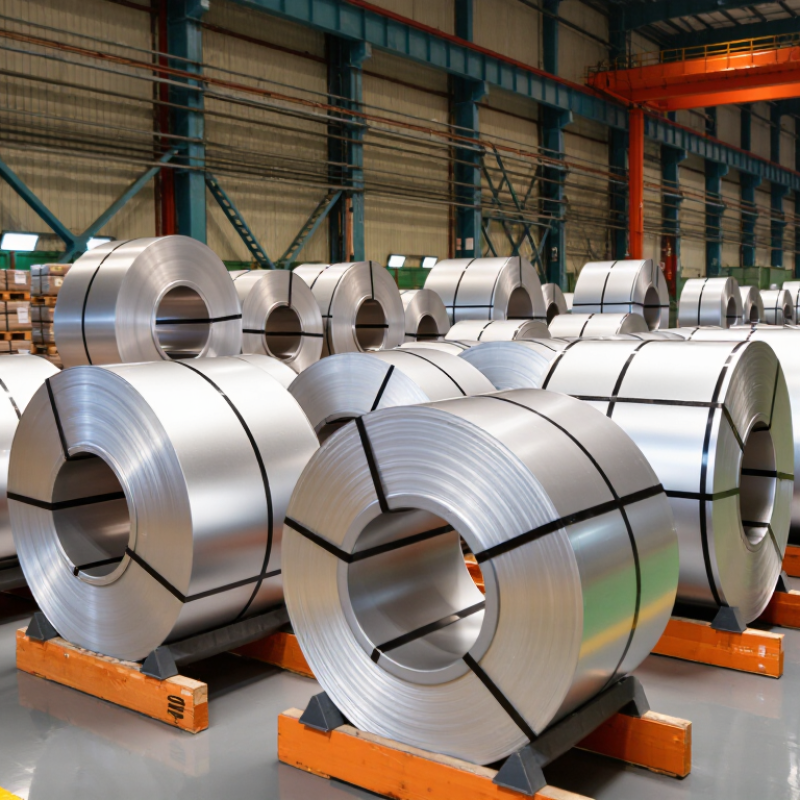
7 Tips for Buying Aluminized Steel Coil?

Define Steel Grade and Coating Type Under ASTM A463 Type 1: 5–11% Silicon

When buying aluminized steel coil, define the substrate and coating separately. ASTM A463/A463M Type 1 uses an aluminum-silicon coating containing 5–11% silicon by weight. The silicon improves coating adhesion during forming. It also supports resistance to heat and oxidation. Confirm the exact coating designation on the mill certificate. Do not rely on “aluminized” alone.

Ask for the steel grade, yield strength, tensile strength, and elongation. These values affect stamping, bending, and welding. A low-carbon drawing grade may suit deep forming. A structural grade may offer higher strength but less flexibility. Check coating mass in ounces per square foot or grams per square meter. Measure both sides when the application demands balanced protection. ASTM A463 specifies testing and coating requirements, but buyers still need clear purchase terms.

Look closely at coil edges, surface stains, pinholes, and telescoping. Small defects can become visible after cutting. Request a certificate of analysis, inspection records, and sample testing before approving bulk supply. World Steel Association reported 1.89 billion tonnes of crude steel production in 2023, showing the scale of this market. Yet volume does not guarantee consistency. I have seen specifications that named Type 1 but omitted the base grade. That gap is easy to miss. It should not be. Compare the supplier’s test data with ASTM A463/A463M and your forming conditions. When heat exposure is critical, validate performance through a practical trial, not paperwork alone.

Confirm Coil Thickness, Width, and Tolerances Against ASTM A568

When buying aluminized steel coil, confirm the substrate dimensions before judging the shiny coating. Request the nominal thickness, ordered width, measured values, and permitted tolerances. ASTM A568/A568M provides general dimensional requirements for steel sheet, including coils, but the applicable edition matters. Check it.

A coil marked 0.80 mm may not measure exactly 0.80 mm at every point. Thickness readings can vary near the edge, across the strip, or after coating. Use a calibrated micrometer and record readings from several locations. Compare them with the ASTM A568 tolerance table for the specified thickness, width, edge condition, and ordering method. Do not accept a generic “standard tolerance” statement.

Width deserves the same attention. A coil that is 1,250 mm wide on paper may create feeding problems if it arrives outside the permitted range. Ask for the mill test certificate, inspection report, and sampling method. Also confirm whether the aluminized coating specification is covered separately, because A568 mainly addresses general steel sheet requirements. I have learned not to trust one measurement alone. A rushed check can miss a narrow section that later causes trimming waste. Record the actual coil ID, measuring tools, temperature, and results before approval. Small details matter.

Compare Coating Mass, Surface Finish, and Defect Limits Before Purchase

When buying aluminized steel coil, do not judge value by price alone. Start with coating mass, stated in grams per square meter (g/m²). Confirm whether the figure covers both sides and whether it is nominal or a guaranteed minimum. A mill certificate should identify the test method, sampling location, and actual result. Ask for separate top and bottom values when one face will be exposed. Small details matter.

Surface finish affects appearance, forming, and later coating performance. Inspect a representative coil sample under bright, angled light. Look for bare spots, roll marks, pinholes, edge damage, and uneven metallic texture. A smooth finish may suit visible panels, while controlled roughness can improve paint adhesion. Do not accept vague terms such as “commercial quality.” Define gloss, roughness, waviness, and allowable stains in writing. Photos help, but they cannot replace inspection.

Defect limits should match the end use and processing route. Set limits for defect size, frequency, location, and repairability. A hidden inner layer may tolerate minor marks, but a formed exterior panel may not. Check coil edges, welds, and the first and last wraps before release. I once underestimated handling damage at the edge; downstream trim loss was larger than expected. That mistake still deserves review. Require traceable inspection records, packaging details, and a clear rejection process. A cheaper coil becomes expensive when defects interrupt production.

7 Tips for Buying Aluminized Steel Coil

Compare coating mass, surface finish, and defect limits before purchase.

1. Confirm the coating designation

ASTM A792 AZ designations indicate the minimum total coating mass on both sides. Higher values generally provide greater atmospheric corrosion resistance.

2. Check the surface finish

Specify whether the coil requires regular spangle, minimized spangle, or a smoother finish for painting, forming, or visible applications.

3. Define defect limits

Agree in writing on acceptable limits for bare spots, scratches, dents, edge damage, waviness, oil stains, and coil telescoping.

4. Match strength to forming needs

Select the steel grade and temper according to bending, drawing, roll-forming, and structural requirements rather than coating mass alone.

5. Verify dimensional tolerances

Review ordered thickness, width, flatness, camber, edge condition, inside diameter, outside diameter, and coil weight.

6. Request inspection evidence

Ask for coating-mass test results, mechanical-property data, dimensional inspection records, and traceable certificates.

7. Confirm packaging and storage

Use dry storage and suitable packaging to reduce the risk of wet-storage staining, edge damage, and handling defects.

Chart values show approximate metric equivalents of ASTM A792 AZ coating designations. Coating mass is the minimum total mass on both surfaces.

Verify Heat Resistance Near 677°C (1,250°F) for High-Temperature Applications

7 Tips for Buying Aluminized Steel Coil

When buying aluminized steel coil, verify its heat resistance near 677°C (1,250°F). This temperature matters for furnace parts, exhaust systems, heat shields, and industrial ducts. However, a catalog rating is not enough. Ask whether 677°C refers to continuous exposure, short-term exposure, or a laboratory test.

Check the coating type, thickness, and aluminum-silicon composition. These details affect oxidation protection and surface durability. Request mill test reports, coating measurements, and temperature test results. Inspect the steel grade too, because the substrate can lose strength before the coating visibly fails. The number alone can mislead.

Ask about thermal cycling. Repeated heating and cooling may cause cracking, peeling, or coating loss near bends and welds. Examine sample edges after forming. Look for darkening, blistering, and flaking. I have seen specifications that looked impressive but lacked practical test conditions. That is a warning sign. Confirm the heating atmosphere, exposure time, and inspection method before comparing suppliers.

Do not assume every aluminized coil performs equally at 677°C. Forming operations, surface scratches, and trapped moisture can reduce service life. Discuss the real operating temperature, peak temperature, and expected hours of exposure with a qualified materials engineer. If the application is critical, test a representative sample under actual conditions. It costs more upfront, but guessing can cost much more.

Request EN 10204 Type 3.1 Certificates and Test Formability Before Fabrication

7 Tips for Buying Aluminized Steel Coil?

An EN 10204 Type 3.1 certificate should accompany every serious aluminized steel coil purchase. It links test results to a specific heat, coil number, grade, and delivery condition. Check the certificate before unloading the material. Confirm yield strength, tensile strength, elongation, thickness, width, and coating mass. The document should also identify the applicable product standard and testing methods. A missing coil number creates a traceability gap.

Do not treat the certificate as a formality. Ask whether results represent the supplied coil, not only a general production batch. Review the issuing authority and confirm that the inspection representative is independent from production. Small errors matter. A mismatched heat number can invalidate otherwise accurate paperwork. Keep copies with receiving records and production documentation.

Formability testing should happen before fabrication. Cut a sample from the actual coil, then perform a bend test using the planned radius and direction. Observe cracking, coating separation, edge splitting, and springback. For deeper forming, request a cup test or a trial part with production tooling. Use suitable lubrication and inspect the coating after forming. Aluminized steel may look acceptable before forming but fail around tight corners. I have found that simple trial pieces reveal problems faster than discussions. Test results can still vary across the coil, so one sample is not always enough.

7 Tips for Buying Aluminized Steel Coil: Request EN 10204 Type 3.1 Certificates and Test Formability Before Fabrication

No. Buying Tip Key Data to Specify or Check Typical Reference Information Recommended Verification
1 Define the steel grade and intended application Base-metal grade, minimum yield strength, tensile strength, elongation, and end use Commercial-quality aluminized sheet is commonly selected for heat shields, exhaust components, oven parts, ducts, and general fabrication. Mechanical properties depend on the ordered grade and thickness. Compare the purchase order, applicable material standard, mill test certificate, and actual test values. Do not accept a generic “aluminized steel” description without a base-steel grade.
2 Confirm coating type and coating mass Aluminum-silicon coating designation, coating mass per total coated surface, and coating uniformity Aluminized Type 1 coatings generally contain aluminum with a small silicon addition; a commonly specified total coating mass is about 75–200 g/m², depending on the product specification. Check whether the stated coating mass is total for both sides or reported per side. Verify the test method and ensure the coating designation matches the application temperature and corrosion requirements.
3 Request an EN 10204 Type 3.1 certificate Heat number, product identification, chemical analysis, mechanical test results, coating results, and authorized inspection declaration An EN 10204 Type 3.1 inspection certificate reports specific test results for the supplied product and is validated by an authorized inspection representative who is independent of the production department. Match the certificate heat number, coil number, thickness, width, grade, and coating designation with the shipping documents and coil markings before fabrication.
4 Check thickness, width, and dimensional tolerances Nominal thickness, width, flatness, edge condition, coil inside diameter, outside diameter, and mass Common cold-rolled aluminized coil thicknesses are approximately 0.40–3.00 mm, while widths are often supplied from about 600–1,500 mm. Actual availability and tolerance depend on the agreed standard and mill capability. Use calibrated micrometers and width gauges. Measure at several locations, including both coil edges, and verify tolerances against the purchase specification rather than using general estimates.
5 Test formability before fabrication Bend radius, forming direction, edge quality, cracking, flaking, and coating adhesion A practical trial should use the actual material thickness and tooling. A 90° bend test is commonly used for screening, but the minimum acceptable inside radius must be agreed for the grade, temper, thickness, and forming direction. Perform a sample bend or forming trial before mass production. Inspect the outer radius for visible cracking, peeling, powdering, or excessive coating damage, and record the tooling radius and bend orientation.
6 Evaluate surface quality and storage condition Surface appearance, scratches, stains, white rust, coil telescoping, edge damage, and packaging condition Aluminum-coated steel should be kept dry and protected from condensation. Water staining or white corrosion products can develop when tightly packed coils are exposed to moisture. Inspect the coil immediately after delivery. Record photographs, packaging damage, wet spots, edge dents, and any visible coating defects before accepting the material.
7 Confirm processing and traceability requirements Slitting, laser cutting, welding, painting, lubrication, minimum order quantity, coil mass, and traceability period Cut edges may expose the steel substrate and can require additional protection depending on the service environment. Welding and forming parameters should be validated for the specific coating and thickness. Agree on coil identification, retained samples, inspection records, and nonconformance procedure. Conduct a production trial after cutting, forming, and joining parameters are approved.
Important: Reference ranges are for preliminary purchasing discussions only. Final requirements should be stated in the purchase order and verified against the applicable material standard, agreed coating specification, and EN 10204 Type 3.1 certificate.
crossmenu linkedin facebook pinterest youtube rss twitter instagram facebook-blank rss-blank linkedin-blank pinterest youtube twitter instagram