Top 10 Benefits of Cargo Storage Containers for Your Business?
In today's competitive market, businesses constantly seek efficient ways to optimize operations. Cargo storage containers have emerged as a vital solution. According to a report by Grand View Research, the global containerized freight shipping market was valued at over $6 billion in 2022, highlighting the growing importance of these containers in logistics.
Businesses benefit from cargo storage containers in various ways. They provide flexibility in storage, allowing companies to scale operations based on demand. The durability of these containers protects goods from environmental damage, which can lead to significant cost savings. However, it's essential to note that not all containers are created equal. Some may suffer from wear and tear, affecting their reliability.
Moreover, using cargo storage containers can help in minimizing transportation costs. A 2023 industry analysis indicates that efficient container usage can reduce expenses by up to 20%. Yet, the challenge remains in ensuring that containers are adequately maintained to avoid issues. As companies navigate these complexities, recognizing the potential advantages of cargo storage containers becomes increasingly critical for success.
Benefits of Increased Security for Stored Cargo in Containers
Cargo storage containers offer significant benefits, particularly in enhancing security for stored items. These containers are often made from durable steel, which provides a robust barrier against theft and damage. Unlike traditional storage methods, containers can be locked securely, ensuring that the contents remain safe. Many businesses choose these containers to safeguard valuable goods from potential intrusions.
Security is not only about locking a door. It's also about location. Containers can be placed in remote areas to deter unauthorized access. Enhanced surveillance systems can be added for extra protection. However, some may overlook the need for routine inspections. Regular checks can prevent rust or damage, which might compromise security.
While containers provide better options for safety, usage can be tricky. Businesses must ensure they are positioned correctly and not cluttered. Poor organization can lead to confusion and potential security breaches. Developing a solid inventory system is key. Without it, tracking items can become difficult, leading to lost opportunities. Investing in containers can greatly elevate security but reflects a commitment to proper management.
Cost-Effectiveness: How Cargo Containers Save Your Business Money
Cargo storage containers can significantly reduce operational costs for businesses. According to a study by Allied Market Research, the global portable storage container market is projected to reach $2.64 billion by 2025. This growth indicates how businesses increasingly recognize the financial advantages of cargo containers. They offer a secure and versatile storage solution. Utilizing these containers can help businesses avoid expensive rental fees for traditional warehouses.
Moreover, the purchase or rental of cargo containers is often more affordable than traditional storage. A report from IBISWorld reveals that the average cost of renting a small warehouse space can exceed $1,000 per month. In contrast, cargo containers can be rented for as low as $75 to $200 monthly. This price difference allows businesses to allocate resources more effectively. However, some may find that maintaining containers requires investment. Regular checks for weather damage and pest control are necessary.
Despite these potential costs, companies that utilize cargo containers experience improved cash flow. A survey from the National Association of Commercial Real Estate found that 40% of businesses face storage issues that can lead to financial strain. Increasing your storage capacity with cargo containers can address these challenges. Furthermore, many companies have reported a reduction in lost inventory due to enhanced organization.
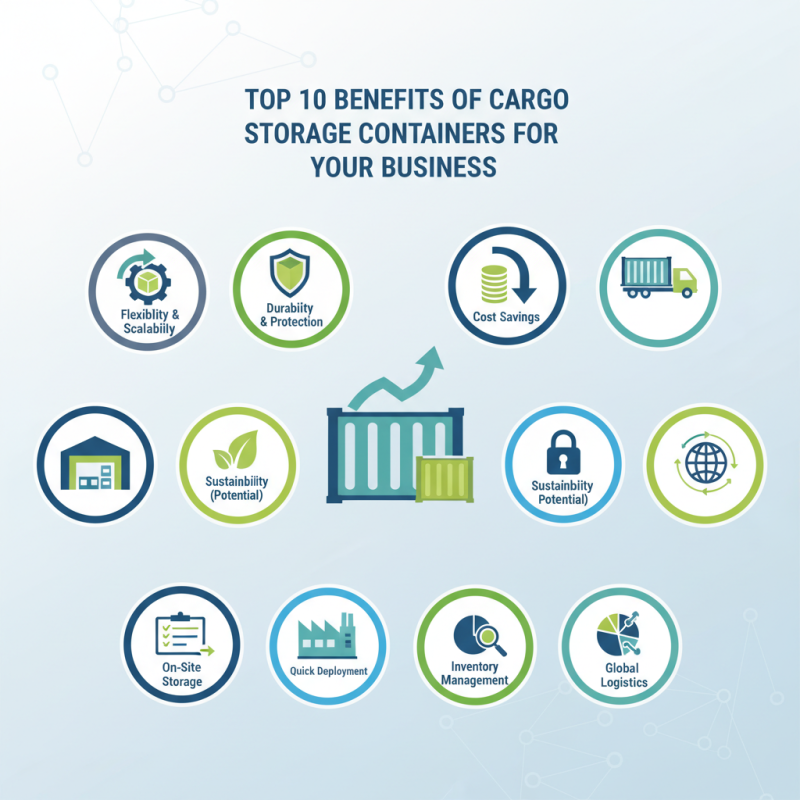
Top 10 Benefits of Cargo Storage Containers for Your Business
Flexibility and Versatility of Cargo Storage Solutions
Cargo storage solutions offer remarkable flexibility and versatility for businesses of all sizes. A recent industry report indicated that about 65% of companies are utilizing cargo containers for various storage needs. This adaptability allows businesses to use containers for inventory storage, equipment housing, or even as temporary office spaces. The ability to repurpose a container quickly can help businesses respond to changing needs without significant disruption.
Many businesses overlook the use of cargo containers. They often rely on traditional warehouses, which can be costly and inflexible. Reports show that renting warehouse space can account for up to 10% of total operational expenses. In contrast, cargo containers can dramatically reduce costs and provide immediate access to essential supplies. This option can also minimize waste, as containers can be transported rather than filled with permanent fixtures.
Moreover, containers can be modified easily. This can inspire creative uses that go beyond storage, such as pop-up shops or temporary event spaces. However, the challenge remains to ensure proper ventilation and climate control. Not all containers are designed for every situation, and businesses must consider these aspects carefully. Some may find that without the proper adaptations, the lack of comfort can deter staff or customers. Flexibility is key, but it needs thoughtful planning.
Improved Organization and Efficiency in Business Operations
In today's fast-paced business environment, organization is crucial. Cargo storage containers improve operational efficiency significantly. According to recent industry reports, businesses that utilize storage containers report a 30% increase in productivity. This improvement stems from a more organized workspace, allowing employees to focus on essential tasks rather than searching for equipment or supplies.
These containers offer flexibility in space management. They can be easily relocated to meet changing needs. This adaptability is essential for businesses that are continually growing or evolving. A recent survey highlighted that 50% of companies experience delays due to poor organization. Inaccessible materials can slow down projects. Cargo containers help mitigate these challenges.
However, not all storage solutions are flawless. Some businesses struggle with container maintenance. Regular inspections and upkeep are necessary to prevent issues. Additionally, space must be used wisely. It can be tempting to overpack containers, leading to disarray. Companies must find a balance between maximizing space and maintaining easy access to items. Adequate organization requires constant reflection and adjustment.
Top 10 Benefits of Cargo Storage Containers for Your Business
| Benefit |
Description |
Impact on Business |
| Improved Organization |
Cargo containers provide a designated space for storing goods, leading to better organization of inventory. |
Enhanced time management and reduced search time for items. |
| Space Efficiency |
Maximize the use of available space in warehouses or retail environments by utilizing containers. |
Higher inventory capacity without needing to expand physical space. |
| Cost-Effective |
Lower costs compared to traditional warehousing solutions for storing materials and products. |
Improved profitability and cash flow management. |
| Mobility |
Containers can be easily transported to different locations as needed. |
Flexibility in operations and distribution logistics. |
| Weather Resistance |
Protect goods from adverse weather conditions with durable and waterproof containers. |
Reduced losses due to damage or spoilage of products. |
| Flexibility in Size |
Different sizes available to accommodate various types of goods and inventory levels. |
Ability to efficiently scale storage needs based on business demands. |
| Enhanced Security |
Cargo containers are typically equipped with lock systems to protect valuable assets. |
Decreased risk of theft or loss of inventory. |
| Simplified Inventory Management |
Cargo containers can be easily labeled and tracked using inventory management software. |
More accurate stock levels and improved operational efficiency. |
| Quick Setup |
Containers can be deployed quickly for immediate use without extensive setup. |
Faster response to inventory needs and business opportunities. |
| Customization Options |
Containers can be modified with shelving, climate control, or other features based on business needs. |
Tailored solutions that enhance operation efficiency. |
Environmental Sustainability: The Green Advantage of Cargo Containers
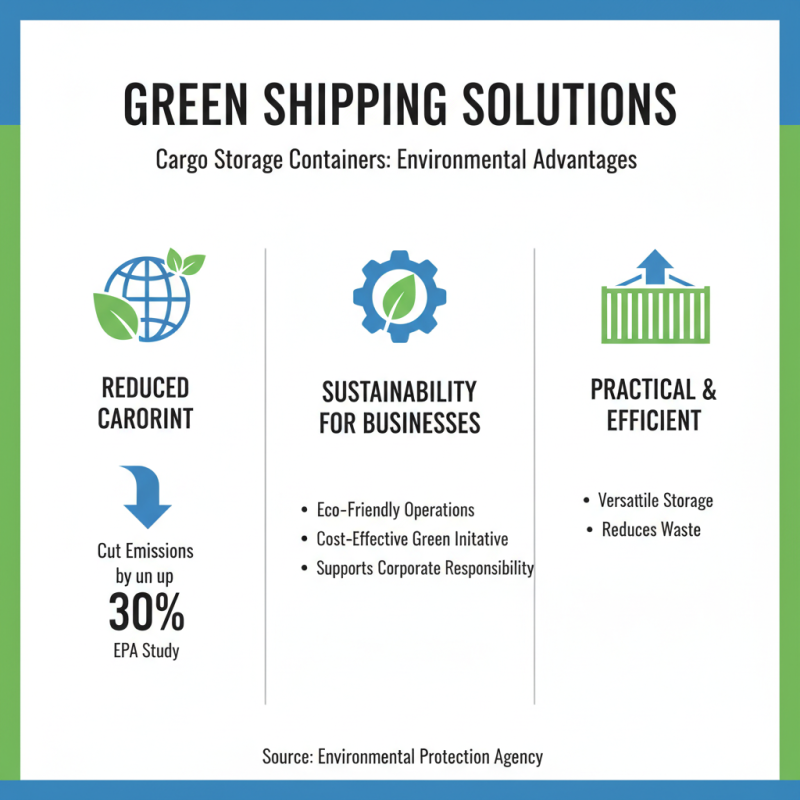
Cargo storage containers are more than just a practical solution for businesses. They offer significant environmental advantages. Using these containers can reduce carbon footprints. According to a study by the Environmental Protection Agency, shipping containers can help cut emissions by up to 30%. This is beneficial for companies looking to be sustainable.
Containers are often made from recycled materials. This reduces the need for new resources. Reusing existing items conserves energy and reduces waste. In fact, the Global Recycling Foundation indicates that recycling one ton of steel saves over 2,500 pounds of iron ore. This recycling effort contributes to a greener planet.
Tips: When considering storage options, think about the eco-friendly benefits of containers. Evaluate your local recycling facilities for better access to sustainable materials. Consider the long-term savings on energy and resources when using these containers.
Utilizing cargo storage can show commitment to sustainability. Environmentally friendly practices resonate with today’s consumers. Still, businesses need to reflect on their overall footprint. It is crucial to monitor how these practices align with a broader sustainability strategy. There is always room for improvement in environmental efforts.