Get A Free Quote

China Best Drone BMS for UAV Sprayers?

UAV spraying is expanding, but a larger market does not make every battery system dependable. MarketsandMarkets’ 2023 Agricultural Drones Market report estimated a value of USD 1.2 billion that year and forecast USD 5.7 billion by 2028. That figure describes the wider agricultural-drone market, not battery-management systems alone. Still, it points to a clear need: sprayers must deliver consistent power through repeated takeoffs, long spray runs, and fast battery changes.

For buyers comparing a Drone Bms For Uav Sprayer, the important details are practical. Can the system track cell voltage and temperature under load? Does it report state of charge clearly? Can it flag imbalance before a pack is returned to service? Agricultural engineering expert Dr. Reza Ehsani’s work in mechanization and precision agriculture highlights the value of matching equipment to real field conditions. Applied to battery selection, that means checking the BMS against the aircraft’s current draw, pack chemistry, and operating environment—not relying on a headline capacity figure.

Small differences matter. A warm battery after a steep climb may need different attention than one used during a cool, short flight. No single “best” BMS fits every sprayer. This guide compares the features, protection functions, and supplier questions that help buyers assess options in China. Market forecasts are useful context, not proof of product quality; specifications and test evidence deserve a closer look.
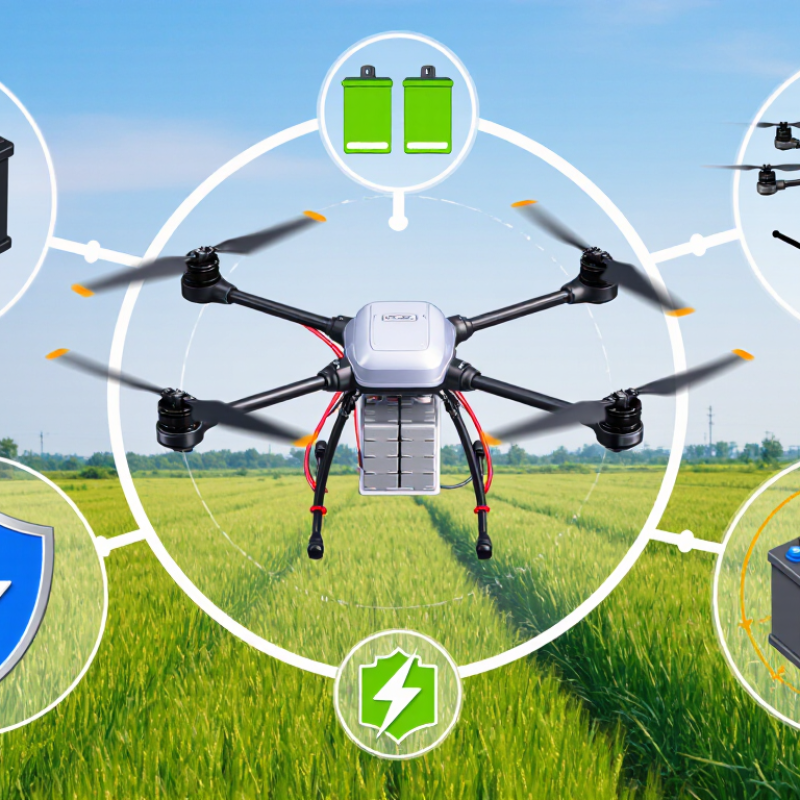
China Best Drone BMS for UAV Sprayers?

What a Battery Management System Does in UAV Sprayers

In a UAV sprayer, the battery management system (BMS) monitors each cell group, pack current, and temperature. It estimates remaining charge, helping crews judge whether the aircraft can finish a spray route and return with a reserve. These readings matter when pumps and lift motors draw power at the same time. Small errors matter.

The BMS can limit charging or discharge when readings approach configured thresholds. It may also balance cell voltages, reducing differences that can grow after repeated flight cycles. During a demanding run, warm cells or a sudden voltage drop can signal that the pack needs attention. Heat builds quickly. The system cannot repair a damaged cell, though, and its estimate is only as reliable as its sensors and settings.

For example, an operator might see adequate charge before takeoff, then notice voltage sag when the pump starts and the aircraft climbs with a full tank. That change deserves a pause and a closer check, not blind trust in the display. A BMS also does not replace inspecting connectors, battery condition, or temperature after landing. Wet spray environments add another concern: the pack and its monitoring connections need suitable protection, but a BMS reading alone cannot confirm that moisture has not entered.

Battery Requirements for Agricultural Spraying Drones

China Best Drone BMS for UAV Sprayers?

Battery Requirements for Agricultural Spraying Drones

Agricultural spraying drones need batteries that deliver strong, steady power throughout repeated flights. A full spray tank adds substantial weight, while the battery must also power pumps, navigation systems, and motors. As the tank empties, the load changes. Battery monitoring should remain reliable through these shifts.

A capable battery management system tracks cell voltage, current, temperature, and state of charge. It should detect weak cells and help balance them during charging. High-current measurements matter because motor demand can rise quickly during takeoff or maneuvering. Clear warnings give operators time to land before power becomes critically low.

Small details matter.

Spray work can involve vibration, dust, moisture, and frequent battery changes. Choose protective enclosures and connectors suited to the operating environment, and follow the battery maker’s charging and storage limits. BMS data can help reveal gradual capacity loss, but estimates are not perfect, especially under changing loads. Field logs may expose patterns that a single dashboard reading misses. There is no universal battery setup; pack voltage, capacity, and discharge rating must match the aircraft and its real payload. That takes testing. A larger pack may extend flight time, yet its added weight can reduce efficiency, so the trade-off deserves careful review.

Key Features of BMS Units for UAV Sprayer Batteries

China Best Drone BMS for UAV Sprayers?
Key Features of BMS Units for UAV Sprayer Batteries

A UAV sprayer battery experiences sharp current changes during takeoff, hovering, and pump operation. Its battery management system should monitor each cell, pack current, and temperature—not just total voltage. This helps identify weak cells before they cause an unexpected voltage drop. Cell balancing also matters, especially when repeated charging leaves small differences between cells. A suitable BMS should match the battery chemistry and the aircraft’s peak current needs.

Protection should cover overcurrent, undervoltage, and excessive temperature, with thresholds suited to the battery specifications. Sprayer aircraft also vibrate, so secure wiring, reliable connectors, and a well-protected enclosure are practical details. Telemetry or recorded fault data can help a technician distinguish a battery issue from a pump or wiring problem. Still, a BMS cannot fix a poorly matched battery or loose connection. That is easy to overlook.

Tips: Check cell readings after a full charge and after a typical spray flight. Compare temperatures across the pack, not only at one point. Keep clear maintenance records. One limitation is that sensor placement can miss a local hot spot, so periodic physical inspection remains useful.

China Best Drone BMS for UAV Sprayers? Key Features of BMS Units for UAV Sprayer Batteries

This chart shows calculated pack voltages using typical lithium-ion and lithium-polymer cell values: 3.7 V nominal and 4.2 V at full charge per cell. A BMS should be matched to the battery’s cell count and chemistry, with appropriate cell-voltage monitoring and overvoltage protection. Always follow the battery manufacturer’s specifications.

How to Evaluate Chinese Drone BMS Manufacturers

China Best Drone BMS for UAV Sprayers?

How to Evaluate Chinese Drone BMS Manufacturers

A sprayer’s battery management system must handle high discharge currents, frequent takeoffs, and changing payload weight. Start by checking that the BMS matches the pack’s cell chemistry, voltage, and continuous and peak current needs. Fit matters. Ask how the system measures cell voltage and temperature, and what happens when readings exceed set limits. Clear answers are more useful than a long feature list.

Evaluate the manufacturer’s testing process, not just its product sheet. Request relevant test records for balancing, temperature protection, vibration, and communication with the flight controller. Confirm which telemetry data the system provides, such as cell voltage, pack current, and remaining capacity. Then check whether connectors, firmware, and enclosure details can be kept consistent across production batches. Small changes matter.

A sample unit can reveal practical issues that paperwork may miss. Test it with the intended battery pack and controller, then review logs after repeated spray-and-recharge cycles. Watch for unstable readings, unexpected cutoffs, or connectors that loosen under vibration. Ask how faults are diagnosed and how technical questions are handled after delivery. No datasheet tells the whole story; even a careful evaluation can miss a field condition, so leave room for further testing.

How to Select and Test a BMS for UAV Sprayer Operations

China Best Drone BMS for UAV Sprayers?

How to Select and Test a BMS for UAV Sprayer Operations

A suitable battery management system should match the pack’s chemistry, cell count, peak motor current, and pump load. Check that its continuous and short-duration current ratings cover takeoff and spraying, not just steady cruising. Confirm cell-level voltage monitoring, temperature sensing, balancing, and fault records. The BMS should also communicate clearly with the flight controller; a warning that appears only after landing is not useful. Small details matter.

FAO’s AQUASTAT database estimates that agriculture accounts for about 70% of global freshwater withdrawals. That figure is not a drone-performance target, but it underlines why predictable spray runs and reliable battery readings matter.

Test the BMS with the actual battery and a representative flight-and-pump load. Record cell voltages, pack current, temperatures, and remaining-capacity readings during takeoff, spraying, and landing. Repeat the run. Compare shutdown behavior with the cell manufacturer’s limits, rather than applying one threshold to every chemistry. A neat bench result can still mislead: vibration, cold starts, or sensor offsets may change readings in the field. I would log those conditions too, even when the first test looks perfect.

crossmenu linkedin facebook pinterest youtube rss twitter instagram facebook-blank rss-blank linkedin-blank pinterest youtube twitter instagram