Get A Free Quote

10 Best HEPA Air Filters for Bulk Buyers in 2026

Bulk buyers need more than a low unit price when choosing Hepa Air Filters for 2026. They must consider filtration claims, airflow, replacement schedules, supplier capacity, and compatibility with existing equipment. A filter that looks economical on a quote may create extra costs if it needs frequent replacement or restricts airflow. Small details matter.

This guide to the 10 best HEPA air filters for bulk buyers compares practical factors buyers can verify, including stated filter efficiency, dimensions, pressure-drop information, documentation, and ordering options. An Air Filter Hepa product should be assessed against the specifications and test standards its manufacturer actually provides; labels alone do not establish performance in every setup. Check that the filter fits the intended system, and confirm availability before planning a large order. Real operating conditions matter, too.

There is no single best choice for every building. A clinic, warehouse, school, and office may have different airflow needs, maintenance routines, and purchasing constraints. The selections are intended to help narrow the field, not replace technical review. Product details can change, and supplier claims deserve a careful read. That takes time. Some comparisons will still involve uncertainty, especially when public testing data is limited. Use the shortlist as a starting point, then confirm current specifications, pricing, and delivery terms with the supplier before committing.
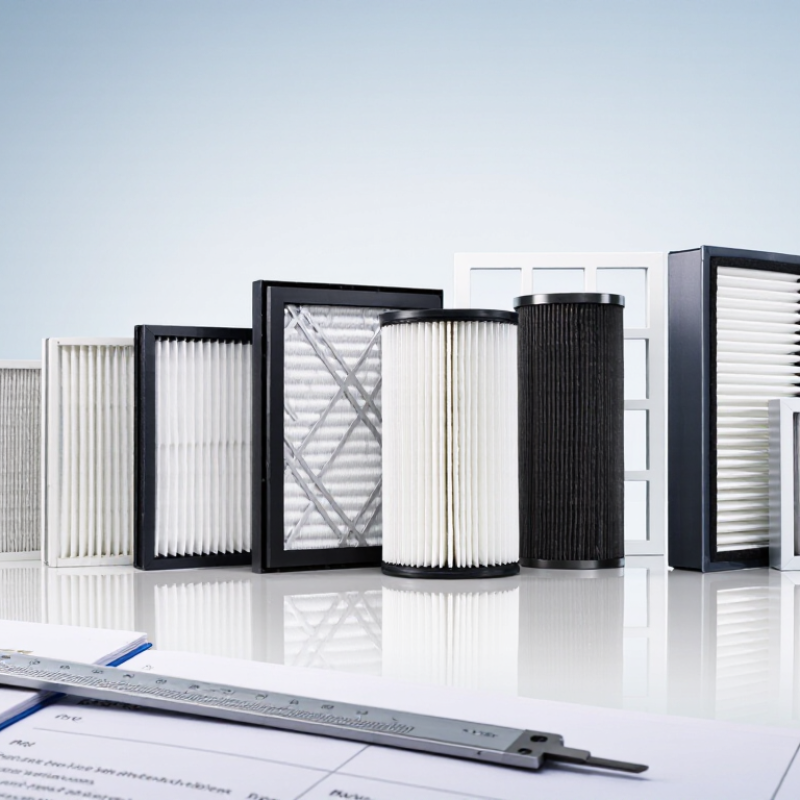
10 Best HEPA Air Filters for Bulk Buyers in 2026

How HEPA Air Filters Capture Airborne Particles

HEPA air filters capture particles as air passes through a dense web of fibers. They do not work like a simple sieve. Larger particles may collide with fibers because of their momentum, while medium-sized particles can brush against fibers as air bends around them. Very small particles move irregularly, increasing the chance that they meet a fiber. Particles do not vanish. They remain trapped in the filter media.

That distinction matters. A filter only helps when air passes through it, rather than around its edges. Poorly seated filters can let dusty air bypass the media, even when the filter itself is effective. In a busy workspace, this may show up as dust returning to a shelf or lingering near a supply vent. It is easy to overlook.

For bulk buyers, compare the filter’s efficiency with the airflow needs of the equipment it will serve. Dense media can create resistance, and a mismatched filter may reduce airflow. Check dimensions, edge seals, and replacement guidance before ordering large quantities. Particle loads vary by room, activity, and maintenance, so one replacement schedule may not suit every site. A specification sheet helps, but fit and operating conditions still deserve a real-world check.

What Bulk Buyers Should Evaluate Before Choosing a Filter

For bulk buyers, a HEPA label is only a starting point. Check the stated filtration efficiency and the test method behind it. Ask for current technical documents, not a sales summary. A filter’s performance also depends on airflow, pressure drop, and a close fit in the equipment. A highly efficient media layer may still disappoint if it restricts airflow or leaves gaps around the frame.

Compare filters under conditions similar to your site. A busy clinic, a warehouse, and a classroom do not have the same dust load or operating hours. Review dimensions, airflow ratings, pressure-drop data, and replacement intervals together. Then check whether the supplier can keep specifications consistent across repeat shipments. Request sample units from the production lot when practical. Small details matter.

Calculate the total cost over time, including replacements, freight, storage, and staff time. Confirm carton quantities and packaging protection; bent frames can turn a good specification into a poor installation. Ask how changes to materials or dimensions will be communicated. Documentation helps, but it is not a guarantee of field performance. That part is easy to overlook. Track airflow and replacement frequency after installation, and revise the order plan if actual conditions differ from estimates. Bulk purchasing rewards careful records, though no spreadsheet can predict every dusty week.

The 10 Best HEPA Air Filters for Bulk Buyers in 2026

The 10 Best HEPA Air Filters for Bulk Buyers in 2026

Bulk buyers should compare room coverage, replacement-filter supply, energy use, and verified performance—not just unit price. The U.S. Environmental Protection Agency explains that true HEPA filters capture at least 99.97% of particles measuring 0.3 microns under test conditions. That benchmark is useful, but it does not tell you how quickly a unit cleans a specific room. Fit matters.

The Association of Home Appliance Manufacturers recommends a smoke clean air delivery rate (CADR) of at least two-thirds of a room’s area for an eight-foot ceiling. For a 300-square-foot room, that means roughly 200 cubic feet per minute. Check CADR alongside operating noise and airflow at the setting staff will actually use. A high maximum rating is less helpful if the unit stays on low.

ASHRAE guidance supports using MERV 13 or better filtration in central HVAC systems where equipment can accommodate it. That is not the same as portable HEPA performance; confirm the filter type and system compatibility separately. For multi-site orders, track filter dimensions, replacement intervals, and stock availability. Noise matters, too. A spreadsheet can miss the human part: staff may switch off a loud machine, and real-world results will then fall short of the specification.

10 Best HEPA Air Filters for Bulk Buyers in 2026

Rank Filter Type Typical Efficiency Rating Best-Fit Application Bulk-Buying Advantage Key Procurement Check
1 H13 Mini-Pleat Panel EN 1822 H13: at least 99.95% efficiency at the most penetrating particle size (MPPS) Commercial HVAC systems, clean areas, and general high-efficiency air-cleaning duties Compact format can suit installations where available filter depth is limited Confirm the exact frame dimensions, airflow, pressure-drop data, and EN 1822 test documentation
2 H14 Mini-Pleat Panel EN 1822 H14: at least 99.995% efficiency at MPPS Applications requiring a higher-efficiency grade than H13 Useful for standardizing higher-grade replacements across similar equipment Check that the fan can handle the filter’s resistance at the required operating airflow
3 Deep-Pleat Box Filter Available in multiple grades; confirm the tested class for the specific filter Air-handling units designed for deeper, rigid filter sections Robust construction may suit centralized systems with planned changeout schedules Verify cabinet depth, face dimensions, airflow direction, and whether a separator or support grid is required
4 V-Bank HEPA Filter Available in H13 and H14 configurations; confirm certification for each model High-airflow systems with space for a multi-bank filter arrangement Can provide substantial media area within a compact face footprint Check overall depth, bank configuration, operating airflow, and fit with the existing housing
5 Gel-Seal HEPA Filter Often supplied in H13 or H14 grades; efficiency is separate from seal design Applications using gel-channel housings where a low-leakage perimeter seal is needed Suitable for facilities purchasing matching filters for compatible gel-seal housings Match the gel channel and knife-edge dimensions; confirm the seal system is compatible
6 Gasket-Seal HEPA Filter Available in different efficiency classes; verify the model’s test report Equipment and housings designed for a compressible perimeter gasket Common sealing approach can simplify replacement planning across compatible units Specify gasket material, location, thickness, frame dimensions, and compression requirements
7 Terminal HEPA Filter Commonly available in H13 or H14 grades; confirm the complete assembly rating Ceiling or terminal installations in controlled environments Can consolidate filter and terminal installation requirements into one specified assembly Confirm housing style, face size, diffuser compatibility, and installation access
8 Fan-Filter-Unit-Compatible HEPA Filter Often H13 or H14; the grade and airflow depend on the unit design Fan filter units used in cleanrooms and other controlled spaces Useful for facilities managing repeated replacements across a fleet of similar units Match the unit model, filter dimensions, airflow target, electrical or control requirements, and seal type
9 US-Standard HEPA Replacement Filter US HEPA filters are commonly specified at 99.97% efficiency at 0.3 micrometers; confirm the applicable test method Equipment specified to a US HEPA performance definition Can simplify purchasing when equipment documentation uses a US HEPA specification Do not assume equivalence with an EN 1822 class; compare test methods and exact equipment fit
10 HEPA Vacuum Replacement Filter Performance claims vary by filter and vacuum system; check the stated test method and rating Commercial or institutional vacuums designed for HEPA-filter replacements Recurring replacement needs can make forecasted, model-specific purchasing practical Verify vacuum compatibility, filter dimensions, seal integrity, and whether the rating applies to the filter or the complete machine

Ratings and airflow are model-specific. For bulk orders, confirm dimensions, operating conditions, pressure-drop data, seal design, and test documentation before purchase. MERV ratings are not interchangeable with EN 1822 HEPA classes.

How to Compare Capacity, Operating Costs, and Supplier Terms

10 Best HEPA Air Filters for Bulk Buyers in 2026
How to Compare Capacity, Operating Costs, and Supplier Terms

Bulk purchasing starts with the room, not the unit price. The U.S. EPA’s Guide to Air Cleaners in the Home recommends a smoke CADR of at least two-thirds of the room’s area, assuming an eight-foot ceiling. A 300-square-foot room therefore needs roughly 200 CADR or more. For larger rooms, compare rated airflow and the number of units needed; a low-priced filter can become an expensive workaround. Check that performance claims specify the particle size and operating speed.

Then calculate the cost of keeping each unit running. Compare electricity use at the speed staff will actually select, plus replacement-filter prices and stated service intervals. A filter that performs well only on its loudest setting may spend most of its life turned down. Ask suppliers for test documentation, CADR figures, filter availability, and written warranty terms. Request delivery schedules and volume pricing in writing, too. Small details matter.

AHAM’s air-cleaner guidance emphasizes CADR as a practical way to compare particle-removal performance across room sizes. But CADR alone does not capture maintenance, noise, or procurement risk. Compare total cost over several years, including spare filters and freight. Confirm whether quoted prices cover one-time orders or recurring shipments, and clarify how shortages are handled. I would still leave room for uncertainty: real rooms, placement, and user habits can change results. A tidy spreadsheet cannot capture all of that.

10 Best HEPA Air Filters for Bulk Buyers in 2026 — How to Compare Capacity, Operating Costs, and Supplier Terms
This chart compares EN 1822 minimum overall efficiency thresholds at the most penetrating particle size (MPPS); it is a filter-class benchmark, not a ranking of products. When evaluating bulk quotes, also compare airflow and pressure drop, replacement costs, service life, minimum order quantities, and warranty terms.

Planning Installation, Filter Replacement, and Routine Maintenance

Bulk buyers should plan filter installation before placing a large order. Confirm each unit’s dimensions, airflow requirements, and filter class against the equipment manual. A high-efficiency filter can restrict airflow if the fan is not designed for its resistance. Ask the supplier for performance data, not just a label. Small mismatch, costly downtime.

During installation, keep clean filters sealed until they are needed, and mark each unit with its installation date. Staff should check that the filter sits flush and that access panels close securely. After startup, note airflow or pressure readings where the equipment allows. A simple log can reveal a problem before rooms feel stuffy.

Replacement intervals depend on operating hours, dust levels, and the building’s ventilation system. A fixed calendar is tidy, but it can miss real conditions. Use manufacturer guidance, inspection results, and pressure readings together. Replace filters when they reach the specified limit, not merely because they look dirty. During routine maintenance, inspect seals and housings for gaps, and keep spare stock in a dry, clean area. Some records will be incomplete. Review them anyway; even imperfect notes can improve the next purchasing plan.

crossmenu linkedin facebook pinterest youtube rss twitter instagram facebook-blank rss-blank linkedin-blank pinterest youtube twitter instagram