China has become an important force in the global Mountain Bike industry. Its manufacturers now offer more than inexpensive entry-level bicycles. Many produce carbon frames, suspension platforms, hydraulic braking systems, and complete bikes for demanding trails.
Giant remains one of the most recognized names connected with Chinese manufacturing. Its engineering, global distribution, and long racing history support strong credibility. Merida also deserves attention for refined frame design and large-scale production experience. XDS has expanded quickly, offering aluminum and carbon Mountain Bike models for recreational riders and competitive users. Trinx and SAVA provide broader access, especially for beginners seeking modern components without premium pricing.
Gary Fisher, a pioneering mountain-bike designer, once said, “The bicycle is a simple solution to a complex problem.” That idea still matters when comparing Chinese manufacturers. A reliable frame, suitable geometry, and properly adjusted suspension can matter more than a famous logo.
However, no single brand is best for every rider. Some manufacturers excel at value. Others focus on racing performance, export quality, or original design. A showroom finish can hide weak wheel building or poor after-sales support. This is where careful evaluation becomes necessary.
Look for clear frame specifications, warranty terms, replacement-part availability, and independent riding reviews. Check the welds, headset alignment, tire clearance, and suspension service options. These details become obvious on rocky climbs and wet descents. A cheaper bike may require upgrades sooner, while an expensive model may still fit poorly.
This guide compares China’s leading Mountain Bike manufacturers through engineering quality, riding experience, pricing, innovation, and customer support. The ranking is not perfect. Regional availability and changing production standards can alter the result. That uncertainty deserves honest attention.
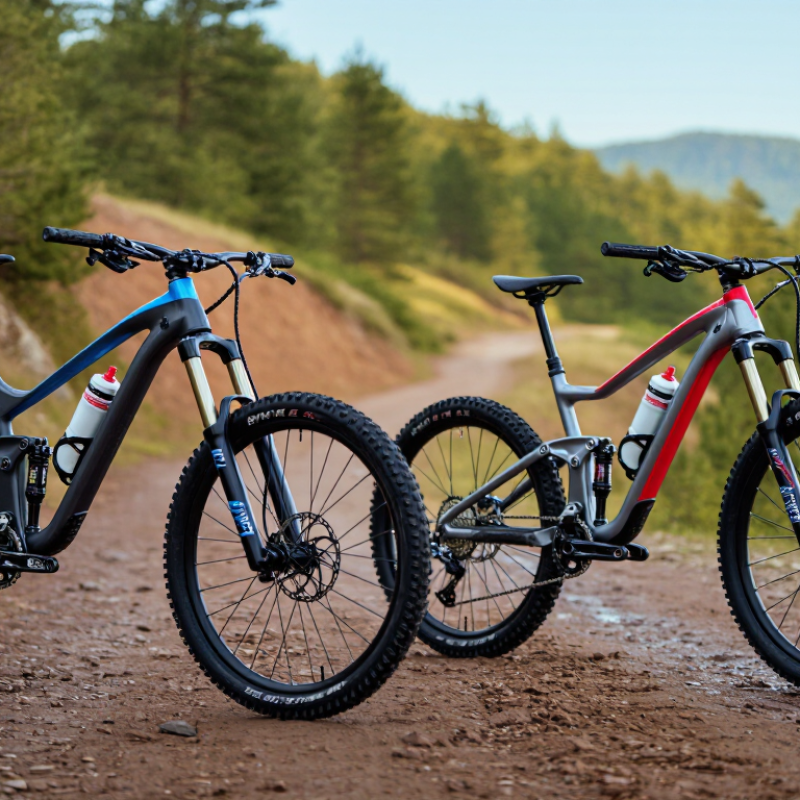
China’s mountain bike manufacturing landscape is broader than a list of leading manufacturers. It includes frame factories, suspension specialists, component suppliers, testing laboratories, and export distributors. According to the China Bicycle Association, China produced nearly 90 million conventional bicycles in 2023. Mountain bikes represent only part of this output, but the scale supports strong supply-chain depth.
Manufacturing activity is concentrated in coastal industrial clusters, including Guangdong, Jiangsu, and Zhejiang. These regions offer faster access to aluminum tubing, carbon components, CNC machining, paint finishing, and packaging services. Many factories operate through OEM or ODM agreements. This allows buyers to adjust geometry, wheel size, suspension travel, and assembly levels. However, factory capability can vary sharply. A polished sample does not always prove stable mass production.
Industry reports from Grand View Research and IMARC Group show continued global growth in the mountain bike market, although their market values differ. That difference deserves attention. Reports often use different definitions, currencies, and sales channels.
Tips: Ask for ISO 4210 testing records, fatigue-test results, weld inspection details, and production samples from multiple batches. Check torque settings, cable routing, bearing seals, and paint thickness. Do not judge a factory by photographs alone. An on-site audit remains more reliable, even when it feels inconvenient.

Choosing among Chinese mountain bike manufacturers requires more than comparing catalog photos. In my experience, frame quality begins with material control and welding consistency. Inspect tube alignment, weld penetration, and the finish around the bottom bracket. Small flaws often appear there first. Ask whether the factory uses aluminum, carbon, or both. Each material needs different testing methods and quality controls.
Production capability also matters. A reliable manufacturer should explain its fatigue testing, impact testing, and inspection records clearly. Request sample reports, not only promises. Check how the factory manages tolerances for head tubes, dropouts, and suspension mounts. These details affect steering, braking, and long-term durability. Factory visits can reveal practical issues, such as crowded work areas or poor storage. However, one visit cannot prove every production batch is consistent.
Communication is another key comparison point. The best partners provide clear drawings, realistic lead times, and traceable quality documents. Ask about replacement frames, small components, warranty handling, and spare-parts availability. Responses should be specific. Vague answers deserve caution. I once focused too heavily on a low quotation and underestimated after-sales support. That judgment needed revision. Price still matters, but testing, inspection, and service often determine the real cost. Check independent reviews, request production samples, and compare the finished bikes under the same riding conditions.
China’s leading mountain bike manufacturers combine large-scale production with increasingly refined engineering. Their strongest advantage is material versatility. Many factories produce lightweight carbon frames, durable aluminum hardtails, and trail models with carefully shaped tubing. Engineers often adjust geometry for local terrain, rider height, and intended use. This practical flexibility helps manufacturers serve beginners, racers, and adventure riders.
Suspension development has also improved. Some manufacturers build frames around longer travel forks, stronger rear pivots, and modern axle standards. Internal cable routing creates a cleaner appearance. It also reduces exposure to mud and branches. Electric mountain bikes are another growing strength, with integrated batteries, reinforced frames, and torque-focused drive systems. However, impressive specifications do not always guarantee better trail performance. I would inspect bearing access, weld consistency, tire clearance, and replacement-part support before judging a model.
Reliable manufacturers usually maintain documented testing procedures. These may include frame fatigue tests, braking checks, drop tests, and repeated suspension loading. Quality control is strongest when inspectors verify torque values, paint finish, alignment, and electrical connections at several production stages. Factory-direct customization can be useful, but it may create inconsistent results between batches. That is a weakness worth acknowledging. Buyers should request test records, warranty terms, geometry charts, and sample units before placing a large order. Real trail feedback matters more than polished catalog language.
When judging the best mountain bike manufacturers in China, frame material deserves close inspection. The China Bicycle Association reported about 89.9 million bicycles produced in 2023. However, production volume does not guarantee trail performance. Aluminum frames should show even welds, clean alignment, and accurate axle spacing. Carbon frames need controlled layups, proper curing, and documented inspection records. A glossy finish can hide weak bonding. That is easy to miss.
Suspension design separates capable manufacturers from ordinary factories. Check the fork’s stanchion finish, linkage bearings, pivot hardware, and shock compatibility. A well-designed frame should remain stable during braking and active over rough stones. According to Grand View Research’s 2024 mountain bike market analysis, the global market was valued at roughly US$10 billion in 2023, with growth expected through 2030. That pressure encourages faster development, but rushed testing remains a concern. More features are not always better.
Manufacturing quality depends on repeatability. Ask for fatigue-test records, torque specifications, traceable batch numbers, and compliance with ISO 4210 requirements. The standard covers frame strength, braking, steering, and fatigue performance. I would also inspect a sample bicycle, not only a technical drawing. Look for cable ports without sharp edges, consistent paint thickness, and bearings that turn smoothly without play. Small flaws matter. Chinese manufacturers with transparent testing, stable suppliers, and responsive engineering teams usually deserve stronger consideration, even when their catalog appears less impressive.
| Evaluation Area | Technical Dimension | Common Specification or Range | Performance Characteristics | Manufacturing Quality Indicators |
|---|---|---|---|---|
| Frame Materials | 6061-T6 aluminum alloy | Approx. 2.70 g/cm³ density Heat-treated after welding | Good strength-to-weight ratio, corrosion resistance, and cost efficiency. Commonly used for hardtail and full-suspension frames. | Consistent tube forming, controlled heat treatment, accurate alignment, and inspection of weld zones are essential because welding can reduce local strength before post-weld treatment. |
| 7005 aluminum alloy | Approx. 2.78 g/cm³ density Can be heat-treated after fabrication | High strength potential and durable performance. Often selected for robust, performance-oriented aluminum frames. | Quality depends on alloy traceability, weld penetration, heat-treatment control, and dimensional inspection after welding. | |
| Carbon-fiber composite | Fiber-reinforced polymer construction Layup varies by frame zone | Low weight, high stiffness-to-weight ratio, and strong control over tube shapes and vibration behavior. | Important controls include fiber orientation, resin ratio, mold temperature, curing pressure, void inspection, bonding quality, and load testing. | |
| Chromoly steel | Approx. 7.8 g/cm³ density Usually butted steel tubing | High toughness, fatigue tolerance, and a compliant ride feel, but generally heavier than aluminum or carbon fiber. | Tube-butting consistency, heat control during welding, rust protection, and accurate alignment are major quality factors. | |
| Titanium alloy | Approx. 4.5 g/cm³ density Commonly Ti-3Al-2.5V tubing | Lightweight for a metal frame, corrosion resistant, durable, and capable of a smooth ride quality. | Requires highly controlled inert-gas welding, clean handling, precise alignment, and careful surface finishing to prevent contamination. | |
| Suspension Systems | Cross-country suspension | Approximately 100–120 mm travel | Efficient pedaling, low weight, and responsive handling for climbing and technical cross-country routes. | Frame pivot alignment, shock-mount stiffness, cable routing, and suspension kinematics should be verified through fatigue and load testing. |
| Trail suspension | Approximately 120–150 mm travel | Balanced climbing efficiency and descending control; suitable for varied terrain and all-round mountain use. | Consistent leverage-rate design, sealed pivot bearings, accurate shock alignment, and reliable frame protection are key indicators. | |
| Enduro suspension | Approximately 150–180 mm travel | Greater impact absorption and stability at speed, with additional weight and suspension-system complexity. | High-strength pivot hardware, reinforced shock areas, impact testing, bearing durability, and protection against chain slap are important. | |
| Hardtail configuration | Front suspension commonly 100–140 mm No rear shock or linkage | Lower weight, simpler maintenance, efficient power transfer, and direct handling on smoother or moderately technical trails. | Head-tube stiffness, dropout alignment, fork compatibility, weld quality, and accurate brake-mount positioning should be checked. | |
| Manufacturing Quality | Dimensional accuracy | Consistent head-tube, bottom-bracket, axle, and pivot alignment | Accurate dimensions help prevent uneven tire tracking, premature bearing wear, shifting problems, and brake misalignment. | Use of calibrated fixtures, coordinate measurement, go/no-go gauges, and documented inspection records indicates stronger process control. |
| Welding and joining | Uniform weld beads and controlled heat input | Properly executed joints improve frame strength, durability, and resistance to fatigue cracking. | Visual inspection, weld-profile checks, process qualification, and non-destructive testing for critical areas are desirable. | |
| Composite molding | Controlled layup, curing temperature, and pressure | Accurate composite processing supports predictable stiffness, low weight, and structural consistency. | Ultrasonic or other non-destructive inspection, resin-flow control, batch traceability, and destructive sample testing improve confidence. | |
| Safety and fatigue testing | Testing aligned with ISO 4210 requirements | Evaluates frame and fork strength, fatigue resistance, and the ability to withstand repeated riding loads. | Reliable manufacturers maintain documented test procedures, calibrated equipment, repeatable samples, and corrective-action records. | |
| Finish and corrosion protection | Uniform coating, sealed interfaces, and protected internal areas | Improves appearance, resistance to moisture and abrasion, and long-term frame durability. | Surface preparation, coating-thickness control, adhesion testing, drainage design, and inspection for chips or exposed metal are useful benchmarks. | |
| Selection Priorities | Weight and stiffness balance | Depends on frame size, material, layup, tubing, and intended use | A lighter frame is not automatically better; trail type, rider weight, impact loads, and durability requirements must also be considered. | Look for published frame weight conditions, rider-weight limits, material specifications, and evidence of structural validation. |
| Compatibility and serviceability | Boost spacing, axle standards, headset type, brake mounts, and shock dimensions should be clearly stated | Clear standards reduce component-fitting problems and make replacement parts easier to source. | Accurate technical drawings, spare-parts availability, replaceable bearings, and documented torque specifications indicate better product support. | |
| Quality consistency | Repeatable results across production batches | Consistency is especially important when frames are produced in multiple sizes or with complex carbon layups and suspension linkages. | Supplier audits, incoming-material inspection, in-process checks, final inspection, serial-number traceability, and warranty feedback systems are strong indicators. |
Choosing the right Chinese mountain bike manufacturer requires more than comparing factory prices. China Bicycle Association data reported about 89 million bicycles produced in 2023. That scale offers strong supply-chain access, but capacity alone does not prove quality. Ask whether the factory builds complete bikes or only supplies frames and components. Check welding consistency, carbon or alloy traceability, suspension compatibility, and spare-parts availability.
Request a production sample before signing a large order. Inspect cable routing, bearing alignment, paint thickness, and torque markings. A reliable manufacturer should provide documented quality procedures and test records. ISO 4210 is a useful reference for bicycle safety and performance requirements. However, certificates need verification. Paperwork can look perfect.
Grand View Research has identified continued growth in the global mountain bike market, driven by trail riding and recreational cycling. This growth can attract factories with limited mountain-bike experience. Ask for evidence from comparable products, not only photographs. Review fatigue testing, braking performance, frame inspection, and failure-handling procedures. Confirm the testing laboratory and test dates.
Commercial terms also deserve careful attention. Compare minimum order quantities, tooling ownership, delivery tolerances, warranty periods, and communication speed. A low quotation may hide costly tooling or weak after-sales support. I would also request a written defect-rate target. It may feel overly cautious, yet one unreliable batch can damage a retailer’s reputation. Factory visits help, but they cannot replace independent inspection. I would still leave room for doubt.