Get A Free Quote

China Top 10 Heavy Duty Cantilever Racking System Suppliers

Choosing a Heavy Duty Cantilever Racking System is not just a matter of comparing prices or counting arms. Long steel tubes, timber boards, and irregular metal sections need stable support, clear load limits, and safe access for forklifts. A poorly matched rack can waste floor space and complicate everyday handling. The details matter.

Warehouse researcher John Bartholdi’s work offers a useful principle, paraphrased here: “Storage design should support the flow of goods, not obstruct it.” That idea is relevant when comparing China’s top suppliers. Buyers should examine engineering documentation, stated capacity, material quality, manufacturing consistency, and after-sales support. Ask how the supplier accounts for load distribution, rack height, base design, and site conditions. A polished catalog is not proof of a suitable system.

This guide introduces ten Chinese suppliers and the factors that can help distinguish them. Company claims should be checked against project references, technical drawings, and the requirements of the intended installation. A real warehouse is less tidy than a product photo: bundles vary in length, aisles get busy, and operators need room to retrieve stock. There is no perfect supplier for every operation. Even a well-designed rack depends on correct loading, installation, and inspection. That deserves honest attention.
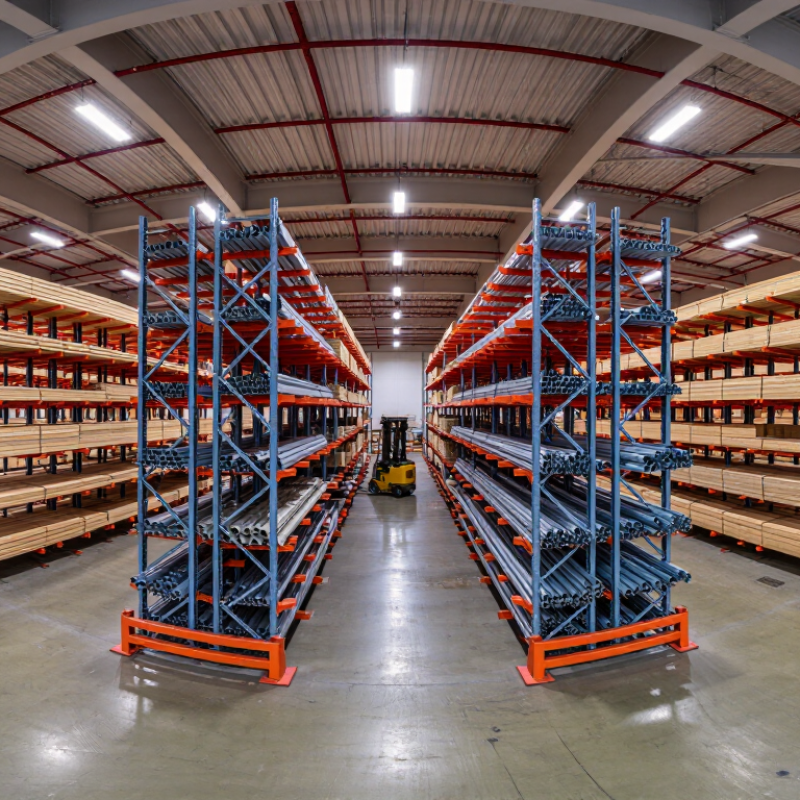
China Top 10 Heavy Duty Cantilever Racking System Suppliers

What Heavy-Duty Cantilever Racking Systems Are

Heavy-duty cantilever racking is a storage structure for long, bulky items that do not fit neatly on standard shelves. It uses vertical steel columns, projecting arms, base supports, and bracing to hold materials such as timber, steel sections, pipes, or large panels. With no front posts, forklifts can approach from the aisle and load goods along the rack’s full length.

The details matter. Arm length, column spacing, steel thickness, and rack height should match the goods’ size and weight. Loads are usually placed on both sides where the layout allows, helping balance the structure.

Still, uneven loading can create problems. A rack may look solid but be poorly suited to a particular bundle of steel. Not a small issue.

Before use, check the rated capacity, anchoring, floor condition, and any impact protection needed for the site. Keep heavier goods lower, and avoid placing loads beyond the arms’ limits.

That sounds straightforward. In practice, product dimensions vary, and real storage habits may not follow the original plan.

Regular inspections help identify bent arms, loose connections, or damaged bracing before they affect safe operation.

How China’s Cantilever Racking Industry Is Organized

China’s cantilever racking industry is organized around several connected roles, not one uniform supplier group. Steel producers and component workshops provide columns, arms, bases, and braces. System manufacturers turn these parts into storage layouts for long or bulky loads, such as timber packs, metal profiles, and pipes.

Some suppliers focus on engineering and fabrication. They assess load dimensions, aisle widths, floor conditions, and forklift access before specifying a rack. Others work mainly as regional distributors or project integrators, coordinating installation and site measurements. The boundaries can blur. A company may manufacture some components while sourcing others, so buyers should check what is made in-house.

Quality depends on more than steel thickness. Weld consistency, connection fit, finish, and clear load ratings all matter. Ask for drawings and capacity information that match the intended configuration, since changing arm spacing can affect performance. Details matter. Not every project needs a complex custom design, though standard layouts may not suit awkward materials. The industry is broad, and supplier descriptions alone do not always reveal who takes responsibility for engineering, delivery, and installation.

Criteria for Evaluating Chinese Racking Suppliers

When evaluating Chinese heavy-duty cantilever racking suppliers, look beyond catalog capacity figures. Ask for engineering drawings that show arm length, column spacing, bracing, base dimensions, and rated loads. A 2.4-meter arm carrying long steel sections behaves differently from one holding evenly stacked timber. Request load assumptions in writing, including how weight is distributed and how the rack is anchored to the floor. Small details matter.

Review material specifications and quality records, not just product photographs. Ask how steel grades are verified and how welds are inspected during production. Check coating thickness, sharp edges, and finish consistency on sample parts. A clean weld is useful evidence, but it does not replace documented inspection. Looks can mislead. If possible, arrange a factory audit or have an independent inspector review production samples.

Also assess communication and after-sales support. Can the supplier answer technical questions clearly, provide installation guidance, and supply replacement arms or braces later? Confirm production lead times, packaging methods, and how design changes are approved. Ask for references from projects with similar loads and operating conditions, then verify the details directly. Price still matters, but a low quote may omit anchors, installation support, or protective features. No checklist removes all risk; compare evidence carefully and record any unanswered questions before ordering.

Profiles of China’s Top 10 Heavy-Duty Cantilever Racking Suppliers

Profiles of China’s top ten heavy-duty cantilever racking suppliers should be judged by engineering depth, manufacturing control, and after-sales support—not catalogue size. Cantilever racks carry long goods such as steel tube, timber, and sheet material. A credible supplier should explain arm capacity, column loading, bracing, and floor anchoring in a project-specific layout. Ask for drawings and load calculations, not just a quoted capacity. ANSI MH16.3 offers a technical reference for the design, testing, and use of industrial steel cantilever racks. Local project requirements still need careful review.

The profiles should distinguish manufacturers with in-house forming and welding from firms focused on system integration. This matters when dimensions, finishes, or delivery schedules change. MHI’s 2024 Annual Industry Report found that 55% of surveyed supply-chain professionals planned to adopt robotics and automation within five years. That finding is not a racking-market forecast, but it highlights why suppliers increasingly need to consider clearances, handling equipment, and future automation. Small details count: a forklift aisle, a projecting arm, or an uneven floor can affect daily use. No rack is perfect. Compare references, inspection records, warranty terms, and spare-part availability, while treating promised lead times with healthy caution.

How to Compare Suppliers and Choose a Suitable System

When comparing heavy-duty cantilever racking suppliers, look beyond the quoted price. Fit matters more than a headline capacity. Share your longest, heaviest, and most awkward loads, such as bundled steel bars or timber packs. Ask for a layout showing arm spacing, upright height, aisle width, and floor anchoring. The design should match how your team handles stock, not just the warehouse dimensions.

Compare the technical details on equal terms. Check rated loads per arm and column, material specifications, finish, and the conditions behind each load rating. Request clear drawings and installation requirements, then confirm who provides inspection guidance and replacement parts. A tidy quotation is useful, but vague assumptions can cause trouble later. I would not treat the lowest offer as the best value without checking what it leaves out.

Tips: Send every supplier the same load list and site measurements. Include slab condition, forklift type, and expected growth. Ask for answers in writing. Short questions help. If one proposal uses different assumptions, request a revised comparison before deciding. It takes extra time, and I sometimes overlook small layout details; a second review can catch them.

crossmenu linkedin facebook pinterest youtube rss twitter instagram facebook-blank rss-blank linkedin-blank pinterest youtube twitter instagram