China Top 10 Mud Pump Piston Manufacturers
A Mud Pump Piston works under repeated pressure, abrasive drilling fluid, and changing operating conditions. Small differences in elastomer compound, bonding, and machining can affect service life. This guide introduces ten manufacturers and compares the details buyers can verify: material options, dimensional consistency, operating limits, quality controls, and technical support. A product page may look convincing. Field performance is harder to judge.
Quality-management expert W. Edwards Deming is widely quoted: “Quality comes not from inspection, but from improvement of the production process.” That principle offers a useful lens for evaluating piston manufacturers, even though it is not a mud-pump-specific quotation. Look for evidence of controlled production, traceable materials, and clear inspection procedures—not just polished catalogs. Ask how the piston handles the fluid and temperature range you actually use. Request dimensional data, compatibility guidance, and practical service recommendations. Details matter. A low price can be attractive, but replacement frequency and downtime change the calculation. No list can settle every buyer’s needs; manufacturer claims also deserve independent checking. The comparison that follows aims to make those trade-offs easier to see, while recognizing that local operating conditions can change the result.
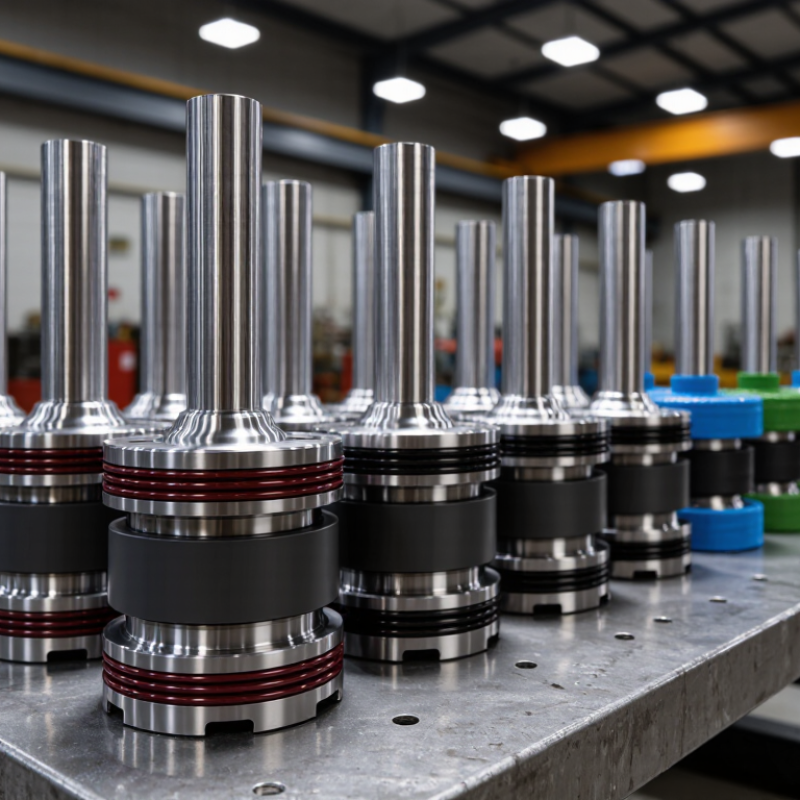
Mud Pump Pistons and China’s Manufacturing Landscape
China Top 10 Mud Pump Piston Manufacturers
Mud Pump Pistons and China’s Manufacturing Landscape
China’s manufacturing base gives mud pump piston buyers access to extensive machining, molding, and materials networks. The National Bureau of Statistics reported that manufacturing value added grew 5.0% in 2023; equipment manufacturing grew 6.8%. These figures describe industrial activity, not piston quality. Buyers still need evidence from each supplier. A piston’s service life depends on elastomer formulation, bonding, dimensional accuracy, and compatibility with drilling fluid. Small defects matter. A rough sealing surface or uneven rubber bond can accelerate wear under repeated pressure cycles.
When assessing manufacturers, request material specifications, inspection records, and batch traceability. Ask how samples are tested for hardness, adhesion, and dimensional consistency. Compare these results with your pump model and operating conditions, rather than relying on a general product label. China’s broad supplier ecosystem can support varied specifications, but production capacity alone does not prove reliable field performance. Some sourcing decisions still lean too heavily on price. That deserves a second look.
Tips: Send a worn piston and operating details for fit assessment. Confirm the elastomer suits the fluid and temperature range, and request a written test report for the production batch.
How the Top 10 Manufacturers Are Evaluated
Evaluating mud pump piston manufacturers starts with operating conditions, not catalog claims. Review the expected pressure, fluid composition, temperature, and duty cycle. A piston used with abrasive drilling fluid faces different wear demands than one used in a less demanding application. Fit matters, too. Check dimensions, sealing design, and compatibility with the pump’s liner and fluid end.
Material quality should be supported by clear specifications and repeatable inspection procedures. Ask how manufacturers control rubber or elastomer consistency, bonding, and finished dimensions. Test records, traceable batches, and defined acceptance criteria offer more useful evidence than broad claims of durability. Look for practical details, such as how samples perform after sustained cycling or exposure to representative fluids. Those details can be hard to compare.
A fair scorecard can also examine delivery consistency, technical support, customization options, and warranty terms. Give greater weight to performance evidence and quality controls than to price alone. Request comparable data from each supplier, and note where information is missing. No ranking method is perfect. Test results may not reflect every field condition, and published service life can depend heavily on installation and maintenance. A careful evaluation makes these limits visible rather than hiding them.
Product Materials, Designs, and Performance Compared
Mud pump pistons differ most in elastomer compound, bonding method, and sealing geometry. Polyurethane can resist abrasion from solids, while nitrile rubber may suit some oil-based fluids. Neither material wins in every well condition. Fluid chemistry, temperature, pressure, and operating speed all change the result. Check the manufacturer’s compatibility data rather than relying on material names alone.
Design matters just as much. A molded piston with a reinforced metal core can hold its shape under repeated pressure cycles. Replaceable rubber elements may simplify field service, but poor fit can cause uneven wear. Look for clear specifications on dimensions, hardness, working temperature, and pressure rating. Small details matter. In practical comparisons, inspect worn pistons for heat cracking, edge damage, and leaks; these clues often reveal more than a headline runtime figure. Test data is useful, though conditions may not match your rig exactly. The comparison is rarely perfectly clean, and that uncertainty deserves attention. A piston that lasts longer in one mud system may perform differently with another fluid or liner.
Key Factors for Selecting a Chinese Mud Pump Piston Supplier
A dependable mud pump piston supplier should prove material consistency, dimensional control, and performance under abrasive drilling conditions. Grand View Research estimated the global oilfield equipment market at USD 115.4 billion in 2023, reflecting a broad, competitive supply chain. That figure covers much more than pistons, so it cannot confirm any supplier’s product quality. Ask for test records tied to the exact piston model and elastomer compound.
Check whether the supplier documents piston diameter, bonding quality, hardness, and batch traceability. Request operating limits for temperature, pressure, and drilling-fluid chemistry. API Spec 7K offers a relevant framework for drilling and well-servicing equipment; ask suppliers how their quality procedures align with applicable requirements.
Test it in mud. A controlled field or laboratory trial can reveal wear, swelling, and leakage that a brochure may miss.
Delivery capability matters too. Confirm production lead times, replacement availability, packaging, and how defects are handled. Ask for recent inspection reports and a sample certificate of analysis, then compare these against your own acceptance criteria. A spreadsheet can look convincing; it cannot prove service life. I would also check whether quoted wear-life figures come from comparable mud and operating conditions, because supplier claims are not always directly comparable.