A Car Garage Lift is more than a way to raise a vehicle. It determines how safely technicians work, how easily they reach underbody components, and how much usable floor space remains. The U.S. Bureau of Labor Statistics projects 4% employment growth for automotive service technicians and mechanics from 2023 to 2033. That steady demand makes workshop equipment choices worth careful thought, even in a small home garage.
ALI, the Automotive Lift Institute, advises buyers to check lift certification and arrange regular inspections by qualified professionals. R.W. “Rusty” Lind, identified by ALI as its executive director, has emphasized lift safety. A fair paraphrase of his guidance is: “Choose a properly certified lift, and keep its inspection history current.” Verify the current guidance with ALI before purchasing. Certification is not a decorative label.
Start with the vehicles you actually service. Measure their weight, wheelbase, roof height, and clearance beneath the chassis. A low-ceiling garage may suit a different lift than a tall workshop with room for a full-rise model. Think about the floor, too: concrete thickness and condition matter. That detail is easy to miss. A capacity rating alone cannot tell you whether a lift fits your space, workflow, or maintenance habits. And a rushed choice can leave a bulky machine blocking the toolbox. The sections ahead compare lift types, capacity, installation needs, safety features, and ownership costs, so you can choose equipment that fits the job—not just the brochure.
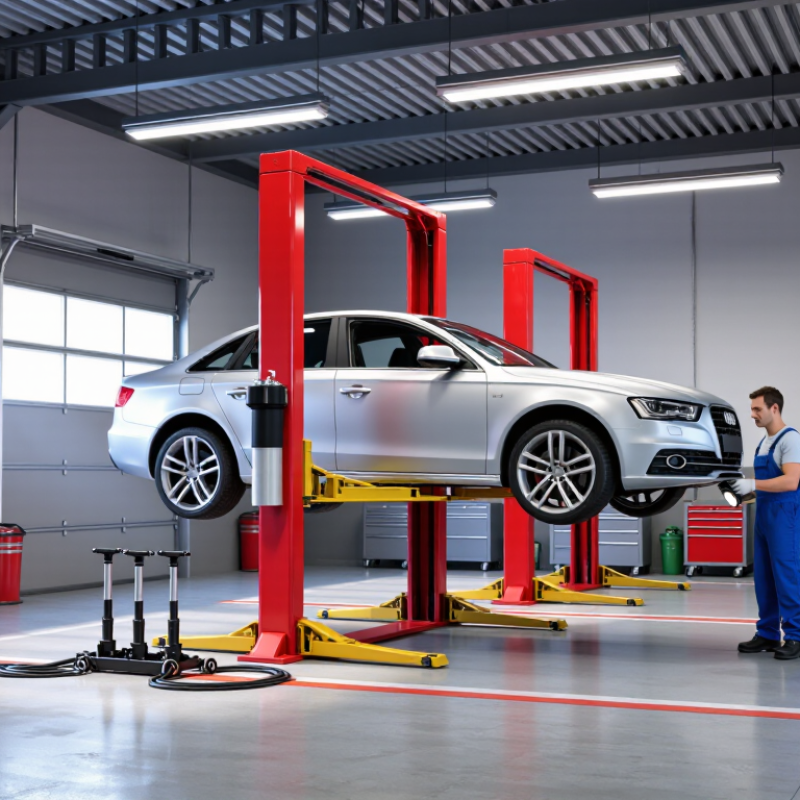
Choosing a garage lift starts with the work you do, not the tallest vehicle it can raise. A two-post lift uses paired arms and hydraulic cylinders to lift a vehicle by approved frame or body points. It leaves the wheels hanging, which helps with brake, tire, and suspension work. The arms must be positioned carefully. A small placement error can make a vehicle unstable.
A four-post lift supports the tires on long runways. Hydraulic power raises the platforms, while mechanical locks hold them at working height. It suits storage and underbody inspections, though wheel service may require extra equipment. That matters. Scissor lifts use crossed metal arms that open as a hydraulic ram pushes upward. Some models sit low and save space, but their central platforms can limit access beneath the vehicle.
Portable column lifts raise each wheel with a separate column. They can accommodate different vehicle widths, but setup takes room and careful alignment. Before choosing, check rated capacity, ceiling clearance, floor condition, and lock design. Match the lift to the vehicle’s weight and lifting points, then follow its installation and operating instructions. A lift that fits the room may still be awkward for daily work; that trade-off deserves an honest look. Extension adapters and low-clearance ramps can also change how easily a vehicle sits on the lift.

How to Choose the Right Car Garage Lift?
Assessing Your Vehicles and Garage Space
Start with the vehicles you actually own, not the largest one you might buy someday. Check each vehicle’s weight, wheelbase, ground clearance, and recommended lifting points. These details affect lift compatibility and how much room you need to work safely. A low sports car may need different access than a tall SUV. Leave space for doors, tools, and walking around the vehicle. Measure twice. It is easy to overlook a ceiling beam or a garage door track until installation day.
Tips: Measure ceiling height, floor width, and vehicle length. Check the lift’s stated capacity and required floor conditions. Ask a qualified installer to assess your concrete slab; its condition and thickness matter.
Think about how you will use the garage. A two-post lift can allow access beneath a vehicle, while a four-post design may suit parking or storage needs. Each setup has different space and access requirements. Mark the lift’s footprint on the floor with tape, then test where your car’s tires and doors will sit. This simple step can reveal awkward clearances. It may feel fussy, but guessing is worse. Before buying, confirm the lift fits your vehicles, available space, and planned use with the manufacturer’s specifications and a qualified professional.
| Lift Type | Typical Capacity Range | Approximate Space to Plan For | Best Suited To | Space and Vehicle Checks |
|---|---|---|---|---|
| Two-post lift | About 9,000–12,000 lb (4,100–5,440 kg) | Often planned around a 12 × 24 ft (3.7 × 7.3 m) bay; roughly 11–12 ft (3.4–3.7 m) of ceiling height is common. | Routine service and underbody access for cars, crossovers, and many light trucks. | Check arm reach, vehicle lifting-point locations, door clearance, ceiling obstructions, and the required concrete slab specifications. |
| Four-post lift | About 8,000–12,000 lb (3,630–5,440 kg) | The lift itself may occupy approximately 10 × 20 ft (3.0 × 6.1 m); allow extra room for driving on and off. Stacking vehicles commonly requires about 12–14 ft (3.7–4.3 m) of clear height. | Vehicle storage, inspections, and jobs where drive-on runways are convenient. | Measure both vehicles’ heights and the lift’s runway and post height. Confirm that the upper vehicle will clear the ceiling, lights, and door tracks. |
| Mid-rise scissor lift | About 6,000–9,000 lb (2,720–4,080 kg) | Many models need roughly 8–10 ft (2.4–3.0 m) of ceiling height; the footprint varies by model. | Maintenance work in lower-ceiling garages where full-height lifting is not essential. | Check platform width and length against the vehicle’s wheelbase and track width. Confirm that the lift leaves enough room to work around the vehicle. |
| Portable low-rise lift | About 6,000–10,000 lb (2,720–4,540 kg) | Usually has a compact floor footprint and requires less overhead clearance than a full-height lift; exact height depends on the model. | Wheel, brake, and general service work when portability or storage is important. | Check minimum and maximum lifting heights, pad or platform position, vehicle ground clearance, and where the lift will be stored when not in use. |
| Vehicle and Garage Assessment | ||||
| Vehicle weight | Use the vehicle’s specifications and the lift maker’s instructions; do not choose capacity based on appearance alone. | Confirm that the lift’s rated capacity and permitted load distribution suit every vehicle you plan to lift. Check the vehicle’s approved lifting points and weight balance. | ||
| Vehicle dimensions | Record overall length, width, wheelbase, track width, height, and ground clearance for each vehicle. | Compare these measurements with the lift’s arm reach or runway dimensions, approach area, door openings, and available working space. | ||
| Ceiling clearance | Measure the lowest fixed obstruction—not just the ceiling—such as a beam, light, fan, or garage-door track. | For an elevated vehicle, allow for vehicle height plus the lift’s raised height and safe overhead clearance. For storage, include the height of both vehicles and the lift structure. | ||
| Floor and installation | Concrete requirements vary by lift design, capacity, and installation conditions. | Verify slab thickness, strength, condition, anchor requirements, and any restrictions in the lift’s installation manual. Have the site assessed if the slab details are unknown. | ||
Planning note: Dimensions and capacity ranges above are general estimates, not universal specifications. Before purchase or installation, compare your measurements with the lift’s current installation manual and confirm local building and safety requirements.
How to Choose the Right Car Garage Lift?
Lift capacity should comfortably exceed the heaviest vehicle you expect to raise, including tools, cargo, and accessories. Do not rely only on a vehicle’s curb weight; check its specified gross weight and the lift’s load rating. A little margin helps. Still, higher capacity does not compensate for poor positioning. The vehicle must sit on the lift points recommended by its manufacturer, with the load distributed as intended. That detail is easy to overlook.
Measure your garage before comparing lift heights. Check ceiling clearance, door tracks, lights, and the vehicle’s height when raised. A lift that fits on paper may leave too little room to work beneath a tall van. Consider your own tasks, too: changing tires needs less vertical clearance than standing comfortably beneath a vehicle. Measure twice. It sounds obvious, but people miss the door hardware.
Safety features deserve the same attention as capacity. Look for clearly engaging mechanical locks, stable contact pads, and accessible lowering controls. Read the installation and operating instructions, and confirm that the floor meets the lift’s requirements. Inspect cables, hoses, arms, and locks regularly; wear can be hard to spot in a dim garage. I might be tempted to choose the tallest model, but useful clearance and safe setup matter more than an impressive maximum height.
Before choosing a car garage lift, check the installation space as carefully as the lift’s rated capacity. Measure the tallest vehicle, ceiling height, door tracks, and clearance around open doors. Compare these figures with the lift’s installation drawings, not just its product dimensions. The concrete slab matters too: thickness, condition, and reinforcement can affect whether a particular model is suitable. Ask a qualified installer to assess the site and confirm anchoring and electrical requirements. Small details count.
Operating costs extend beyond the purchase price. Include installation, electrical work, scheduled inspections, lubrication, replacement parts, and any downtime if the lift needs repair. Electricity use may be modest, but frequent use and poor maintenance can change the total. Request a written service schedule and price estimate, then compare costs over several years. A monthly checklist can help staff spot unusual noises, leaks, or uneven movement early. Don’t assume every garage has the same needs; a low ceiling or older floor may require a different setup. Budgeting is rarely exact. Leave room for surprises.
Choosing a lift starts with the work, not the price tag. S&P Global Mobility reported that the average U.S. light vehicle age reached 12.6 years in 2024, keeping repair and maintenance needs in focus. For frequent underbody repairs, a two-post lift gives open access and uses less floor space. It suits a busy shop, but requires careful vehicle positioning and a suitable concrete slab. Check ceiling height, lift capacity, and the manufacturer’s installation requirements before buying.
A four-post lift is often more practical for storage, tire work, and occasional maintenance. Its runways support the vehicle, and optional rolling jacks can lift the wheels. It costs more and occupies more floor area, so measure around the parked vehicle, not just the empty bay. A portable scissor lift can fit a lower-ceiling garage, though its central platform may obstruct some underbody tasks. Not every garage needs one.
Budget for installation, inspections, and accessories, not only the lift itself. NADA’s dealership data shows that service and parts generate nearly half of dealership gross profit, underscoring why professional shops value reliable equipment. A home user may rarely recover that investment. I would not assume the cheapest option is the best value; that is an easy mistake. Compare certified lift models, floor specifications, warranty terms, and the work you actually expect to do.