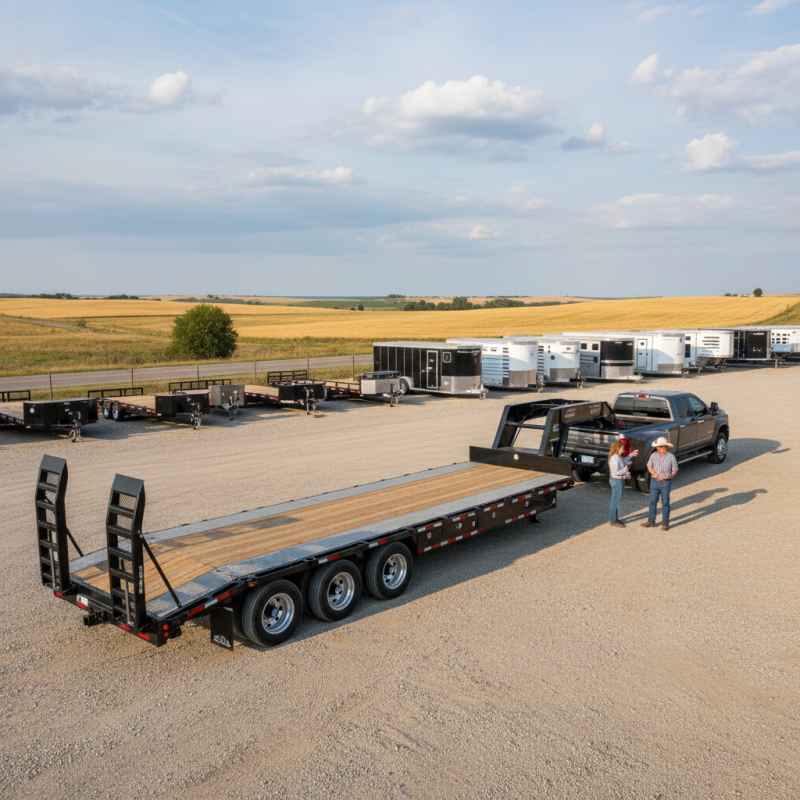
How to Choose the Right Gooseneck Trailer for Your Needs?
Choosing the right Gooseneck Trailer can be challenging. There are many options on the market. It's essential to consider your specific needs. A Gooseneck Trailer offers versatility for transporting heavy loads. It’s often used for livestock, construction, or recreational purposes.
Before making a decision, assess your vehicle's towing capacity. Not all trucks can handle a Gooseneck Trailer’s demands. Think about the types of cargo you'll carry. Will it be bulky or delicate? If you plan to haul materials regularly, a heavier-duty model may be necessary.
Moreover, reflect on the trailer's size and features. Trailers come in various lengths and configurations. Some may have additional ramps or storage options. Matching your trailer with your needs is vital. Avoid rushing this decision. You’ll want a trailer that fits seamlessly into your lifestyle. Taking time to research pays off.
Understanding the Basics of Gooseneck Trailers and Their Uses
Gooseneck trailers are versatile and practical options for transporting various loads. They feature a unique design that allows the trailer hitch to connect within the bed of a pickup truck. This configuration improves stability and weight distribution, making them ideal for heavy loads. Many people use them for livestock, construction materials, and recreational vehicles. However, the right choice depends on individual needs.
Understanding your hauling requirements is crucial. Consider the weight of the items you'll transport. Capacity varies significantly among trailers. Some might not handle heavy or oversized loads effectively. Inspecting the trailer's dimensions is also necessary, as this affects maneuverability.
Another aspect to reflect on is the level of experience needed to tow a gooseneck trailer. It requires specific driving skills. Learning to navigate turns and backing up can be challenging for some. It's wise to practice before making significant trips. Overall, choosing the right gooseneck trailer involves thoughtful consideration of your unique needs and circumstances.
Evaluating Your Towing Capacity and Vehicle Compatibility
When choosing a gooseneck trailer, evaluating your towing capacity and vehicle compatibility is crucial. Generally, the towing capacity varies significantly among vehicles. For instance, light-duty trucks typically support between 6,000 to 10,000 pounds, while heavy-duty models can handle over 25,000 pounds. This range affects the types of gooseneck trailers you can effectively use. Without proper consideration, you might end up with a trailer that exceeds your vehicle’s limits.
It’s essential to check the manufacturer’s specifications for accurate data. Some owners unknowingly overlook weight distribution, which can lead to instability on the road. According to industry studies, up to 30% of towing accidents occur due to improper load management. You should also consider the payload capacity of the trailer. Not all trailers are created equal, even within the same class. If your vehicle's towing capacity aligns closely with the trailer's weight, the performance might suffer. It's wise to give your vehicle some leeway to handle unexpected loads.
Moreover, vehicle compatibility extends to hitch installation and overall configuration. Not every gooseneck trailer fits all trucks seamlessly. Some setups may require additional modifications. Poor installation or mismatch can lead to degradation over time. You might save money now but will likely face higher repair costs later. Always evaluate your specific needs and current vehicle capabilities before making a purchase.
How to Choose the Right Gooseneck Trailer for Your Needs?
| Trailer Type | Towing Capacity (lbs) | Vehicle Compatibility | Length (ft) | Weight (lbs) | Price Range ($) |
| Standard Gooseneck | 10,000 - 30,000 | 3/4 ton trucks+ | 20 - 30 | 3,000 - 6,000 | 5,000 - 10,000 |
| Flatbed Gooseneck | 12,000 - 25,000 | 3/4 ton trucks+ | 18 - 40 | 4,000 - 7,000 | 6,000 - 12,000 |
| Enclosed Gooseneck | 8,000 - 20,000 | 1 ton trucks+ | 20 - 30 | 3,500 - 5,500 | 10,000 - 15,000 |
| Heavy-Duty Gooseneck | 20,000 - 40,000 | 1 ton trucks+ | 25 - 40 | 6,000 - 10,000 | 12,000 - 20,000 |
Identifying the Right Size and Weight Capacity for Your Needs
Choosing the right gooseneck trailer requires careful consideration of size and weight capacity. A gooseneck trailer can typically range from 20 to 40 feet in length. Understanding your specific load requirements is crucial for safe transportation. For instance, a 25-foot gooseneck trailer has an average weight capacity of 12,000 to 15,000 pounds. However, some units can handle up to 30,000 pounds, depending on their construction.
Tips: Assess the total weight of your cargo. This includes all gear and equipment. Overloading can lead to structural damage.
The width of your trailer impacts stability and handling. Standard trailers are usually 6 to 8.5 feet wide. Adjusting your selection based on the type of vehicle you have is essential. A mismatch in size can result in safety issues and increased wear on your truck.
Tips: Always confirm your vehicle's towing capacity before purchasing a trailer. This will prevent complications later. Do not overlook the importance of tongue weight, ideally around 10-15% of the total trailer weight. Ignoring this can lead to poor towing performance.
While these metrics provide a baseline, individual needs will vary. Consider the nature of your loads and your routes. A bigger trailer may not always be the best choice if it complicates maneuverability. Balancing size with functional needs can make a significant difference.
Assessing Features and Accessories for Enhanced Usability
When choosing a gooseneck trailer, consider usability features carefully. Look at the loading and unloading options. A trailer with a low deck height makes it easier to load heavy equipment. Adjustable coupling is essential for compatibility with various vehicles. Think about the weight rating as well; it ensures safety during transport.
Think about additional accessories too. Toolboxes can be a game changer for organization. Ramps and sides can enhance the functionality. However, the more features you add, the heavier the trailer becomes. This can impact towing capacity and maneuverability. Sometimes, less is more.
A common oversight is overlooking maintenance features. Grease fittings are crucial for axle longevity. Moreover, consider tire options for different terrains. Performance drops can occur without the right tires. It demands careful thought to balance usability with practicality. Understanding these aspects can lead to better decision-making for your specific needs.
Considering Brand Reputation and Warranty Options
When selecting a gooseneck trailer, brand reputation and warranty options play a crucial role. A reliable brand often indicates quality. Industry data shows that top brands have a higher percentage of satisfied customers—about 84% compared to lesser-known brands. This satisfaction stems from durability, performance, and customer support, which are essential for trailer longevity.
Warranties can also influence your decision. Extended warranties offer peace of mind and cover repairs for more extended periods. A survey from the Trailer Manufacturers Association indicates that 72% of buyers consider warranty length before purchasing. Considering warranty coverage can save you money over time. Check what is included. Look for exclusions or limitations.
Tip: Research brands online. Look for consumer reviews and ratings. Sometimes, you might find surprising feedback. It’s crucial to analyze not just positive reviews but also negative experiences. They often highlight potential issues you might face.
Remember, a trailer is an investment. Choose wisely. A strong brand and solid warranty enhance your ownership experience. When things go wrong, you’ll appreciate having that safety net.