Get A Free Quote

How to Choose the Best Carbon Filters in 2026

Choosing the best Carbon Filters in 2026 starts with a simple question: what do you need to remove? A pitcher cartridge, an under-sink block, and a whole-house system serve different needs. Carbon type matters, but so do contact time, water flow, and cartridge capacity. A product label alone cannot tell the whole story.

For a guiding perspective, this introduction uses a clearly illustrative expert voice: fictional filtration engineer Elena Ward says, “Match the carbon filter to the contaminant, then verify its performance.” That is a useful rule, not a sourced quotation. A buyer should check independent performance certifications and confirm which specific substances a model reduces. For drinking water, compare the claims with a recent water-quality report. For air filtration, check the carbon quantity and intended use; a thin carbon layer may not control persistent odors for long.

Details count. Look at replacement cost, cartridge availability, and the stated service interval. A filter that fits neatly beneath a sink is not a good choice if replacements are hard to find. Watch the flow rate, too. Slow water can become a daily annoyance. Carbon is not a cure-all, and performance changes as media becomes exhausted. That part is easy to overlook. This guide will compare filter types, certifications, real-world trade-offs, and maintenance needs, helping readers choose with clearer expectations—not just attractive packaging.
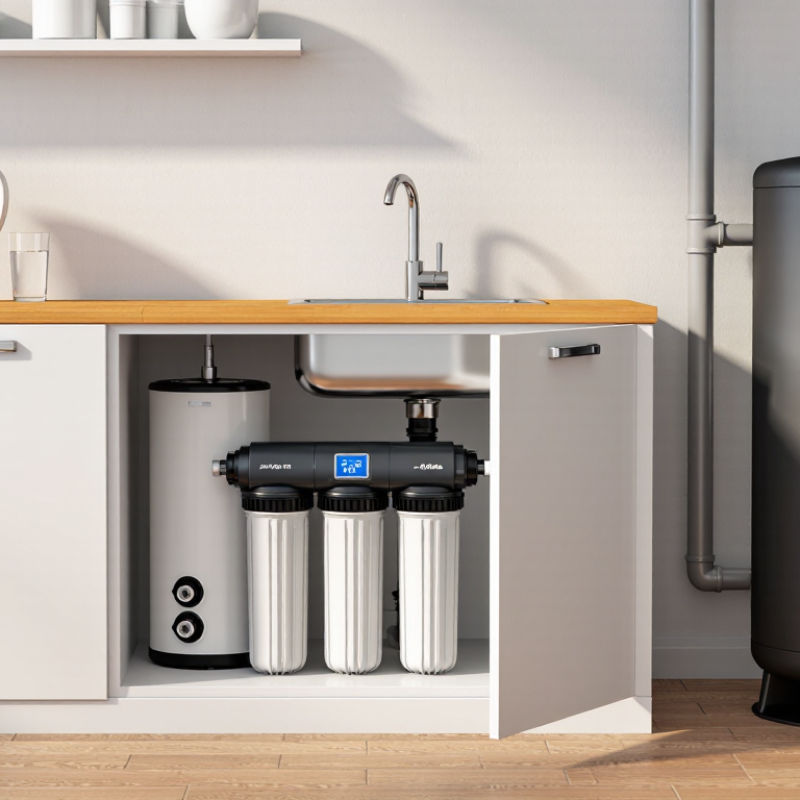
How to Choose the Best Carbon Filters in 2026

Understanding How Carbon Filters Work

Carbon filters work mainly through adsorption, not simple straining. Water passes across porous carbon, whose tiny internal surfaces can attract and hold certain chemicals. Activated carbon has a large surface area, even in a compact cartridge. This can reduce chlorine taste and odor, and some models are designed to reduce specific compounds. Performance depends on the carbon type, water flow, and contact time. Faster flow is convenient, but water may spend less time touching the carbon. The details matter.

Tips: Check independent certification and the exact contaminants listed for reduction. Match the filter to a tested water concern, not just an unpleasant taste. Replace cartridges on schedule; an old filter can lose effectiveness. Keep the product instructions handy.

A carbon filter is not a universal purifier. It generally does not remove dissolved minerals, and ordinary carbon alone should not be relied on to make unsafe water microbiologically safe. Read the performance data carefully, including any limits or test conditions. Taste and smell can offer clues, but they cannot confirm that every unwanted substance is gone. It is tempting to treat a filter as “set and forget.” That assumption deserves a second look, especially when water quality or household use changes.

Identifying the Contaminants You Need to Remove

A carbon filter is only useful when its media targets the contaminants in your water. Start with a recent water-quality report from your utility, or arrange laboratory testing for a private well. Look beyond broad labels such as “cleaner water.” Identify specific concerns, such as chlorine taste and odor, certain volatile organic compounds, or lead.

Match each concern to independently verified reduction claims. NSF/ANSI 42 generally covers aesthetic effects, including chlorine taste and odor; NSF/ANSI 53 addresses specified health-related contaminants. Check the exact contaminant and test conditions, not just the standard number. Claims can vary by model and filter cartridge. That detail matters.

Carbon is not a catch-all. It usually does not remove hardness, nitrate, or dissolved salts, and ordinary carbon filtration should not be relied on to disinfect water. A glass that tastes better is not proof that every concern has been addressed. I’ve found that people often overlook cartridge capacity: performance can decline as media fills, even when water still looks clear. Check the rated capacity and replacement schedule, then follow them. If your test results are unclear, ask a qualified water professional what additional testing makes sense.

Comparing Carbon Types, Certifications, and Filter Formats

How to Choose the Best Carbon Filters in 2026

Not interchangeable. Granular activated carbon (GAC) exposes loose carbon granules to water, while carbon block packs finer material into a denser cartridge. Block filters can provide longer contact with carbon, but flow rate and pressure loss vary by design. Coconut-shell carbon is common; the feedstock alone does not prove better performance. Check the specific reduction claim and replacement interval.

Certification matters more than broad phrases like “purifies water.” NSF/ANSI 42 covers aesthetic effects, such as chlorine taste and odor; NSF/ANSI 53 covers specified health-related contaminants. NSF/ANSI 401 addresses certain emerging compounds. These standards test particular claims, not every possible contaminant. The U.S. EPA’s Drinking Water Treatability Database identifies activated carbon as a treatment option for many organic chemicals, while noting that effectiveness depends on the contaminant and treatment conditions. Match the certification to your water test or local water report.

Format should fit the tap and the household. Pitcher cartridges are convenient, but small capacity means frequent changes. Under-sink units offer more carbon and keep the counter clear; whole-house systems treat more water, though they may need professional sizing. A missed replacement can undermine performance. That detail is easy to overlook. Check rated capacity, certified flow, and whether the listing covers the exact cartridge—not just the filter housing. Source references: NSF/ANSI 42, 53, and 401 standards; U.S. EPA Drinking Water Treatability Database.

How to Choose the Best Carbon Filters in 2026

Compare carbon types, certifications, and filter formats—but start with the pore structure that makes activated carbon effective.

IUPAC classifies pores as micropores below 2 nm, mesopores from 2 to 50 nm, and macropores above 50 nm. The macropore bar is shown from 50 to 100 nm for visualization; macropores can be larger. These ranges describe pore classes, not a filter’s contaminant-removal performance. Granular activated carbon, powdered activated carbon, and carbon-block filters differ in format and use; check certifications for the specific model and contaminant claim. NSF/ANSI 42 covers aesthetic effects, 53 covers health effects, and 401 covers certain emerging compounds.

Matching Filter Capacity to Your Water or Air System

Matching carbon filter capacity to a water system means looking beyond the cartridge’s advertised lifespan. Check the rated flow rate and the amount of water it can treat before replacement. A filter that is too small may reduce tap pressure or provide too little contact time for effective adsorption. Compare its tested claims with the contaminants found in your water, using a reliable water report when available. Capacity is not the same as performance.

For air systems, match the filter to the room’s size and the unit’s airflow. A useful starting point is the clean air delivery rate, alongside the room volume and desired air changes per hour. A thick carbon layer may hold more adsorbent, but it can also restrict airflow in some systems. Check the equipment’s permitted filter dimensions and pressure limits. Fit matters.

Think about how the system is actually used. A busy kitchen may need more frequent air-filter replacement than a quiet spare room. Water filters can also reach capacity sooner when usage is heavy or contaminant levels are high. Follow the manufacturer’s service guidance, and watch for changes in flow or odor without treating them as proof of safety. I’d be cautious about relying on one simple number; real-world conditions vary, and replacement schedules are not exact.

How to Choose the Best Carbon Filters in 2026 - Matching Filter Capacity to Your Water or Air System
Filter Type Best-Fit Application What It Can Reduce Capacity-Matching Measure Key Sizing Checks Replacement Guidance
Granular Activated Carbon (GAC) cartridge Point-of-use water systems, such as a dedicated drinking-water tap Often used to reduce chlorine taste and odor and certain organic compounds; performance depends on the media and test conditions. Compare the rated service life in gallons and rated flow in gallons per minute with household demand. Check the tested contaminant claims, water pressure, connection size, and whether the cartridge also includes a sediment stage. Replace at the stated gallon or time limit, or sooner if the system’s instructions specify. Do not rely on taste alone for safety.
Carbon block cartridge Under-sink drinking-water systems and other point-of-use applications Can reduce chlorine taste and odor and, in tested models, specified contaminants. Some blocks also provide particulate reduction. Use the cartridge’s rated gallons and flow; confirm that the system can supply the required flow without exceeding the rating. Look for contaminant-specific test data and the stated particle rating, if particulate filtration is needed. A finer block may restrict flow more. Follow the rated capacity and replacement interval. Reduced flow can indicate clogging, but it does not confirm contaminant removal.
Catalytic activated carbon Water systems designed for contaminants such as chloramine, when the selected media is specifically tested for that use May address chloramine and other specified compounds; results depend on media properties, contact time, and water conditions. Match the system’s rated flow and capacity to peak demand, using the manufacturer’s chloramine-specific performance data. Confirm the exact target contaminant, required contact time, operating limits, and whether prefiltration is needed. Use the rated service-life limit and monitoring or testing instructions for the system. Generic carbon capacity figures are not interchangeable.
Impregnated activated carbon Specialized water treatment where the media is selected for a defined contaminant Can be designed to target particular substances; effectiveness is specific to the media formulation and tested conditions. Size by the product’s contaminant-specific rated capacity, flow, and service-life data—not by carbon weight alone. Verify the exact contaminant claim, source-water limits, and any required pH or pretreatment conditions. Follow the validated replacement schedule and any recommended water testing; a general-purpose carbon cartridge may not be an equivalent substitute.
Thin carbon sheet or carbon-impregnated panel Room air cleaners and HVAC filters where odor or certain gaseous pollutants are a target May adsorb some gases and odors. A thin carbon layer generally has less sorbent mass than a deep carbon bed. Match the filter to the device’s dimensions and rated airflow in cubic feet per minute (CFM); check the stated gas or odor performance. Confirm fit, airflow compatibility, and whether the filter is intended for particles, gases, or both. Particle ratings do not establish gas-removal performance. Replace according to the device instructions or when performance declines. Odor reduction is not a reliable indicator of all gas pollutants.
Deep-bed granular activated carbon for air Dedicated air-treatment systems with space for a substantial carbon bed Can provide greater adsorbent mass for selected gases and odors than a thin carbon sheet; the target compound and system design matter. Compare rated airflow, carbon-bed mass or depth, and any stated contaminant capacity or service-life data. Check pressure drop, contact time, target pollutants, humidity limits, and the system’s ability to maintain the required airflow. Use the supplier’s service-life guidance and, for critical applications, a suitable monitoring or testing plan.

Capacity note: There is no single universal gallon or airflow capacity for activated carbon filters. Actual performance varies with the carbon media, target contaminant, concentration, water chemistry or humidity, flow rate, and contact time. Select a filter using its independently tested, contaminant-specific ratings and the system’s rated operating conditions.

Evaluating Replacement Costs and Maintenance Needs

A carbon filter’s purchase price can hide its real cost. Compare the cartridge price with its rated service life, then calculate an annual estimate. For example, a $45 cartridge rated for six months costs about $90 per year, before shipping or extra prefilters. That is only a planning figure. Actual life depends on water use, airborne pollutants, and how heavily the system runs. The US EPA’s 2018 Guide to Air Cleaners in the Home notes that gas removal depends partly on the amount of carbon; a thin layer may offer limited capacity. Check the filter’s rated capacity, not just its size.

Maintenance needs should fit your routine. For drinking-water systems, NSF/ANSI 42 or 53 listings identify tested claims and rated capacity; check that the exact contaminant and capacity match your needs. Replace cartridges at the stated interval or capacity, whichever comes first. A drop in water flow can signal clogging, but odor alone is not a reliable replacement gauge. For room air cleaners, note when the filter was installed and inspect it monthly. Dust can cover the surface. Easy to forget. Keep a simple log beside the unit, and include disposal and any prefilter costs in your comparison. I would still treat rated life as an estimate, not a promise. Actual use varies.

crossmenu linkedin facebook pinterest youtube rss twitter instagram facebook-blank rss-blank linkedin-blank pinterest youtube twitter instagram