Get A Free Quote

How to Choose the Best Parchment Paper Roll in 2026?

Choosing the best Parchment Paper Roll in 2026 is less about finding a flashy label and more about matching the paper to your kitchen. A baker lining a wide sheet pan needs different coverage from someone wrapping a few cookies or roasting vegetables. Width, roll length, and easy-to-tear packaging can make a real difference during a busy cooking session. Small details matter.

Start by checking the product’s stated temperature limit and intended uses. Parchment paper is not interchangeable with wax paper, and its coating and heat guidance can vary by product. Follow the package directions, especially when using it in an oven or air fryer. Never assume it is suitable for direct contact with a heating element. That detail is easy to miss.

Compare the usable length, not just the price on the shelf. A sturdy cutter can help produce clean sheets, while a compact box may store better in a crowded drawer. If you bake often, consider whether the roll fits your usual pans without excessive trimming. For occasional use, a shorter roll may be less wasteful. There is no single best choice for every cook, and product descriptions do not always make comparisons simple. A little skepticism helps. This guide will explain the features worth checking, how to judge everyday convenience, and which trade-offs deserve attention before you buy.
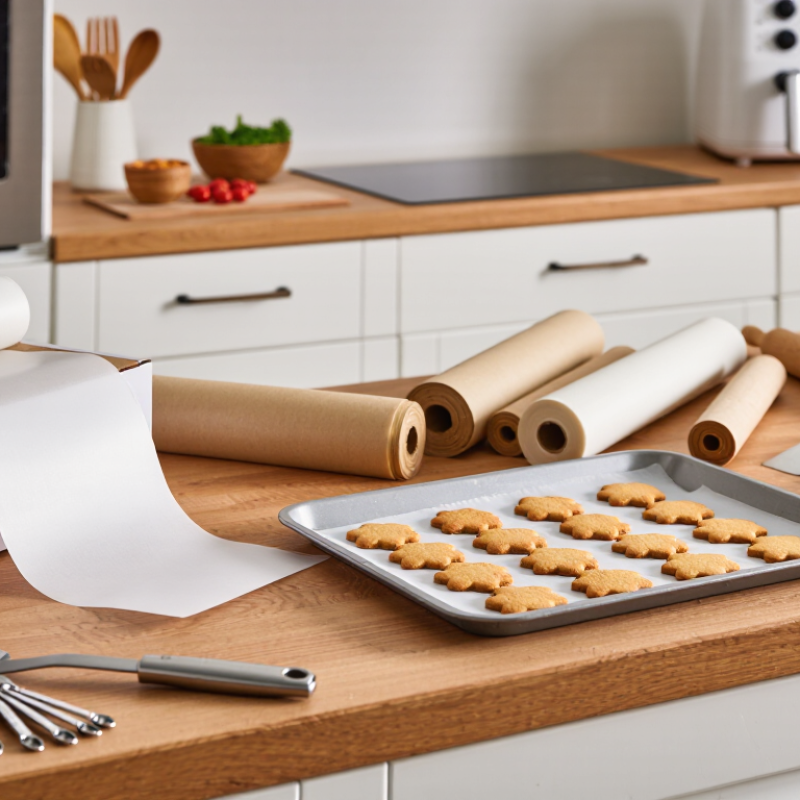
How to Choose the Best Parchment Paper Roll in 2026?

Understanding Parchment Paper Roll Materials and Key Specifications

Parchment paper is usually made from cellulose paper treated with a thin silicone coating, which helps food release and resists grease. Check the material description rather than relying on a “nonstick” label alone. Some rolls are bleached and bright white; others are unbleached and brown. Color does not tell you how strong or heat-resistant the paper is.

Look for a clearly stated maximum oven temperature and follow it, especially when baking near exposed heating elements. The rating is a limit, not a target. Check the roll’s width and length against your pans and storage space; a wider sheet can cover a roasting tray with fewer seams. Paper weight or thickness may also be listed, but measurement conventions vary, so compare products cautiously.

That detail is easy to miss.

Silicone coating may be applied to one or both sides, so check the package if the distinction matters for your recipe. Confirm that the paper is intended for food contact and that its instructions match your cooking method. I would not choose by color or thickness alone. A sturdy-feeling sheet can still curl at the corners, and packaging claims do not replace careful use. A small test sheet can reveal how it behaves in your oven.

Comparing Coatings, Heat Limits, and Food Safety

A good parchment roll starts with its coating. Most baking parchment uses a thin silicone layer to help release cookies and roasted vegetables. Check whether both sides are coated; some products specify a preferred side. Unbleached paper may look tan, while bleached paper is white, but color alone does not prove safety or quality. Look for clear food-contact information on the packaging. Small details matter.

Heat limits vary by product. Read the stated maximum temperature, then compare it with your recipe and oven setting. A roll rated for ordinary baking may not be suitable under a broiler or near an open flame. If the package gives no clear limit, choose another option. Keep the paper flat on the tray, trim overhanging edges, and avoid letting it touch oven walls or heating elements. These steps are easy to overlook when a pan is crowded.

For repeated batches, inspect the sheet between uses. Discard it if it becomes brittle, heavily stained, or scorched; reuse guidance depends on the product and food. Parchment is not wax paper, and swapping them can lead to smoke or melted coating. I still find roll width less obvious than it should be: measure your usual pans before buying, since a narrow roll can mean awkward overlaps. Temperature ratings are useful, but they cannot make careless placement safe.

Parchment Paper Roll: Common Labeled Oven Limits

Maximum temperatures commonly shown on parchment-paper packaging. These are reference examples, not guarantees for a particular coating or product.

How to use this chart: Silicone-coated parchment is common, but heat limits vary by product and coating. Follow the temperature printed on the roll, and avoid direct contact with flames or heating elements. The Celsius values are conversions of the Fahrenheit ratings shown.

Choosing Roll Width, Length, and Strength for Your Baking Needs

When choosing a parchment paper roll, match its width to your usual pans. A half-sheet pan often needs a sheet close to 13 inches wide, while narrow loaf pans waste less paper with a slimmer roll. Measure before buying. Leave a small overhang only when it helps lift delicate bars or cakes; excess paper can curl or interfere with handling.

Roll length affects convenience more than baking performance. A longer roll suits frequent baking and reduces replacement trips, but it needs dry, flat storage. If you bake once a week, a shorter roll may be easier to keep tidy. Consider how many sheets you cut from each roll, not just the printed length. That matters.

Strength is less obvious on the package. Thicker, sturdier paper is easier to handle when moving batter-filled pans, while lighter sheets can work well for cookies and simple lining. Check the paper’s oven-temperature rating and follow its instructions. A roll that tears unevenly can waste more than it saves. I’d compare one sheet with your pan before choosing a large roll; package descriptions sound precise, but your pan’s shape may complicate the fit.

Checking Compatibility With Ovens, Air Fryers, and Baking Pans

A parchment roll should match the appliance, not just the recipe. Check its stated heat limit against your oven’s settings, including broiling temperatures. Parchment is not a substitute for a silicone mat or foil in every situation. Keep it away from heating elements and open flames. Check the manual. If the roll has no clear temperature guidance, choose one that does.

Air fryers need extra care because their fans move lightweight paper. Cut a sheet to fit the basket, leaving no loose corners or overhang. Add food before switching the appliance on; food helps hold the parchment down. Never preheat with an empty sheet inside. That matters. Some baskets have perforations that support airflow, so a solid liner may slow cooking or make food less crisp. Use a perforated sheet when appropriate, and keep the basket’s instructions in view.

For baking pans, compare the roll’s width with your pan before buying. A sheet should cover the base without bunching up the sides or reaching above the rim. Crumpling the paper lightly can help it settle into a round tin, though it may still wrinkle. I would check both pan size and oven limits rather than assume one roll suits every job. For a dark metal pan, watch browning closely; parchment can reduce sticking, but it will not correct uneven heat.

Evaluating Packaging, Price, and Product Quality in 2026

How to Choose the Best Parchment Paper Roll in 2026?

Packaging can reveal how thoughtfully a parchment roll was designed. Check whether the box protects the roll from crushed edges and keeps it easy to dispense. A built-in cutter is useful, but it should not tear the paper unevenly. Look for clear details about sheet width, roll length, and recommended oven use. Vague labeling makes comparisons harder. More packaging is not automatically better.

Price matters most when you compare usable paper, not just the sticker price. Divide the price by the roll’s stated length, then consider whether the width suits your pans. A low-cost roll may waste paper if it is too narrow or difficult to tear. Check the paper’s stated heat limit and whether it is intended for baking. Small details count. A box that curls shut can be annoying.

Product quality shows up during ordinary tasks: lining a tray, lifting cookies, or folding paper around a loaf. The sheet should lie reasonably flat and handle without splitting. Nonstick performance can vary with the food and oven conditions, so avoid expecting perfect release every time. I would compare a small purchase before choosing a large roll; that takes extra effort, admittedly. Store the roll somewhere dry, and inspect the paper for damage before use.

crossmenu linkedin facebook pinterest youtube rss twitter instagram facebook-blank rss-blank linkedin-blank pinterest youtube twitter instagram