How to Choose Scooter Motors in 2026?
Choosing Scooter Motors in 2026 is not just a matter of picking the highest wattage. The right motor must suit the scooter’s weight, route, rider, and expected range. A compact hub motor may work well on flat streets. Steep climbs and frequent stops demand closer attention to torque, heat, and controller compatibility. Small details matter.
A useful principle for this guide comes from an illustrative expert voice, Alex Morgan, a fictional Scooter Motors adviser: “Choose for the ride you actually take, not the peak number on the box.” This is an original editorial line, not a verified quotation from a real industry expert. The distinction matters; product claims deserve evidence, not borrowed authority.
This guide explains how to compare hub and mid-drive designs, understand rated and peak power, and assess battery pairing. It also covers wheel size, cooling, maintenance access, and the conditions behind a manufacturer’s performance figures. Look for clear specifications and independent testing where available. A motor that feels strong on a short, level test may behave differently on a long incline. And advertised range can shift with rider weight, temperature, tire pressure, and speed.
No single specification tells the whole story. That is easy to forget when shopping. Use the sections ahead to match motor design to real routes, then check the complete scooter system before deciding. Some trade-offs remain uncertain, especially when testing methods differ. Be cautious, and compare like with like.
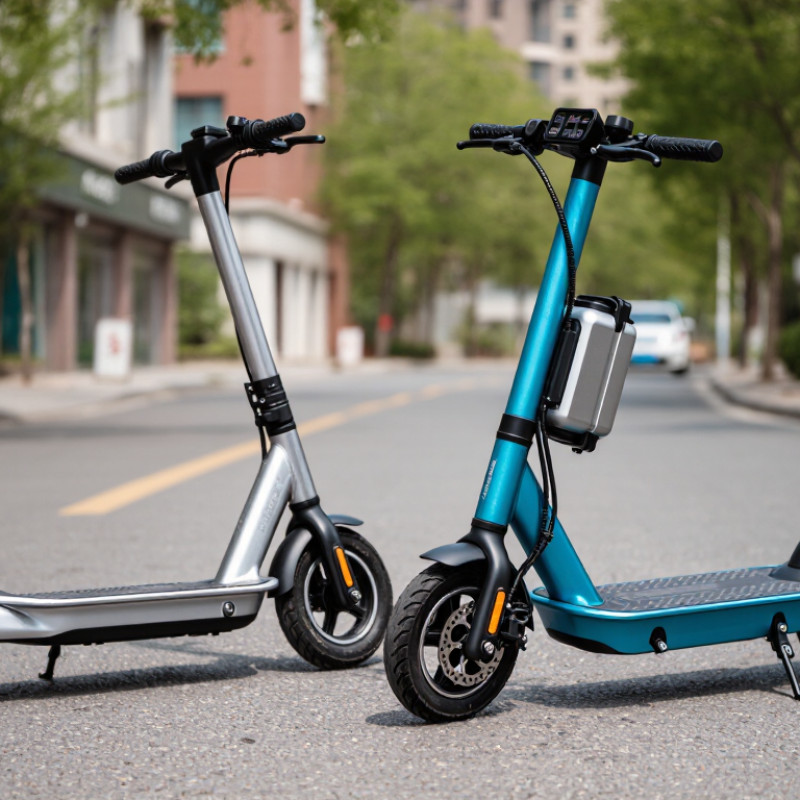
Classify the Scooter: EU L1e-B Allows Up to 4 kW and 45 km/h
For an EU L1e-B scooter, the motor choice starts with the vehicle category, not a peak-power headline. Regulation (EU) No 168/2013 sets a maximum design speed of 45 km/h and maximum continuous rated or net power of 4 kW. That distinction matters: a short burst above the continuous rating does not define the category by itself. Ask for the motor’s continuous rating, controller limits, and test documentation. Check that the battery can sustain the intended output without overheating on a long climb. Small details matter, like whether the scooter carries a rider, luggage, or both.
The International Energy Agency’s Global EV Outlook 2024 reports more than 10 million electric two- and three-wheeler sales worldwide in 2023. That growth makes careful specification more important, not less. A 4 kW ceiling is not a recommendation to use all 4 kW; gearing, wheel size, gradients, and cooling affect real performance. There is a catch. A compliant power figure alone cannot promise safe handling or useful range. I would compare measured hill performance and thermal behavior, though published tests are not always easy to compare. Leave room for doubt, and verify the complete vehicle configuration against its approval documents.
Compare Continuous and Peak Output Using P = τ × ω and Rated Torque
How to Choose Scooter Motors in 2026?
When comparing scooter motors, separate continuous output from peak output. Continuous power is the level a motor can sustain without overheating under specified conditions. Peak power may last only seconds, especially during hard starts or steep climbs. A large peak figure can look impressive. It may not describe everyday hill performance.
Power relates to torque and angular speed: P = τ × ω. Use torque in newton-metres and speed in radians per second to calculate watts. For example, 20 N·m at 50 rad/s equals 1,000 W. Motor listings often give rotational speed in rpm, so convert it before comparing figures. Rated torque matters because it indicates usable twisting force at a stated operating point. Check the torque-speed curve, not one isolated number. Real results vary.
For a practical comparison, look for continuous power, rated torque, operating speed, and the conditions used for testing. A motor may deliver strong launch torque but less force as wheel speed rises. That matters. Also consider wheel size, rider load, gradient, and controller limits; they shape what reaches the road. I would not choose from wattage alone. Specifications are sometimes incomplete, and even careful calculations cannot predict every ride. A warm motor on a long incline can behave differently from one tested briefly in a cool workshop.
Choose Hub or Mid-Drive by Wheel Torque, Gradeability, and Drivetrain Loss
How to Choose Scooter Motors in 2026?
Choose by wheel torque, not the motor’s headline wattage. On a steep ramp, the tire needs enough force to move the rider and scooter uphill. For a 100-kilogram combined load, a 10% grade requires roughly 98 newtons just to counter gravity, before rolling resistance or acceleration. Numbers can mislead. A hub motor sends torque directly to its wheel, keeping the drivetrain simple and avoiding chain losses. It can suit flat commutes, but its wheel-speed limits may constrain steep, slow climbs.
A mid-drive motor uses gears to multiply torque at the wheel. For example, 40 newton-metres through a 4:1 reduction at an assumed 90% efficiency yields about 144 newton-metres at the wheel. The reduction ratio matters. So does the selected gear: a high gear can leave the motor laboring on a hill. The U.S. Department of Energy’s 2024 Vehicle Technologies Office Annual Merit Review evaluates electric-drive performance with efficiency maps, reflecting how efficiency changes with speed and load. Ask for comparable motor maps, not just peak-efficiency claims.
Compare gradeability at your actual loaded weight, wheel size, and intended climbing speed. A mid-drive may climb strongly, but its chain and gears add maintenance and transmission losses. A hub avoids that chain path, though its motor still has electrical and heat losses. Feel the difference. Published ratings rarely capture stop-start traffic, tire pressure, or a hot summer climb. Those details matter.
Match Motor Voltage and Controller Current Using P ≈ V × I
Choosing scooter motors in 2026 means checking more than the wattage printed on a listing. A useful estimate is P ≈ V × I: at 48 volts and 20 amps, the electrical input is about 960 watts. That is not the motor’s exact mechanical output; heat, wiring, and controller losses reduce what reaches the wheel. Numbers help.
Match the controller’s voltage range to the battery, including its fully charged voltage, not just its nominal rating. Then check what its current specification measures. Battery current and motor phase current are different, and comparing them directly can lead to a poor match. Read the manual carefully. A controller that allows excessive current may overheat the motor, connectors, or battery, even if the scooter runs smoothly during a short test.
For a practical check, compare the motor’s rated voltage and continuous power with the controller’s limits, then consider cooling, rider load, hills, and typical ride duration. A brief climb can demand more power than a flat-road commute. If the controller draws 20 amps from a 48-volt battery, the simple estimate is 960 watts at the battery, before losses. Real conditions vary. I would not treat this formula as a sizing guarantee; specifications can be vague, and temperature readings after a ride may reveal a mismatch the math misses.
How to Choose Scooter Motors in 2026? Match Motor Voltage and Controller Current Using P ≈ V × I
Estimated electrical input power is calculated as nominal battery voltage multiplied by controller battery current. For example, 48 V × 20 A ≈ 960 W. These are illustrative system combinations, not guaranteed motor ratings. Check that the motor and controller support the same voltage, and that the motor can handle the controller’s current; actual power and mechanical output vary with battery voltage, operating conditions, and component limits.
Check Duty Cycle, Cooling, and Enclosure Protection Under IEC 60529
Choosing a scooter motor in 2026 starts with its duty cycle, not peak wattage alone. Check how long the motor must run, how often it starts, and whether the route includes steep climbs. A short burst rating may not suit a daily commute with sustained hills. Heat builds quietly. Compare the manufacturer’s continuous rating with your real load, rider weight, terrain, and expected stop-and-go use.
Cooling depends on both motor design and operating conditions. A compact hub motor has little airflow around its internal windings, especially at low speed under heavy load. Ask for temperature limits, thermal test conditions, and any required rest periods. Leave room for uncertainty: published results may come from cooler test environments than your summer commute. This is easy to overlook. A motor that repeatedly overheats can lose efficiency and suffer shortened insulation life.
Check the enclosure rating under IEC 60529, including the motor, cable entry, and connectors. The first IP digit describes protection against solid objects and dust; the second describes water protection. IP65, for example, indicates dust-tight protection and resistance to water jets under specified test conditions. It does not promise protection during every real-world wash or prolonged submersion. That distinction matters. Confirm the complete assembly’s rating, inspect seals after maintenance, and avoid assuming that a higher water digit covers every exposure type.