Get A Free Quote

How to Choose the Best Quadricycle Bike in 2026?

Choosing the best Quadricycle Bike in 2026 requires more than comparing prices and glossy photographs. These four-wheeled cycles vary widely in stability, comfort, cargo capacity, electric assistance, and daily practicality. A model that feels perfect on a flat showroom floor may struggle on steep streets or uneven pavement.

This guide examines the details that matter during real use. We consider frame strength, wheelbase, turning radius, braking performance, seat support, weather protection, and battery range. We also look at loading space, because a basket carrying groceries behaves differently from an empty test ride. Small details matter.

Reliable decisions should begin with verified manufacturer specifications and a practical test ride. Check whether the advertised range reflects realistic weight, hills, temperature, and riding speed. Ask about replacement batteries, service availability, warranty coverage, and spare parts before making a purchase. Independent reviews can help, but personal riding conditions remain more important than a perfect rating.

I have learned that impressive numbers can hide ordinary weaknesses. A long range may come with a heavy battery, while a compact design may feel cramped after thirty minutes. Some recommendations will remain subjective, especially when comfort and steering feel are involved. That is worth admitting.

The right Quadricycle Bike should match your route, body position, storage needs, and confidence level. It should feel controlled beside traffic, predictable during turns, and manageable when parked. By weighing technical evidence against everyday experience, buyers can avoid costly surprises and choose a cycle that genuinely supports their routine.

How to Choose the Best Quadricycle Bike in 2026?

What Is a Quadricycle Bike and Who Should Use One?

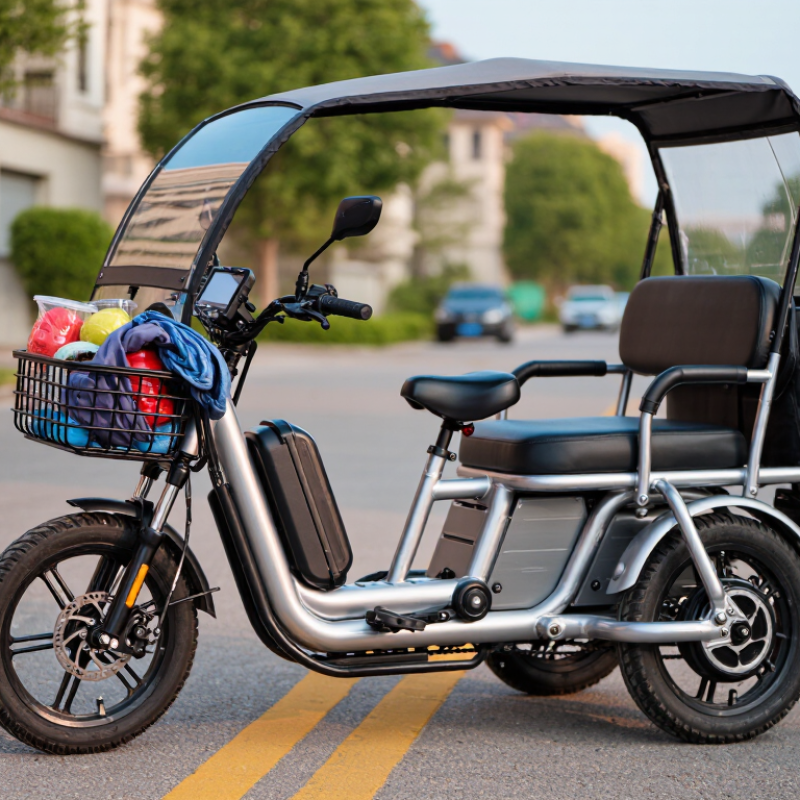
A quadricycle bike is a pedal-powered vehicle with four wheels, a stable frame, and a broad seating area. Some models include electric assistance, storage space, or a covered cabin. Unlike a traditional bicycle, it feels less like balancing on a narrow line. It feels more like steering a compact cart.

This design suits riders who value stability over speed. Parents can carry children, groceries, or small work equipment with better weight distribution. Older adults may appreciate the low step-through frame and supportive seat. It can also help riders who feel nervous on two wheels.

Keep the width in mind. Narrow paths may become difficult, especially near parked cars or crowded entrances.

A quadricycle bike works best on familiar urban routes, quiet lanes, and reasonably smooth surfaces. Electric assistance can reduce effort on hills, but it cannot fix poor handling or weak brakes. Check the turning radius, seat height, frame access, lighting, and cargo limits before buying.

Test it with realistic weight inside. Empty rides can feel misleading. I once underestimated how much space four wheels need, and that small mistake changed the route completely.

The category is not perfect. Wind, steep roads, and limited storage can quickly reduce its convenience.

Key Features to Compare Before Choosing a Quadricycle Bike

How to Choose the Best Quadricycle Bike in 2026?

When comparing a quadricycle bike, start with stability and control. A wide wheelbase can feel secure, but it may reduce maneuverability in narrow paths. Check the turning circle beside parked cars or garden gates. Stability matters. Sit in the seat and test the steering at walking speed.

Examine the frame, brakes, tires, and drivetrain closely. A strong frame should feel rigid without excessive weight. Hydraulic or well-adjusted mechanical brakes should stop smoothly, even with a loaded rear platform. Test it loaded. Look for comfortable pedals, an adjustable seat, and handlebars that do not strain your wrists. For electric models, compare motor assistance, battery capacity, charging time, and replacement support. Real range changes with hills, temperature, rider weight, and cargo.

Safety details deserve careful attention. Reflective elements, lights, secure belts, and clear visibility improve everyday confidence. Ask for maintenance intervals and written component specifications. During practical testing, listen for clicking joints or uneven wheel movement. I once trusted a smooth showroom ride and overlooked a cramped foot position. That mistake became uncomfortable after twenty minutes. Do not guess. Measure storage space, doorway width, and parking access before buying. A reliable choice should match your routes, carrying needs, fitness, and willingness to maintain it regularly.

How to Match Quadricycle Types to Your Riding Needs

How to Choose the Best Quadricycle Bike in 2026?

Choosing a quadricycle starts with your daily route, not its appearance. A compact pedal model suits short trips on quiet streets and firm paths. It feels stable, but hills can become tiring quickly. An electric-assist type works better for longer commutes, steep roads, or riders carrying groceries. Check the motor system, battery range, braking performance, and local regulations before buying. I once chose a lightweight model for a mixed-surface route. That was a mistake. Its small wheels struggled over loose gravel and broken pavement.

Tips: Measure your storage space and doorway first. Sit in the vehicle for ten minutes. Test turning near a curb. Cargo riders should inspect the load platform, tie-down points, and weight limit. Families may prefer a wider cabin with weather protection, while fitness-focused riders often value direct steering and adjustable seating. Do not trust a smooth showroom floor. Real roads are less forgiving.

Your body position also matters. A recumbent-style quadricycle can reduce wrist pressure and offer comfortable back support. However, its lower seating position may reduce visibility in busy traffic. Riders with limited balance may prefer four wide wheels, a low center of gravity, and easy-access entry. Ask for a supervised test ride and check whether controls remain reachable while turning. Personal comfort is easy to underestimate. It should not be. A quiet motor, clear lights, mirrors, and dependable brakes add practical confidence. Still, no design fits everyone, so reassess your route after a week of real use.

How to Evaluate Safety, Comfort, Performance, and Durability

How to Choose the Best Quadricycle Bike in 2026?

How to Evaluate Safety, Comfort, Performance, and Durability

Choosing the best quadricycle bike in 2026 starts with real-world checks, not attractive specifications. Safety should feel predictable on wet paths, sloped driveways, and crowded cycle lanes. Inspect the frame for clean welds, firm joints, and visible damage. Test both brakes separately, then together, while carrying the intended load. The bike should stop without pulling sharply. Check lights, reflectors, mirrors, and tire grip. A low center of gravity matters more than aggressive styling. Ask about tested weight limits and maintenance records. Do not treat a seller’s claim as independent proof.

Comfort affects control during long rides. Settle into the seat for ten minutes. Your hips should remain level, and your hands should reach controls without stretching. Adjustable pedals, handlebars, and back support help different riders. Check the entry height carefully. A wide seat may look comfortable but restrict leg movement. Look for weather protection, ventilation, and knee space. Performance depends on terrain, gearing, motor assistance, battery capacity if equipped, and cargo. Ride uphill and turn tightly. Listen for chain noise, motor hesitation, or frame flex. Display numbers cannot replace a test ride.

Durability hides in small details. Examine fasteners, cable routing, bearings, wheel spokes, and the underside. Protective coating can reduce corrosion, but it cannot replace regular care. Ask how replacement parts are sourced and who performs service. A simple design may outlast a faster one. Record braking distance, hill speed, noise, and comfort after repeated rides. My first inspection would not be perfect; fatigue can distort judgment. Repeat the test another day. Extra testing may reveal loose fittings, uneven tire wear, or an uncomfortable saddle.

How to Choose the Best Quadricycle Bike in 2026? - How to Evaluate Safety, Comfort, Performance, and Durability
Evaluation Area Key Dimension Practical Benchmark How to Evaluate It Warning Signs
Safety Frame and chassis stability Low center of gravity, wide track, rigid frame, and no noticeable frame flex during normal cornering. Ride slowly through controlled turns, inspect welds and joints, and check that the frame remains stable when mounting or dismounting. Visible cracks, loose joints, excessive twisting, or a narrow stance combined with a high seat position.
Safety Braking system Separate, progressive brakes with reliable stopping performance on dry and slightly wet surfaces. Test braking from a moderate speed in a traffic-free area. The bike should stop in a straight line without pulling, juddering, or requiring excessive lever force. Soft levers, brake fade, uneven braking, exposed or damaged cables, or wheels that lock too easily.
Safety Lighting and visibility White front light, red rear light or reflector, side reflectors, a bell or horn, and high-visibility surfaces. Confirm that lights are visible from the front, rear, and sides. Check operation with the motor running and under battery power. Lights powered only by removable accessories, poor side visibility, difficult-to-reach controls, or no reflective elements.
Safety Electrical protection Protected wiring, secure battery mounting, battery-management protection, and a charger with clear status indicators. Inspect connectors and cables for abrasion, verify that the battery cannot move during riding, and review charging and overheating instructions. Loose battery movement, exposed terminals, swollen battery casing, damaged cables, or an unlabelled charger.
Safety Load capacity and distribution A clearly stated combined rider-and-cargo rating, commonly around 120–180 kg for utility-oriented designs. Include the rider, passenger, basket contents, and accessories when comparing the stated payload rating. Check whether the rating changes on slopes. No published payload limit, overloaded rear rack, unstable cargo position, or unclear passenger seating requirements.
Comfort Riding position and adjustability Adjustable saddle and handlebar positions that allow a relaxed back, slightly bent knees, and easy control access. Test the bike for at least 15 minutes. Confirm that both feet can reach the ground comfortably when stopped. Fixed controls, cramped knee room, excessive wrist angle, or difficulty reaching brakes and shifting controls.
Comfort Seat and suspension Supportive seat padding, an appropriate seat width, and suspension or large-volume tires suited to the intended roads. Ride over smooth pavement, rough paths, and small bumps. Check whether vibration reaches the seat, hands, or back. Bottoming-out suspension, unstable seat movement, excessive vibration, or a seat that restricts pedaling.
Comfort Weather protection and accessibility Practical mudguards, a stable roof or canopy where needed, easy step-through access, and sufficient legroom. Check entry height, turning space, visibility through the canopy, ventilation, and access to storage areas. Blocked sightlines, poor ventilation, difficult entry, water collecting near the rider, or doors that cannot be operated from inside.
Performance Motor assistance and hill ability Smooth power delivery, controllable low-speed assistance, and a published rated motor output that complies with local regulations. Test starts on level ground and on a moderate incline using the intended load. Assistance should engage progressively without surging. Delayed response, abrupt acceleration, overheating on short climbs, or performance that depends on a nearly full battery.
Performance Real-world range For many pedal-assist utility designs, approximately 20–60 km per charge is a realistic planning range; actual results vary considerably. Compare the battery watt-hours, rider-and-cargo load, terrain, temperature, tire pressure, and assistance level—not only the advertised maximum. Range stated without test conditions, no battery-capacity information, or a sharp drop in performance under normal load.
Performance Handling and turning radius Predictable steering at low speed and a turning radius suitable for the intended paths, entrances, and storage area. Perform slow U-turns, negotiate a narrow passage, and check steering clearance around the rider, passenger, and cargo. Front-wheel shudder, excessive steering effort, wheel interference, or difficulty recovering from a small steering error.
Performance Gearing, tires, and rolling resistance Low enough gearing for starts and hills, puncture-resistant tires, and tire width appropriate for the surface. Test starts with the intended load and inspect tread, sidewalls, valve access, and recommended tire pressure markings. Gear range too high for hills, tires unsuitable for wet or uneven surfaces, or pressure requirements that are not documented.
Durability Frame and finish quality Corrosion-resistant treatment, sealed or protected joints, durable fasteners, and a finish without exposed bare metal. Inspect welds, underside areas, drainage points, hinges, and fasteners. Pay special attention to areas exposed to road spray. Rust at welds, chipped coating around mounting points, water traps, or mismatched and loose fasteners.
Durability Battery service life A quality lithium-ion battery commonly supports several hundred full equivalent cycles; capacity gradually decreases with use and age. Check battery replacement cost, storage temperature guidance, charging limits, diagnostic support, and availability of a replacement pack. No replacement pathway, unknown cell or protection information, excessive heat during charging, or battery swelling.
Durability Serviceability and spare parts Standard tires, tubes, brake parts, cables, bearings, and fasteners that can be inspected or replaced by a qualified technician. Ask for a maintenance schedule and confirm access to service documentation, compatible parts, and battery or motor diagnostics. Proprietary parts with no stated availability, sealed components that cannot be serviced, or missing maintenance instructions.
Durability Storage and transport Secure parking capability, weather-resistant electrical components, and dimensions compatible with the intended storage space. Measure total length, width, height, turning clearance, and storage-door width. Confirm whether the battery can be removed safely. Cannot fit through the storage route, unstable parking stand, water entering electrical areas, or excessive lifting weight.
Overall Decision Value and ownership cost Compare purchase price with charging, maintenance, tires, brake wear, battery replacement, insurance, and secure-storage costs. Estimate total cost over three to five years rather than comparing purchase prices alone. Include expected service intervals and local regulations. Low initial price but unavailable parts, unclear warranty coverage, expensive battery replacement, or high routine maintenance needs.
Benchmarks are general buying guidelines, not universal legal requirements. Always verify local rules for speed limits, lighting, helmets, passenger use, road access, and vehicle classification.

How to Select the Right Quadricycle Bike for Your Budget in 2026

How to Choose the Best Quadricycle Bike in 2026?

How to Select the Right Quadricycle Bike for Your Budget in 2026

Your budget should begin with usage, not decoration. A quadricycle bike for short market trips needs different equipment from one carrying children or weekly groceries. CONEBI’s 2024 European Bicycle Industry and Market Report recorded about 11.7 million bicycle sales in 2023. E-bikes represented roughly 5.1 million units. However, quadricycles remain a smaller category, so published prices vary widely. Treat online averages carefully.

For a basic pedal model, plan around €900–€1,800. This range may cover a steel frame, simple brakes, a weather cover, and modest storage. A stronger cargo version can reach €2,000–€4,500. Electric assistance, larger batteries, hydraulic brakes, and weather protection raise the price quickly. The European Commission’s transport research consistently highlights battery range, vehicle weight, and charging access as practical adoption factors. I would check these before choosing a brighter finish. A heavy bike may feel safe, yet it can become difficult on a steep driveway.

Tips: Keep 15% of your budget for accessories and repairs. Inspect the turning radius in a real parking area. Ask about battery replacement costs. Compare the warranty in writing. A low purchase price can hide expensive wheel, brake, or battery work. Measure your storage door first. That small detail is easy to miss. For frequent use, test the seat height, pedal reach, and loaded braking. Manufacturer claims are useful, but your own route is more honest.

How to Choose the Best Quadricycle Bike in 2026?

Typical brand-neutral planning benchmarks for selecting a quadricycle bike by budget, assisted range, and carrying capacity.

Entry-level models are generally suitable for short leisure trips, while mid-range options offer a practical balance of range and utility. Premium models typically provide stronger carrying capacity and longer assisted range, but local regulations, terrain, battery size, and rider load can affect actual performance.

Article Source:

crossmenu linkedin facebook pinterest youtube rss twitter instagram facebook-blank rss-blank linkedin-blank pinterest youtube twitter instagram