What Are RFID Tags for Asset Tracking and How Do They Work?
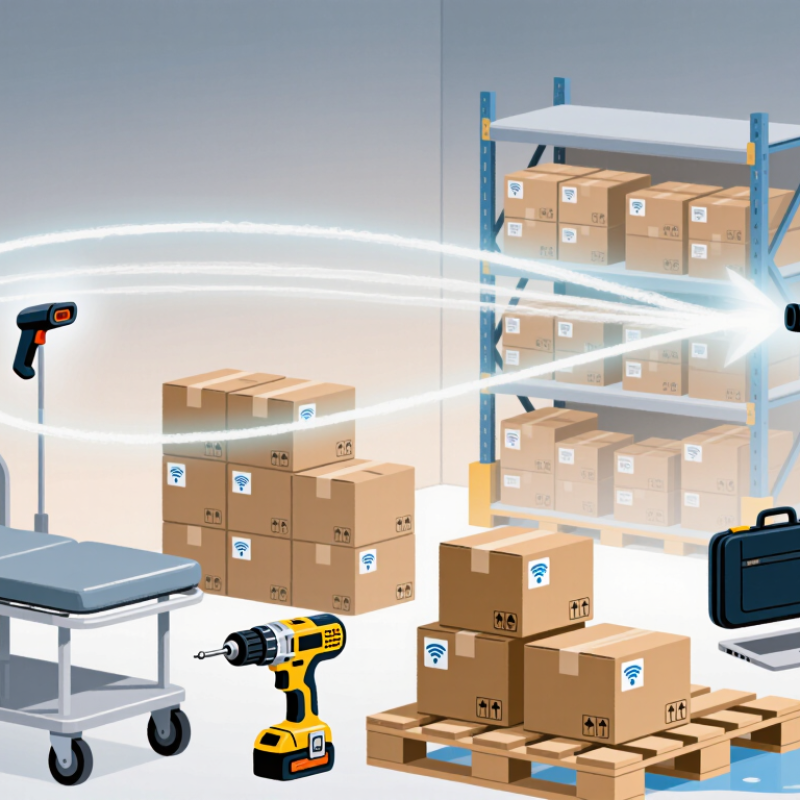
Rfid Tags For Asset Tracking are small identification devices that help organizations locate, count, and manage physical assets. A tag may sit on a medical cart, warehouse pallet, rental tool, or laptop case. It stores an electronic identifier. An RFID reader sends radio waves to the tag. The tag then returns its stored data, usually without direct contact or a camera scan.
Mark Roberti, founder of RFID Journal, described the business perspective clearly: “RFID is not a technology project. It is a business project.” That idea remains important. A successful system begins with a practical question: Which asset problem needs solving? Readers placed near doors can record movement. Fixed portals can capture pallet transfers. Handheld readers can help staff search shelves and verify inventories. The software then connects those readings with asset records, locations, maintenance dates, and responsible teams.
The process is not magic. Metal surfaces, liquids, crowded storage areas, and weak reader placement can reduce performance. A tag can also be damaged or attached incorrectly. These details deserve testing in the real workplace, not only in a demonstration room. Organizations should select suitable tag frequencies, protect personal information, and define access controls before deployment. Results should be measured through fewer misplaced assets, faster audits, and more accurate records. Some projects still disappoint. That is useful feedback, because reliable tracking depends on thoughtful design, trained users, and honest measurement.
RFID Asset Tracking Architecture: Tags, Readers, Antennas, and Software
What Are RFID Tags for Asset Tracking and How Do They Work?
RFID Asset Tracking Architecture: Tags, Readers, Antennas, and Software
RFID asset tracking depends on four connected parts: tags, readers, antennas, and software. An RFID tag stores an identification number on a small chip. Its antenna receives radio energy and sends the number back. Passive tags use power from the reader, while active tags contain a battery for longer range.
Readers create the communication link. They send signals through antennas placed near doors, shelves, or workstations. Antenna position matters greatly. A metal cabinet, dense liquid, or tightly stacked equipment can weaken the signal. In a warehouse test, moving an antenna only 30 centimeters changed the reading performance. Small details matter.
Software turns raw reads into useful asset events. It filters repeated signals, records time and location, and connects each tag with an asset record. A practical system might show that a tool entered a service room at 09:14 and left at 10:02. Reader settings, tag orientation, and environmental noise still require testing. RFID is not magic.
Reliable deployment also needs clear data rules. Staff should know which assets receive tags and how exceptions are corrected. A reader may detect a nearby item instead of the intended one. That imperfect result deserves review, not blind acceptance. Field observations should guide antenna placement, read zones, and software alerts.
Passive, Active, and Battery-Assisted Tags: Power and Read-Range Profiles
RFID tags support asset tracking by storing an identification number that readers capture without direct contact. Passive tags draw energy from the reader’s signal. They are small, affordable, and useful for shelves, cartons, tools, and indoor check-in points. Their read range is usually limited, often from a few centimeters to several meters. Metal surfaces and liquid containers can weaken that signal.
Active tags contain a battery and transmit stronger signals at longer distances. They suit high-value equipment, vehicles, and outdoor yards where location updates matter. Battery-assisted passive tags use a battery to strengthen communication but usually respond only when a reader sends a signal. They can improve performance around dense storage areas. In practical deployments, battery life, reader placement, tag orientation, and surrounding materials matter as much as the tag type. I have seen well-designed systems underperform because tags were placed behind metal brackets. Range claims also need testing in the actual facility.
Tips: Match power to movement and distance. Use passive tags for routine doorway scans. Choose active tags for wider-area visibility. Test several tag positions before installation. Record missed reads, not only successful scans. This exposes weak zones early. Do not assume the longest range is the best choice. A stronger signal may increase cost, maintenance, and unwanted reads.
From EPC Encoding to Inventory Events Through GS1 EPCIS 2.0
RFID tags support asset tracking by giving each item a machine-readable identity. The tag usually stores an Electronic Product Code, or EPC. This code identifies the asset, not its complete history. A reader captures the EPC when the asset passes through a gate, shelf, or work area.
The tracking system then converts that read into an operational event. EPCIS 2.0 provides a standard structure for sharing these events. An event can record what happened, when it happened, where it happened, and why it mattered. Key details may include event time, read point, business location, disposition, and sensor data. For example, a receiving event can show that an asset arrived at a warehouse door at 09:42. A commissioning event can connect the EPC with an internal asset record. Later, a shipping event can document its movement to another site.
The data flow is practical but not perfect. A reader may miss a tag behind metal equipment. Two nearby tags may respond together. Good deployments use reader testing, antenna adjustment, and exception checks. EPCIS 2.0 can help teams compare expected events with observed events. A missing commissioning event needs attention. So does an asset appearing in two locations at once. Clear EPC encoding matters here. Duplicate identities can damage trust quickly. Teams should also define event rules before installation, because collecting every read creates noise rather than useful history. The technology works best when physical processes and digital records are designed together.
This chart shows the standardized 96-bit structure of an SGTIN-96 EPC used in UHF RFID systems. The encoded identifier contains an 8-bit header, a 3-bit filter, a 3-bit partition value, 44 bits for the company prefix and item reference, and a 38-bit serial number. After an RFID reader captures the EPC, EPCIS 2.0 can record the identifier in events such as ObjectEvent, AggregationEvent, TransactionEvent, or TransformationEvent, together with time, location, and business-step data.
Testing RFID Accuracy Around Metal, Liquids, and Typical 1–10 m Ranges
What Are RFID Tags for Asset Tracking and How Do They Work?
RFID tags use a chip and antenna to identify assets without direct scanning. In typical UHF systems, readers can detect tags across 1–10 meters. The RAIN Alliance’s 2024 industry report describes multi-meter reading as practical, but not guaranteed. Distance changes with antenna gain, tag orientation, reader power, and warehouse layout. A tag facing sideways may respond poorly, even at two meters.
Metal and liquids remain the difficult test cases. Metal can detune a tag antenna, while water absorbs part of the radio signal. In controlled ARC testing guidance from Auburn University’s RFID Lab, material-specific tag selection is treated as essential, rather than optional. A useful field test places identical assets at 1, 3, 5, and 10 meters. Record successful reads across 100 repeated passes. For example, a 98% rate at one meter may fall below 70% near liquid containers. Results depend heavily on placement.
Test the real environment.
Do not trust a clean bench result. The ISO/IEC 18000-63 air-interface standard defines communication behavior, but it does not promise a fixed accuracy level. Reflections from steel racks can create silent zones, and moving workers can block signals temporarily. I would also test full and partly empty containers. That distinction is easy to miss. A deployment report should include missed reads, duplicate reads, tag height, orientation, temperature, and reader location. Perfect accuracy is an assumption worth challenging.