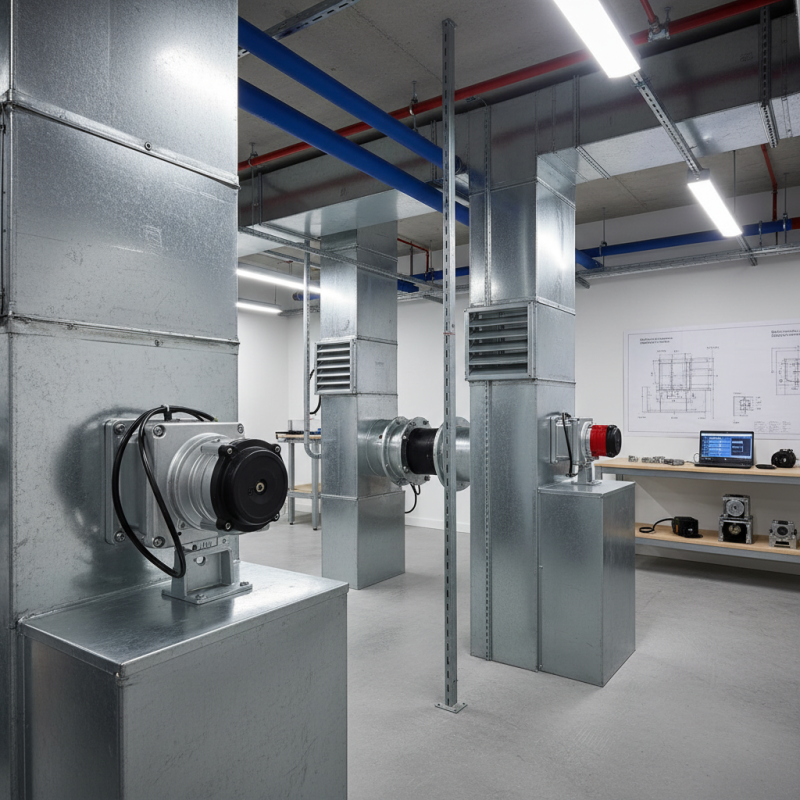
Essential Tips for Choosing the Right Damper Actuator?
Choosing the right Damper Actuator is crucial for HVAC systems. The right actuator ensures efficient airflow control, impacting energy consumption and comfort. Many fail to recognize the importance of this decision.
Several factors influence your choice. Size, compatibility, and torque are vital aspects to consider. For instance, an undersized actuator may struggle to operate effectively. In contrast, an oversized one can waste energy.
Researching brands and specifications can seem overwhelming. It’s essential to weigh the pros and cons of each option. Make sure to gather feedback from users. These insights can reveal which models consistently perform well. Ultimately, taking time to choose wisely will yield better long-term results.
Factors Influencing Damper Actuator Selection: Torque and Speed Requirements
Selecting the right damper actuator involves understanding several critical factors, with torque and speed at the forefront. Torque is essential because it determines how much force the actuator can exert to open or close the damper. Too little torque can lead to a failure in maintaining the desired airflow. For example, a poorly specified actuator might struggle to operate in extreme temperatures, affecting performance.
Speed requirements also play a vital role. Some systems need rapid response times while others may function well with slower adjustments. Choosing an actuator with the wrong speed can cause delays in response. In a fire safety system, for instance, a sluggish actuator can hinder airflow control, creating risks. Balancing torque and speed is tricky. Take the time to analyze your specific application needs thoroughly.
Understanding the environment where the actuator will be placed is key, too. High humidity or temperature fluctuations can affect both torque and speed. It's worth considering how external conditions may change over time. Often, overlooked details can lead to miscalculations. Being proactive in addressing these factors can prevent future complications.
Understanding Different Types of Damper Actuators: Electric vs. Pneumatic
When selecting a damper actuator, understanding the types available is crucial. Electric actuators are often favored for their precision. They provide fast response times. These devices work well in systems requiring accurate airflow control. However, they may be less effective in extreme temperatures. You might encounter issues with reliability under such conditions.
Pneumatic actuators, on the other hand, operate using compressed air. They are known for their robustness and can handle harsher environments. These actuators tend to be simpler in design. But, they can be less precise than electric ones. Maintenance is another factor. Pneumatic systems often require regular checks. This added upkeep can turn off some users.
Both types have their advantages and drawbacks. Evaluating your specific needs is vital. Are you prioritizing precision or durability? Each choice leads to different outcomes. Consider your environment carefully. Reflect on these factors before making a decision.
Evaluating Environmental Conditions for Optimal Damper Actuator Performance
When selecting damper actuators, understanding environmental conditions is crucial. Factors like temperature, humidity, and exposure to chemicals affect performance. For instance, a report from the American Society of Heating, Refrigerating and Air-Conditioning Engineers (ASHRAE) indicates that high humidity can lead to corrosion in actuators. This corrosion compromises actuator reliability and efficiency.
Tips for optimal performance include assessing the operational environment before installation. If the area is consistently moist, consider corrosion-resistant materials. For extreme temperatures, choose actuators rated for such conditions. Research shows that 70% of actuator failures occur due to unsuitable environmental choices. That’s a significant number.
Another key point is to monitor airflow dynamics. High airflow can lead to actuator wear. Regular inspections can reveal early signs of fatigue or damage. Each environment is unique. It's worth noting that what works in one setting might falter in another. Balancing these variables is an ongoing challenge in actuator selection.
Comparative Analysis of Actuator Lifespan and Maintenance Costs
When selecting a damper actuator, understanding lifespan and maintenance costs is vital. Lifespan varies widely among actuators. Some can last over a decade, while others may falter in just a few years. The material used plays a large role in longevity. For example, corrosion-resistant materials typically offer better durability in harsh environments.
Maintenance costs can add up quickly. Routine checks and part replacements can be essential for long-term performance. Make a list of common issues associated with each actuator type. This can help predict future expenses. Additionally, consider the accessibility of components during maintenance. If parts are hard to reach, labor costs will rise.
Tips for choosing the right actuator include assessing your environment. Will it be exposed to moisture, dust, or extreme temperatures? Always factor in these conditions when making your choice. Take time to compare different options. This will ensure you invest wisely. Maintain realistic expectations about what budget can accomplish. Sometimes, spending more upfront can save you money later on.
Assessing Control Strategies: Manual vs. Automated Systems in Actuator Use
When choosing a damper actuator, assessing control strategies is crucial. Manual systems require human intervention. They can be less expensive but often lead to inconsistent results. Automation, on the other hand, provides precision. It integrates seamlessly into smart building systems. Yet, it can be costly to implement.
Consider the environment where the actuator will operate. In dynamic settings, automated systems excel. They adapt to changing conditions and ensure optimal performance. Manual controls may struggle in such scenarios. However, manual systems can be simpler to troubleshoot. Users might miss out on efficiency gains with purely manual control.
Tips for selecting the right system:
First, identify your specific needs. Think about response times, reliability, and ease of use. Next, weigh costs against benefits. Automation can save time and reduce errors. Lastly, consider the learning curve. A more complex system may not be immediately intuitive. Balance simplicity with functionality.
Remember, no system is perfect. Each has trade-offs. Regularly reevaluate your choices to ensure they meet your evolving needs.