Get A Free Quote

China Top Solid State Diode Laser Suppliers?

China’s solid-state diode laser market includes manufacturers serving medical, industrial, research, and pumping applications. Yet “top” depends on the job. A supplier suitable for a compact marking system may not meet a high-power laboratory’s beam-quality or lifetime requirements. Buyers should compare product specifications with real operating needs, not rankings alone.

A useful evaluation starts with wavelength, output power, beam profile, cooling method, and operating life. Ask for test reports, sample data, and clear warranty terms. Check whether the company builds the laser module itself or integrates components from other manufacturers. That distinction can affect customization, troubleshooting, and delivery schedules. Small details matter. A connector, cooling plate, or unstable output can disrupt an otherwise well-designed system.

Laser physicist Theodore Maiman is often credited with the line, “The laser is a solution looking for a problem.” The remark offers a useful reminder: match the technology to a defined application. For a Solid State Diode Laser, that means checking performance under the conditions where it will actually run—not only reading a headline power rating. This guide will outline how to compare Chinese suppliers, assess their technical evidence, and identify questions worth asking before requesting a quotation. It will not treat a polished website as proof of quality. Supplier information can be incomplete, and specifications may vary by configuration. That uncertainty deserves attention, too.
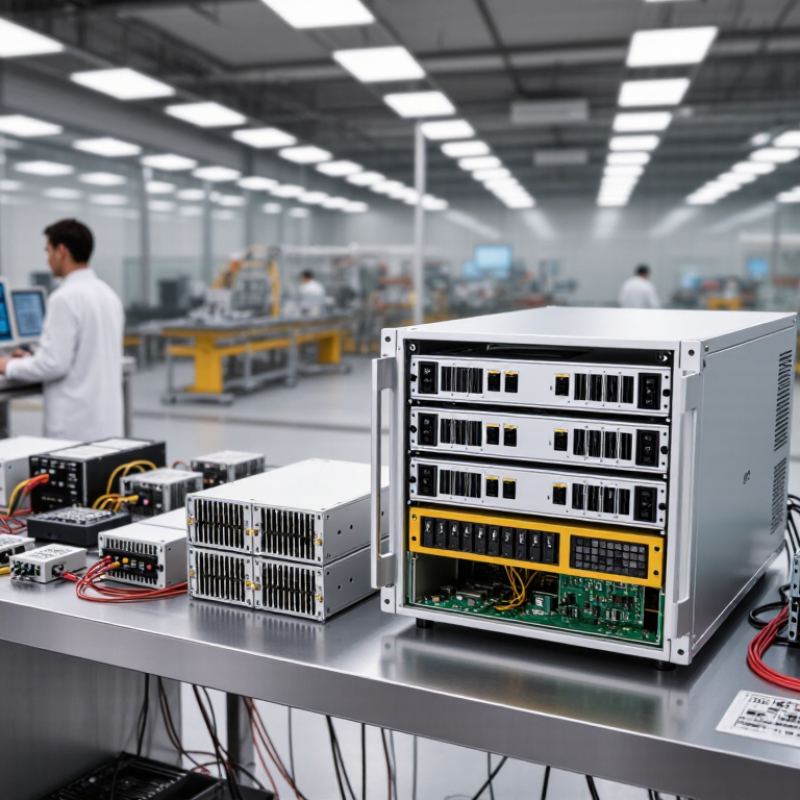
China Top Solid State Diode Laser Suppliers?

What Solid-State Diode Lasers Are and How They Work

Solid-state diode lasers generate coherent light using solid materials rather than gas or liquid. The term may describe a semiconductor laser diode, or a diode-pumped solid-state (DPSS) laser. These designs are related, but they work differently. That distinction matters.

In a laser diode, electrical current passes through semiconductor layers. Electrons and holes recombine, releasing photons at a wavelength set largely by the material. Reflective surfaces inside the diode form an optical cavity, encouraging light to build into a focused beam.

In a DPSS system, the diode instead pumps a solid gain medium, such as a crystal. That medium emits laser light, sometimes at a different wavelength after optical conversion.

Heat still matters. Even a compact diode can shift wavelength or lose efficiency as its temperature changes. A heat sink, stable power supply, and suitable optics help maintain consistent output.

When comparing systems, check wavelength, beam quality, power stability, and intended operating conditions—not just the stated output power. One limitation is easy to overlook: published performance may not match results in a poorly cooled or misaligned setup.

China’s Solid-State Diode Laser Supplier Landscape

China’s solid-state diode laser supplier landscape is varied, spanning component manufacturers, system integrators, and contract producers. Some focus on pump sources or laser modules; others deliver complete systems with optics, cooling, and control electronics. The label “supplier” can cover very different levels of engineering support.

A useful evaluation starts with the actual operating conditions. Ask for wavelength, output power, beam quality, duty cycle, and cooling requirements in writing. Request test data from a unit comparable to the intended configuration, not just a catalogue sheet. Details matter. For production use, check calibration records, burn-in procedures, traceability, and how failures are handled. A polished sample may not reflect routine output.

Communication is part of the technical assessment. Can the engineering team explain tolerances, integration limits, and expected service intervals clearly? Ask how design changes are documented and whether replacement parts remain available. These questions can reveal gaps early. Still, specifications do not tell the whole story; real performance depends on alignment, thermal management, and the host machine. I have seen buyers underestimate integration time, and that is easy to do when a quotation looks complete. Short sample runs and clear acceptance criteria help expose practical issues before wider deployment.

Key Technologies and Product Types Offered by Chinese Suppliers

Chinese solid-state diode laser suppliers offer more than bare laser chips. Common products include single-emitter modules, diode bars, stacked arrays, and fiber-coupled systems. They serve materials processing, illumination, medical equipment, and research applications. Output may be continuous-wave or pulsed, with wavelength and power selected for the task.

The technology behind these products matters. Epitaxial chip design affects efficiency and wavelength stability, while heat sinks and cooling channels help manage temperature during extended operation. Beam-shaping optics can turn uneven output into a more uniform line or spot. Some suppliers also provide power drivers, fiber coupling, and custom housings. Small details count. A buyer should compare measured output, operating temperature, wavelength tolerance, and test conditions—not just headline power. Ask for test data under realistic workloads. A module that performs well briefly may drift after hours of use. That’s easy to overlook. Not every module fits. Datasheets can also leave questions about long-term reliability, so sample testing is useful. One awkward point: customization may improve fit, but it can lengthen lead times and complicate replacement.

China Top Solid State Diode Laser Suppliers? – Key Technologies and Product Types Offered by Chinese Suppliers

Technology or Product Type Typical Wavelengths Common Product Formats Typical Uses Key Selection Considerations
Laser diode pump modules for solid-state lasers 808 nm, 880 nm, 940 nm, and 976 nm, depending on the gain medium and design Single-emitter modules, fiber-coupled modules, and multi-emitter assemblies Pumping Nd:YAG, Nd:YVO4, and other solid-state laser media Match the pump wavelength to the absorption band of the gain medium; check output power, spectral width, cooling requirements, and fiber-core specifications.
Diode laser bars Commonly around 808 nm, 940 nm, or 976 nm; wavelength depends on the diode design Linear arrays of emitters, often supplied as bare bars or mounted assemblies High-power pumping, industrial illumination, and integration into diode-pumped laser systems Review bar dimensions, fill factor, operating current, thermal resistance, and the required heat-sink arrangement.
Diode laser stacks Often in the 808–980 nm region, with configuration-specific wavelength options Vertically stacked diode bars, with conduction or active cooling options High-average-power pumping and applications requiring concentrated optical output Assess cooling method, stack geometry, electrical connection, beam uniformity, and the system's thermal-management capacity.
Fiber-coupled diode laser modules Commonly 808 nm, 915 nm, 940 nm, or 976 nm Diode source coupled into a fiber, with specified core diameter and numerical aperture Remote pumping, compact system integration, and delivery of pump light to a laser head Confirm fiber core diameter, numerical aperture, coupling efficiency, connector type, and allowable bend radius.
Diode-pumped solid-state (DPSS) laser systems Output wavelengths depend on the gain medium and frequency conversion; examples include 1064 nm and frequency-doubled 532 nm Integrated laser heads or system modules combining a pump diode, gain medium, and resonator Materials processing, measurement, scientific instrumentation, and laser marking Compare output wavelength, continuous-wave or pulsed operation, pulse characteristics, beam quality, stability, and cooling needs.
Direct-diode laser modules and systems Wavelength varies by semiconductor material and product design; visible and near-infrared options are available Single-emitter modules, multi-emitter sources, and fiber-delivered systems Heating, cladding, surface treatment, illumination, and other wavelength-compatible industrial processes Evaluate wavelength suitability for the target material, output format, beam profile, power-control range, and integration requirements.
Custom diode laser assemblies Specified to match the intended application and optical design Configured combinations of emitters, bars, cooling hardware, optics, and electrical interfaces OEM equipment and application-specific laser-system integration Request documented optical and electrical specifications, thermal limits, interface drawings, test conditions, and product qualification details.

How to Evaluate and Compare Potential Suppliers

Comparing solid-state diode laser suppliers starts with your application, not a catalog headline. Specify wavelength, output power, beam quality, pulse duration, duty cycle, cooling method, and operating environment. Ask for test data at your intended settings, not only a best-case figure. A dependable supplier should explain measurement conditions and tolerances. Check whether results represent multiple production units. Ask how alignment, aging, and thermal drift are controlled. Small differences matter.

Tips: Request a sample test report, warranty terms, repair turnaround, and spare-part availability. Confirm the supplier can provide integration drawings, safety interlock details, and technical support in your time zone. Compare total ownership cost, including cooling, calibration, and downtime—not just purchase price. Use the same questions for every candidate. Look beyond claims.

Also compare production consistency, documentation, and communication before making a decision. Ask how each unit is inspected and whether serial-number-level test records are available. A factory visit or technical call can clarify details that brochures omit. Neither guarantees a perfect fit. Supplier comparisons involve trade-offs, and a lower price may be reasonable if service needs are modest. Record your assumptions, then verify them against a real sample or acceptance test.

China Top Solid State Diode Laser Suppliers? - How to Evaluate and Compare Potential Suppliers

Compare suppliers against your required pump wavelength, then verify output power, wavelength tolerance, beam and fiber specifications, cooling requirements, reliability data, and test documentation in their datasheets.

Reference values show commonly used nominal diode pump wavelengths, not supplier performance ratings. The best wavelength depends on the gain medium and system design.

Industrial Applications and Market Trends in China

China’s industrial laser market is shaped by practical production needs. Solid-state diode laser systems support metal welding, surface hardening, cladding, and selected plastics processing. On a factory floor, compact laser heads can fit beside robotic arms, while water or air cooling helps manage heat during long shifts. The right setup depends on material, thickness, and required cycle time. Small process differences matter.

Demand is moving toward automated cells, stable output, and easier integration with production software. Buyers often compare power consistency, beam delivery, maintenance access, and local technical support—not just purchase price. In supplier evaluations, sample tests on the actual workpiece can reveal spatter, uneven heat, or slow cycle times before installation. That matters.

Competition among Chinese suppliers encourages faster product development and cost control, but specifications do not tell the whole story. Service response and replacement-part availability can vary by region. A lower price may look attractive, yet downtime is expensive. There is still room for better independent performance data and clearer lifetime-cost estimates. A careful trial remains worthwhile.

crossmenu linkedin facebook pinterest youtube rss twitter instagram facebook-blank rss-blank linkedin-blank pinterest youtube twitter instagram