Get A Free Quote

Top Electric Power Substation Suppliers in China

China’s electrical equipment industry includes suppliers serving utilities, industrial plants, renewable energy projects, and infrastructure developers. Their capabilities vary widely. Some focus on complete substation packages, while others specialize in transformers, switchgear, protection systems, or engineering services. For buyers, the distinction matters: a well-matched supplier can help coordinate equipment, installation requirements, and commissioning schedules.

Electric Power Substations must operate reliably under demanding conditions, from summer heat to heavy switching loads. A credible supplier should explain its design process, quality controls, testing procedures, and after-sales support in clear terms. Buyers can examine factory test reports, project references, product specifications, and the availability of spare parts. Details matter. A polished brochure alone is not evidence of performance.

This guide introduces notable Chinese substation suppliers and the capabilities buyers may want to compare. It considers equipment range, engineering experience, production capacity, customization, and communication during project delivery. Requirements differ by voltage level, site conditions, and local technical rules, so supplier claims should be checked against the project’s actual specifications. No single company is right for every application. Even a strong proposal may leave practical questions unanswered, such as how quickly replacement components can be provided. Careful evaluation helps readers build a shortlist based on verifiable information, rather than broad promises.

Top Electric Power Substation Suppliers in China

What Electric Power Substation Suppliers Provide

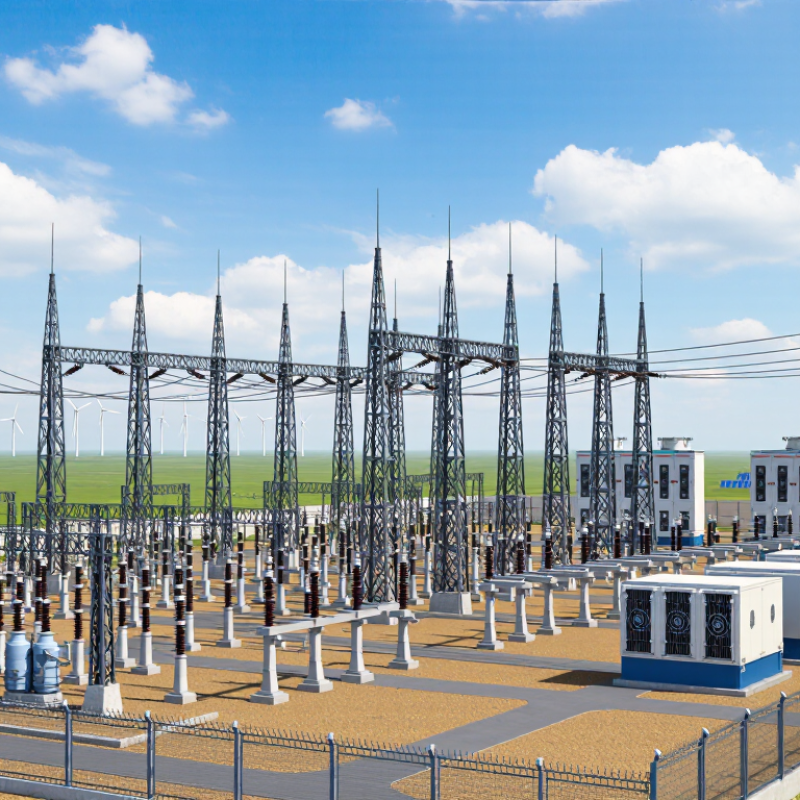
Electric power substation suppliers provide the equipment and technical support needed to connect, protect, and control electrical networks. Their scope may include power transformers, circuit breakers, disconnect switches, instrument transformers, protection relays, and control panels. Engineers review the required voltage, load, fault levels, and site conditions before recommending a configuration. A coastal site, for example, may need enclosures and finishes suited to salt air. Clear drawings matter. So do practical cable routes.

Suppliers may also support substation layout, equipment integration, factory testing, installation guidance, and commissioning. They can provide operating manuals, test records, and maintenance schedules that help utility teams manage equipment over time. Some projects require tailored arrangements because space, climate, or connection requirements differ. That takes time. A supplier should explain technical limits, delivery assumptions, and what falls outside its scope. Buyers can compare documentation, testing procedures, service coverage, and spare-parts availability—not only the equipment list. A polished proposal cannot resolve every site uncertainty; soil conditions, access, and changing loads may still require reassessment during detailed engineering.

What substation suppliers provide: Equipment and systems such as power transformers, circuit breakers, disconnectors, protection and control systems, and monitoring solutions. The chart shows common nominal AC voltage levels used in China’s power system; it is not a supplier ranking.

China’s Electric Power Substation Supply Landscape

China’s Electric Power Substation Supply Landscape

China’s substation supply landscape spans equipment makers, engineering firms, and system integrators. Their offerings may include power transformers, switchgear, protection systems, control cabinets, and prefabricated enclosures. Capabilities differ widely. Some suppliers focus on standard equipment, while others configure complete substations for particular voltage levels, site conditions, and grid requirements.

For buyers, the important question is how well equipment and engineering fit the project. Check rated voltage, short-circuit withstand capacity, insulation requirements, and local environmental conditions. Ask for drawings, test records, and clear documentation of component specifications. A factory visit can also reveal practical details, such as assembly methods and quality checks. Catalogs are useful, but they do not tell the whole story.

Delivery planning matters too. Large transformers need careful transport, and remote sites may require installation support and commissioning guidance. Confirm what is included in the quotation, from routine testing to technical service after delivery. Supplier comparisons can be difficult when configurations differ. That deserves a second look. A lower price may reflect a different scope, not better value; conversely, extensive paperwork alone does not prove dependable performance. Evaluate the evidence against the project’s actual operating needs.

How to Evaluate Substation Suppliers

Evaluating a substation supplier takes more than comparing quoted prices. Check whether its engineers can explain transformer ratings, fault levels, protection coordination, and cooling choices for your site. Ask for type-test reports, routine-test records, material traceability, and clear drawings. A supplier should also describe factory acceptance testing and how defects are handled. A polished brochure proves little. The International Energy Agency’s 2023 report, Electricity Grids and Secure Energy Transitions, says over 80 million kilometres of grids must be added or refurbished by 2040. That scale makes dependable equipment and documented quality essential.

Review compliance against the relevant IEC standards, such as IEC 60076 for power transformers and IEC 62271 for high-voltage switchgear. Verify that test documents match the offered model, voltage class, and configuration—not merely a similar product. During a factory visit, inspect winding or assembly controls, calibration labels, and the actual test bay. Request references for projects with comparable climate, load, and operating conditions. Then check service response times, spare-parts availability, and commissioning support in writing. The IEA estimates annual grid investment must exceed USD 600 billion by 2030. Still, paperwork can miss a weak field connection; include site acceptance checks and keep realistic contingencies. No checklist catches everything.

Profiles of Leading Substation Suppliers in China

China’s leading substation suppliers differ in engineering depth, production capacity, and project support. Some specialize in compact substations for urban sites, where limited space and reliable access matter. Others supply high-voltage equipment and integrated systems for utility-scale projects. Their profiles often include transformers, switchgear, protection devices, and control systems, but product lists alone reveal little.

A strong supplier can explain how equipment is tested, configured, and maintained. Look for clear technical documentation, traceable quality checks, and engineers who can discuss site conditions in practical terms. Ask how the supplier handles spare parts and commissioning support. These details matter when a dusty site, tight installation window, or unusual load challenges the original plan. No profile tells the whole story. Capabilities also vary between projects, and published claims deserve careful verification.

Tips: Request test reports, reference project details, and a sample maintenance schedule. Compare ratings, delivery scope, and after-sales support—not price alone. If an answer feels vague, ask for a specific example.

Top Electric Power Substation Suppliers in China - Profiles of Leading Substation Suppliers in China

Supplier profiles below describe common product and service categories in China’s substation market. They are not company-specific rankings or claims; actual ratings, certifications, and project scope should be confirmed against the supplier’s current technical documents and tender requirements.

Supplier Profile Typical Products and Scope Common Voltage Classes Typical Applications Relevant Standards and Checks Key Procurement Factors
Power Transformer Manufacturer Oil-immersed power transformers, autotransformers, distribution transformers, reactors, and associated cooling or monitoring systems. Distribution and transmission classes; project ratings may include 110 kV, 220 kV, 500 kV, or higher grid applications. Grid substations, generation interconnections, industrial power systems, and renewable-energy collection networks. IEC 60076 series and the applicable GB/T 1094 series; verify rated capacity, impedance, temperature rise, insulation level, losses, and test reports. Capacity range, loss guarantees, short-circuit performance, delivery schedule, service support, and type-test evidence.
High-Voltage GIS and Switchgear Supplier Gas-insulated switchgear (GIS), circuit breakers, disconnectors, earthing switches, current transformers, and voltage transformers. GIS is used across high-voltage transmission classes; project ratings depend on the required system voltage and equipment specification. Compact urban substations, transmission hubs, coastal installations, and sites where space or environmental exposure is a concern. IEC 62271-1 and IEC 62271-203 for applicable high-voltage switchgear; check rated voltage, short-circuit breaking current, insulation coordination, and gas-handling requirements. Rated performance, footprint, operating mechanism reliability, maintenance requirements, and applicable environmental rules for insulating gas.
Medium-Voltage Switchgear Supplier Metal-enclosed switchgear, vacuum circuit breakers, ring main units, busbar systems, and protection or metering compartments. Common medium-voltage equipment classes include 10 kV and 35 kV; some product ranges cover other ratings specified by the project. Distribution substations, commercial and industrial facilities, renewable-energy plants, and utility feeder systems. IEC 62271-200 for applicable AC metal-enclosed switchgear above 1 kV and up to 52 kV; GB/T 3906 may apply to metal-enclosed switchgear within its scope. Internal arc classification where required, rated short-time withstand current, interlocking, protection compatibility, and installation conditions.
Substation Protection and Automation Supplier Protection relays, bay-control units, substation automation systems, communication gateways, disturbance recording, and monitoring software. Applied at distribution, transmission, and higher-voltage substations; functions and interfaces are selected for each voltage level and bay design. Protection, control, measurement, alarm handling, remote operation, and integration with utility dispatch or supervisory systems. IEC 61850 is widely used for substation communication and interoperability; confirm the required edition, protocol profile, cybersecurity provisions, and utility-specific specifications. Protection functions, interoperability testing, redundancy, time synchronization, cybersecurity controls, and commissioning support.
Substation EPC and Integration Contractor Engineering, procurement, civil works, equipment integration, installation, testing, commissioning, and project handover. Scope may span distribution through extra-high-voltage projects; the actual voltage rating is defined by the project. New substations, capacity expansion, grid reinforcement, renewable-energy connections, and replacement or retrofit projects. Applicable national and project standards, grid-operator specifications, equipment standards, construction codes, and site-specific safety requirements. Engineering capability, interface management, quality assurance, schedule control, commissioning plan, and clearly defined contractual boundaries.
Prefabricated and Modular Substation Supplier Factory-assembled or modular substations, compact switchgear assemblies, containerized electrical rooms, and integrated control or protection panels. Commonly configured for distribution and medium-voltage applications; final ratings depend on the included transformer and switchgear. Solar and wind projects, remote or space-constrained sites, temporary power installations, and industrial distribution systems. Applicable transformer and switchgear standards, enclosure protection requirements, thermal design, transport constraints, and local installation rules. Factory integration level, transport dimensions, environmental rating, site connection requirements, maintainability, and expansion options.

Key Trends Shaping China’s Substation Industry

China’s substation industry is being reshaped by rapid renewable growth. The National Energy Administration reported 373 GW of new renewable capacity in 2024, including roughly 277 GW of solar. These projects often sit far from major demand centers. Substations must therefore manage longer transmission routes and more variable power flows. The challenge is practical: a sunny afternoon can push local output sharply upward.

Digital monitoring is becoming essential. Sensors can track transformer temperatures, breaker operations, and equipment condition, helping crews spot faults before outages occur. The International Energy Agency’s Renewables 2024 report projects that China will account for nearly 60% of global renewable capacity growth through 2030. That scale puts pressure on substation planning, protection systems, and grid connections. Faster upgrades matter.

Resilience is another clear trend. More extreme weather can expose weak points in older equipment and access routes. Engineers are combining condition monitoring with stronger physical protection and more flexible layouts. Not every project can be modernized at once. That gap deserves attention: digital tools help, but they cannot replace sound maintenance, trained operators, or reliable field data.

crossmenu linkedin facebook pinterest youtube rss twitter instagram facebook-blank rss-blank linkedin-blank pinterest youtube twitter instagram