Get A Free Quote

Top 10 Tubular Heater Manufacturers for Global Buyers

Selecting a Tubular Heater manufacturer is not just a price exercise. Buyers need dependable heat, repeatable dimensions, and clear technical support. A small mismatch in wattage or sheath material can affect warm-up time, service life, and product quality. Details count.

The International Energy Agency’s Tracking Industry 2023 report estimates that industry accounts for about 37% of global energy use and 24% of energy-related carbon dioxide emissions. Those figures make efficient process heating an important purchasing consideration, though they do not predict the performance of any single heater. The U.S. Department of Energy’s Industrial Decarbonization Roadmap also highlights the scale of energy use in industrial operations. Together, these reports show why buyers should assess more than a catalogue specification.

This guide introduces ten manufacturers serving global buyers. It considers product range, materials, temperature capabilities, customization, quality documentation, delivery reach, and technical service. Buyers should verify each supplier’s current certifications and test records for their application. A food-processing line, packaging machine, and furnace may need very different heater designs. The comparison is useful, but not absolute: supplier capabilities and lead times can change, and published specifications may not cover every operating condition. Ask for drawings, tolerances, and application-specific recommendations before placing an order. A careful review can prevent costly surprises.
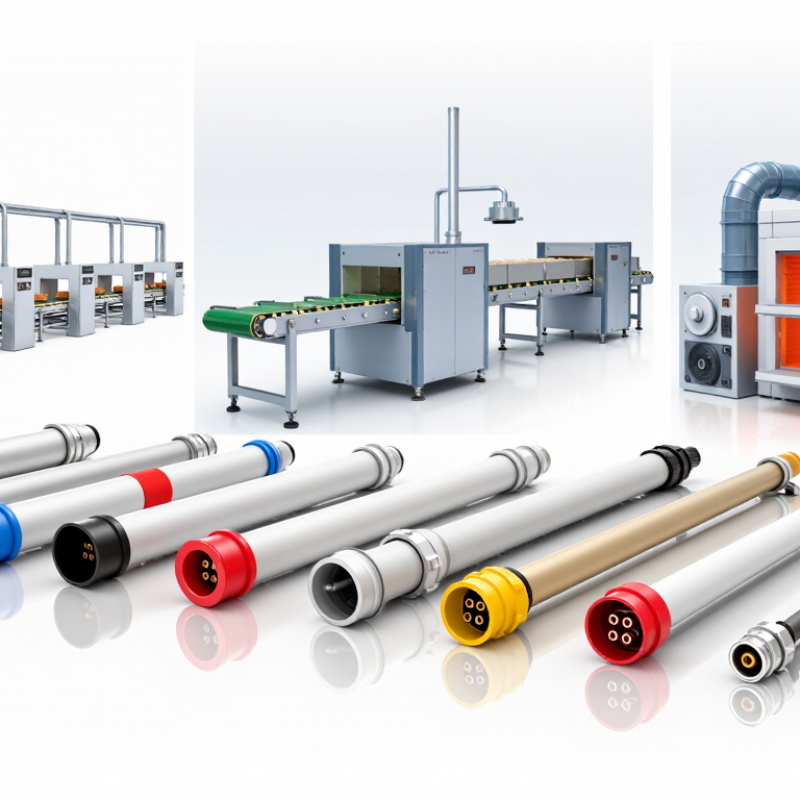
Top 10 Tubular Heater Manufacturers for Global Buyers

Define Tubular Heaters by Construction, Operating Principle, and Typical Uses

A tubular heater is a compact electric resistance element built around a coiled wire inside a metal sheath. Magnesium oxide powder fills the space between the wire and sheath, electrically insulating the coil while transferring heat outward. Terminals connect the element to a power supply; sealed ends help limit moisture entry. Straight, U-shaped, and finned designs fit different mounting and airflow needs. Small details matter.

When current flows, resistance converts electrical energy into heat. Heat then moves through the sheath by conduction and into surrounding air or liquid by convection; nearby surfaces can also receive radiant heat.

Common uses include heating tanks, ovens, dies, and packaging equipment. An immersion heater, for example, transfers heat directly to liquid, while fins increase air-contact area.

DOE’s 2022 Industrial Decarbonization Roadmap reports that process heating accounts for about 51% of U.S. manufacturing energy use. This figure covers many heating technologies, not tubular heaters alone.

Operating conditions still deserve careful review: fluid chemistry, temperature, watt density, and airflow affect service life. A heater that fits the space may not suit the process.

Compare Key Ratings: Voltage, Power, Sheath Alloy, and Watt Density (W/cm²)

Comparing tubular heater suppliers starts with matching ratings to the actual process, not simply choosing the highest wattage. A heater rated for 240 V may perform differently on a 208 V circuit, so confirm supply voltage, tolerance, and wiring arrangement. Power, measured in watts, indicates heat input but does not guarantee uniform temperature. Ask about element length and the active heated zone. Small details matter.

Check watt density in W/cm², calculated over the heated sheath area. Higher density can speed heating, but may also increase surface temperature and stress the element. There is no single ideal value. Sheath alloy selection depends on operating temperature and exposure to air, moisture, or process materials; request compatibility data for your conditions. Compare ratings using the same assumptions, including immersion depth and airflow. A datasheet may not show every installation detail. That is worth questioning. Ask manufacturers to clarify how they define watt density and whether stated power applies at your specified voltage. These answers make side-by-side comparisons more useful than a rating table alone.

Top 10 Tubular Heater Manufacturers for Global Buyers - Compare Key Ratings: Voltage, Power, Sheath Alloy, and Watt Density (W/cm²)

The entries below are generic tubular-heater design profiles, not manufacturer-specific ratings, verified product listings, or a ranking. Values are representative engineering ranges; actual limits depend on heater geometry, operating temperature, heat-transfer medium, and supplier design.

Design Profile Typical Supply Voltage Typical Power per Element Common Sheath Alloy Typical Watt Density (W/cm²) Common Application
General-Purpose Air Heating 120–480 VAC 0.1–3 kW Stainless steel 304 or 321 1–5 Small ovens, equipment enclosures, and forced-air heating
Industrial Duct Heating 240–600 VAC 0.5–10 kW Stainless steel 304/321 or Incoloy 800 1–5 Air ducts, ventilation systems, and process-air equipment
Water Immersion Heating 120–480 VAC 0.5–15 kW Stainless steel 316L or copper, selected for water chemistry 5–10 Water tanks, wash systems, and circulation heaters
Oil Immersion Heating 240–600 VAC 0.5–10 kW Stainless steel 316L or Incoloy 800 1–3 Heat-transfer oil tanks and lubricating-oil systems
Corrosive-Liquid Heating 120–480 VAC 0.5–10 kW Titanium or stainless steel 316L, subject to chemical compatibility 2–6 Selected chemical baths and corrosive-process liquids
Food and Beverage Process Heating 120–480 VAC 0.5–10 kW Stainless steel 316L 3–8 Sanitary tanks and food-process equipment; surface finish and approvals vary
High-Temperature Furnace Heating 240–600 VAC 0.5–5 kW Incoloy 800/840 or stainless steel 310S, depending on temperature and atmosphere 3–8 Industrial ovens, furnaces, and high-temperature air systems
Process-Pipe Heating 240–600 VAC 0.5–10 kW Stainless steel 316L or Incoloy 800 2–8 Inline process heaters and temperature maintenance for piping
Defrost and Refrigeration Heating 120–480 VAC 0.1–3 kW Stainless steel 304 or 316 2–6 Refrigeration coils, cold-room equipment, and condensate trays
Custom-Formed Tubular Heating 120–600 VAC 0.1–15 kW Stainless steel 304/316 or Incoloy alloys, selected for the application 1–10 Custom machinery, hot plates, molds, and application-specific assemblies

Check Industrial Safety Requirements Under IEC 60519-1:2020

IEC 60519-1:2020 sets general safety requirements for industrial electroheating installations. For tubular heater buyers, the key question is not simply whether a heater has been tested. It is how the heater performs in the intended equipment. Ask suppliers for rated voltage, sheath material, watt density, temperature limits, insulation data, and installation instructions.

Check that the design suits the process medium, mounting position, and expected thermal cycling. A heater tested in air may not suit immersion or a narrow channel. Small differences matter.

Review the complete assembly, not only the heating element. Confirm protective earthing, suitable electrical insulation, secure terminals, and protection against accidental contact with hot surfaces. Where a control failure could cause overheating, assess temperature monitoring and independent cut-outs for the specific application.

Keep wiring diagrams and test records available for inspection. Requirements can vary with equipment type, so consult the relevant parts of the IEC 60519 series and applicable product standards.

That detail is easy to miss. A careful review should also consider cleaning access, moisture, vibration, and what happens after a sensor fails. No checklist replaces a competent risk assessment; even experienced teams can overlook an awkward installation detail.

Profile 10 Tubular Heater Manufacturers by Product Range and Global Reach

Global buyers should compare tubular-heater manufacturers by product range and service reach, not catalog size alone. A broad industrial producer may offer straight, bent, finned, and flanged elements through regional sales offices. An immersion-heater specialist often supplies tank assemblies, controls, and application guidance. Precision cartridge-heater makers serve tight spaces where sheath diameter and watt density matter. Finned-element manufacturers focus on airflow in ducts, ovens, and drying lines, sometimes using distributors for overseas orders. Corrosion-resistant specialists offer stainless steel or nickel-alloy options for damp, washdown environments. Food and process equipment suppliers may provide inspection records and traceability; confirm these for each order. Details matter.

Standard-element producers suit buyers needing repeatable sizes and stocked parts. Project-focused fabricators handle custom lengths, terminal layouts, and mounting flanges for plant upgrades. Appliance and HVAC suppliers typically emphasize compact elements and high-volume production, with less flexibility for unusual designs. Regional manufacturers with export partners may offer closer communication and shorter local delivery routes, though their service coverage can vary. A catalog can mislead. Ask about sample testing, drawings, packaging, and replacement lead times before comparing prices. A supplier’s global reach is useful only when its technical support and spare parts reach your site too.

Evaluate Suppliers Using Customization, Quality Systems, Certifications, and Lead Times

Top 10 Tubular Heater Manufacturers for Global Buyers

Evaluate Suppliers Using Customization, Quality Systems, Certifications, and Lead Times

Choosing a tubular heater supplier takes more than comparing quoted prices. Start with the application: required wattage, sheath material, operating temperature, mounting method, and available space. A capable manufacturer should explain which design choices affect performance and service life. Ask for drawings or a sample before approving a large order. Small details matter. A terminal positioned a few millimeters off can complicate installation.

Review the supplier’s quality process, not just its quality claims. Ask how incoming materials, welds, insulation, and finished heaters are inspected, and whether test records can be provided by batch. Check that certifications match the product and destination market; a general certificate may not cover a specific heater configuration. Lead times also deserve careful scrutiny. Confirm production time, sample approval, packaging, and shipping separately, especially during peak demand.

Tips: Send a written specification and request a matching quotation. Ask suppliers to state tolerances, test methods, and what happens if a unit fails inspection. Compare realistic delivery dates, not optimistic estimates. One point is easy to miss: customization can extend production, even when the change seems minor. Build in a buffer, and keep the final drawing on record.

Top 10 Tubular Heater Manufacturers for Global Buyers

A practical framework for evaluating suppliers by customization, quality systems, certifications, and lead times.

The percentages are illustrative buyer-defined weights, not measured supplier ratings or market statistics. Adjust them to match your application, compliance requirements, and delivery priorities.

Article Source:

crossmenu linkedin facebook pinterest youtube rss twitter instagram facebook-blank rss-blank linkedin-blank pinterest youtube twitter instagram