Get A Free Quote

What Are Butt Fusion Accessories Used For?

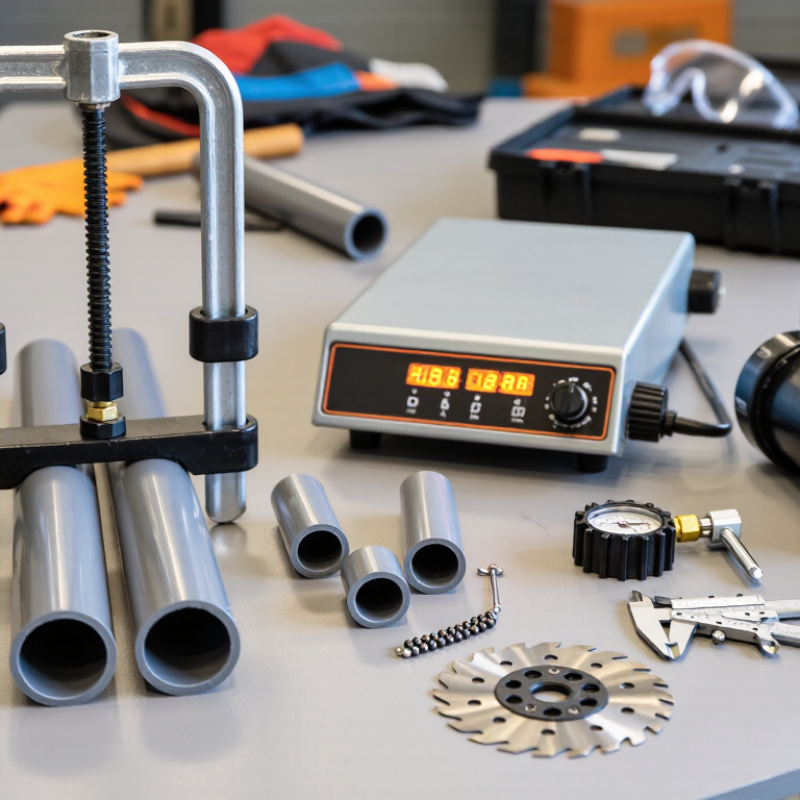
Butt Fusion Accessories are the practical tools that turn a fusion machine into a controlled joining system. They support preparation, alignment, heating, pressure control, and inspection. Facing tools create square pipe ends. Clamps hold sections firmly. Heating plates soften the polyethylene surfaces evenly. Hydraulic units then bring the prepared ends together under measured pressure. Other accessories, such as temperature indicators, bead gauges, inserts, and data loggers, help technicians check consistency in the field.

John Heap, an experienced polyethylene pipe-fusion trainer, has said, “A reliable fusion joint begins with accurate preparation.” That principle explains why accessories matter. Even a powerful machine can produce a weak joint when pipe ends are dirty, misaligned, or poorly faced. Small details leave visible evidence. A clean, even bead should appear around the connection. Uneven bead formation deserves investigation.

These tools also improve repeatability across different pipe sizes and installation conditions. They reduce guesswork when wind, dust, cold surfaces, or limited workspace affect the process. However, Butt Fusion Accessories are not magic. They cannot replace trained judgment, correct heating temperatures, or documented procedures. Not every project needs every accessory. Selecting the wrong clamp insert or using an unverified temperature reading can create false confidence.

A careful article should acknowledge this limitation. Accessory quality, operator skill, equipment calibration, and site discipline work together. When those factors align, butt fusion becomes more predictable, traceable, and dependable for demanding polyethylene pipeline applications.
What Are Butt Fusion Accessories Used For?

What Are Butt Fusion Accessories?

Butt fusion accessories are the supporting tools that make polyethylene pipe joining accurate, repeatable, and safer. They include pipe clamps, alignment inserts, facing tools, heater plates, temperature gauges, bead-removal tools, and pressure controls. The fusion machine creates the joint, but these accessories control the details around it. Clamps keep pipe ends level. A facer removes oxidation and uneven surfaces. A heater plate softens the pipe ends evenly. For polyethylene, ASTM F2620 commonly specifies heater temperatures between 204°C and 232°C, depending on the procedure and material.

Good accessories also help technicians inspect their work. Pressure gauges show whether the fusion cycle follows the approved procedure. Digital recorders can capture heating time, joining pressure, and cooling time. This evidence supports quality checks later, especially on buried water lines. The Plastics Pipe Institute’s Handbook of Polyethylene Pipe reports that properly designed polyethylene systems can provide service lives exceeding 50 years. That long service life depends heavily on joint quality, not pipe material alone.

Field conditions can expose weaknesses quickly. Dust on a facer, a loose clamp, or a damaged heater surface may create an imperfect joint. A smooth bead is not absolute proof of strength. Technicians should also check alignment, surface cleanliness, temperature stability, and cooling time. ISO 21307 provides recognized butt fusion procedures, but real installations still require judgment. Accessories reduce uncertainty, though they cannot replace training, inspection, or careful records.

Butt fusion accessories support the main joining sequence for thermoplastic pipes: alignment, end preparation, heating, controlled joining, temperature verification, and post-fusion inspection. A value of 1 means the accessory directly performs or supports that task.

Main Types of Butt Fusion Accessories

What Are Butt Fusion Accessories Used For?

Main Types of Butt Fusion Accessories

Butt fusion accessories help technicians align, heat, and join thermoplastic pipes with controlled pressure. The equipment matters because small movement can weaken the finished joint. In field work, a stable setup often saves more time than a faster heating cycle.

Clamping units hold pipe sections firmly during preparation and fusion. They usually include fixed and adjustable jaws for different pipe diameters. A facing tool removes uneven pipe ends and creates clean, parallel surfaces. Even a thin ridge can affect contact. Heating plates soften the pipe ends before pressure joins them. Their temperature must remain within the procedure’s specified range.

Hydraulic power units control clamping and fusion pressure with smoother movement than manual force. Pressure gauges help operators check whether the setting remains consistent. Rollers and pipe supports reduce drag, especially when long pipe sections are used. Alignment guides limit offset between the pipe ends. Some systems also use temperature probes, timers, or data recorders for quality checks.

Details are easy to overlook. A dirty heating plate can transfer contamination. Worn clamps may allow slight slipping. A perfect-looking bead is not complete evidence of a reliable joint. Operators should inspect tools, verify calibration, and follow approved procedures for the pipe material and size. In practice, the accessory layout may need adjustment for uneven ground, limited space, or changing weather. That judgment is important, and sometimes imperfect.

How Butt Fusion Accessories Support Pipe Alignment

What Are Butt Fusion Accessories Used For?

Butt fusion accessories help installers keep thermoplastic pipes aligned before and during heating. Clamps, alignment guides, inserts, and facing tools reduce movement at the joint. Proper alignment keeps pipe ends level, concentric, and ready for even pressure. In field work, a clean setup matters as much as the welding machine. Soil, moisture, or a small height difference can shift a pipe after clamping. That detail is easy to miss.

During preparation, technicians should check pipe size, wall thickness, and clamp contact points. Facing tools create square, clean ends for a more consistent fusion surface. After facing, the operator should recheck alignment. A pipe may move slightly when the facing tool is removed. Even experienced crews can overlook this small change. If one pipe sits higher, the finished joint may show uneven bead formation or unnecessary stress. The accessory does not replace careful judgment.

Tips: Clean every contact surface. Check the pipe from both sides. Tighten clamps gradually. Do not force a crooked pipe into position. A quick recheck prevents expensive correction later. Record unusual movement or slipping, then inspect the setup before heating.

How Accessories Are Used During Butt Fusion

What Are Butt Fusion Accessories Used For?

Butt fusion accessories support every stage of joining thermoplastic pipes. Clamps hold each pipe section firmly and keep the ends aligned. Without stable clamping, even a clean pipe can shift during heating. The facing tool removes uneven material and creates two flat surfaces. This step matters because small gaps can weaken the final joint. A hydraulic unit then moves the pipes together with controlled pressure.

The heater plate softens the pipe ends evenly. Operators check temperature, timing, and contact across the full surface. Pressure gauges help monitor movement during heating, fusion, and cooling. Some equipment includes a data recorder, which helps document key values for quality control. Clean tools are essential. Dust, moisture, or plastic residue may affect the joint. It sounds simple, but the details are demanding.

During cooling, clamps keep the fused pipe still. Removing them too early can distort the connection. Technicians also inspect the bead around the joint, looking for a regular shape and consistent size. A practical lesson is that accessories cannot correct poor preparation. They only support disciplined work. In the field, rushed alignment checks sometimes create problems that appear much later. The process is not foolproof. Operators should follow approved procedures, equipment instructions, and applicable pipe-fusion standards. Temperature readings may also need verification, because a display can look normal while the heater surface is uneven.

How to Choose and Maintain Butt Fusion Accessories

Butt fusion accessories control alignment, heating, pressure, and inspection during polyethylene pipe joining. Clamps hold the pipe steady, while a facer creates matching, square ends. A heater plate softens both surfaces evenly. Hydraulic units then apply controlled force until the joint cools. Without these accessories, even good pipe can produce a weak or uneven connection.

Selection should begin with pipe outside diameter, wall thickness, SDR rating, and resin compatibility. The machine must provide enough clamping force for the largest pipe size. Check heater temperature stability and facing-blade condition, not only the advertised capacity. ASTM F2620 and ISO 21307 provide recognized fusion procedures. The U.S. Environmental Protection Agency’s 2023 Drinking Water Infrastructure Needs Survey estimates $625 billion in drinking-water investment needs over 20 years. Reliable joining equipment matters at that scale. A 2024 Grand View Research analysis also projects continued growth in the HDPE pipe market through 2030, increasing demand for repeatable field fusion.

Maintenance needs discipline. Clean heater surfaces with approved lint-free materials, remove plastic residue, and inspect clamps for movement. Check hydraulic hoses, gauges, electrical leads, and blade sharpness before each project. Calibration records should include temperature, pressure, pipe size, operator, and weather conditions. Keep accessories dry and protected from dust. Small damage matters. I have seen teams clean the heater but ignore loose clamps. That mistake can distort alignment and force a poor bead. Operators should review fusion records, because the easiest inspection is sometimes the one people skip.

What Are Butt Fusion Accessories Used For? - How to Choose and Maintain Butt Fusion Accessories

Accessory Primary Use Important Selection Criteria Recommended Maintenance Typical Replacement or Inspection Signs
Heating Plate Heats the prepared pipe ends until the polymer reaches the required fusion temperature and forms a uniform melt bead. Match the pipe material, outside diameter range, operating temperature, plate size, temperature-control accuracy, and surface coating condition. Keep the face clean and dry, remove residue with a non-abrasive method, protect the coating from scratches, and verify temperature with a calibrated instrument. Uneven heating, damaged or peeling coating, unstable temperature, visible hot spots, or inability to reach the specified temperature.
Pipe FacER Removes a thin layer from both pipe ends to create clean, flat, and parallel surfaces before heating. Select a unit compatible with the pipe diameter range and material; check cutter rigidity, blade quality, feed control, and alignment with the fusion machine. Remove shavings after use, keep blades free from contamination, lubricate moving parts where specified, and store the facer with its cutting surfaces protected. Ragged shavings, tapered or uneven pipe faces, excessive vibration, slipping, damaged blades, or difficulty achieving parallel ends.
Clamping Inserts and Jaws Hold pipes securely and keep them aligned during facing, heating, and joining. Choose the correct pipe outside diameter, wall geometry, material compatibility, jaw profile, and clamping capacity. Inserts should provide firm support without damaging the pipe. Clean contact surfaces, inspect fasteners, prevent corrosion, and check that jaws close evenly and remain properly aligned. Pipe slippage, visible pipe marks, uneven clamping, excessive play, worn contact surfaces, or difficulty maintaining alignment.
Hydraulic Power Unit Generates and controls the hydraulic force used to open, close, clamp, and bring pipe ends together. Consider pressure range, flow capacity, hose length, control sensitivity, compatibility with the machine, and suitability for the required pipe sizes. Check hydraulic oil level, hoses, fittings, seals, and connections; clean spills promptly and follow the equipment schedule for filter and fluid service. Pressure loss, slow movement, fluid leaks, damaged hoses, irregular piston travel, abnormal noise, or inability to maintain fusion force.
Pressure Gauge or Force Indicator Displays hydraulic pressure or calculated fusion force so the operator can follow the approved joining procedure. Select a readable scale, suitable pressure range, correct connection type, shock resistance, and compatibility with the machine's force calculation. Protect it from impact, keep connections clean, check for zero drift, and calibrate it at documented intervals using a traceable reference. A pointer that does not return to zero, cracked lens, damaged connection, erratic readings, or failed calibration.
Temperature Controller and Sensor Measures and regulates heating-plate temperature to support consistent fusion conditions. Check measurement range, control accuracy, sensor type, response time, electrical rating, and compatibility with the heating system. Keep electrical connections dry, inspect sensor cables, avoid bending or crushing the probe, and verify readings against a calibrated thermometer. Temperature fluctuations, inconsistent readings, slow response, damaged wiring, alarm errors, or significant difference from the reference thermometer.
Pipe Rollers and Supports Support long pipe sections, reduce drag, and help maintain a level pipe path during alignment and fusion. Choose adequate load capacity, adjustable height, roller width, stability, and compatibility with the pipe diameter and job-site conditions. Remove dirt from rollers, inspect bearings and frames, confirm smooth rotation, and position supports to prevent pipe sag or excessive side load. Seized or rough rollers, unstable frames, damaged bearings, excessive friction, or visible pipe deformation during movement.
Alignment and Measurement Tools Help verify pipe alignment, outside diameter, wall thickness, angular mismatch, and the dimensions required for correct setup. Use tools with suitable accuracy, adequate measurement range, durable construction, and calibration appropriate to the project specification. Clean measuring surfaces, store tools in protective cases, avoid dropping them, and check calibration or zero position regularly. Bent components, damaged scales, inaccurate zero readings, excessive wear, or measurements that cannot be repeated consistently.
Protective Covers and Storage Cases Protect heating plates, facers, gauges, sensors, and small components from moisture, dust, impact, and contamination during transport and storage. Select sufficient internal space, padding, ventilation, corrosion protection, carrying capacity, and secure compartments for precision parts. Store equipment clean and dry, allow heated components to cool before covering, avoid trapped moisture, and inspect latches and padding. Cracked cases, missing padding, water ingress, broken latches, corrosion, or equipment damage caused by inadequate protection.
Data Logger or Fusion Record System Records key parameters such as heating temperature, fusion pressure or force, and cycle time for quality control and traceability. Consider sensor inputs, recording interval, memory capacity, data export, environmental protection, and compatibility with the approved joining procedure. Keep firmware and batteries maintained where applicable, protect connectors, back up records, and verify time and sensor accuracy. Missing records, incorrect timestamps, sensor disconnection, corrupted files, unreliable readings, or failed data verification.
Selection and maintenance reminder: Confirm accessory compatibility with the pipe material, outside diameter, wall thickness, fusion machine, and approved joining procedure. Maintenance intervals should follow the equipment manufacturer's instructions, applicable standards, and site safety requirements.
crossmenu linkedin facebook pinterest youtube rss twitter instagram facebook-blank rss-blank linkedin-blank pinterest youtube twitter instagram