Why Choose a Face Mechanical Seal for Your Pump?
A Face Mechanical Seal can help a pump contain liquid where the rotating shaft meets the stationary casing. That small interface faces constant pressure, friction, and heat. When the seal is selected well, it can reduce leakage, protect nearby equipment, and support steadier operation. The benefits are practical: fewer drips beneath the pump, less attention to routine adjustments, and cleaner surroundings. But no seal is magic.
For a clear choice, consider the liquid, operating temperature, pressure, shaft speed, and whether the pump runs continuously. A seal that performs well with clean water may struggle with abrasive slurry or a liquid that crystallizes on the faces. Material pairing matters, too. Carbon against silicon carbide is common, but it is not right for every service. As reliability author Heinz P. Bloch’s approach can be paraphrased: “Reliable machinery depends on choosing components for the conditions they actually face.” That principle applies directly here. A seal is only as dependable as its installation and operating environment. Dry running, poor alignment, and sudden temperature changes can shorten its life, even when the product is well made. Small details matter. A faint vibration may deserve attention before a leak appears. This guide explains why pump operators choose face mechanical seals, where they offer advantages, and what to check before specifying one. It will also look at trade-offs, because replacing packing is not automatically the best answer. The right choice starts with the pump’s real duty—not a guess based on the nameplate alone.
What Is a Face Mechanical Seal?
Why Choose a Face Mechanical Seal for Your Pump?
What Is a Face Mechanical Seal?
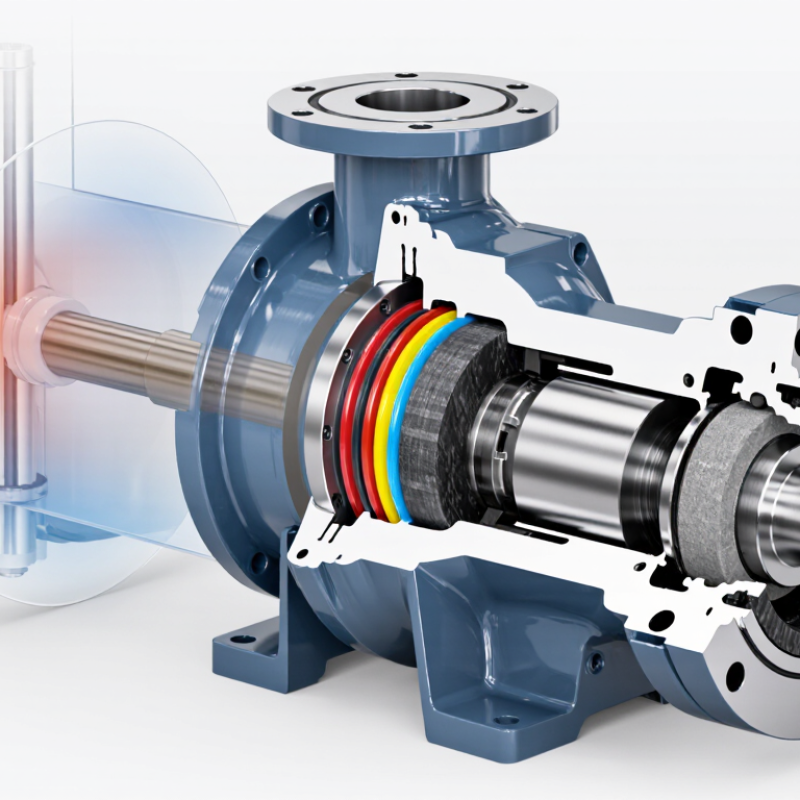
A face mechanical seal is a device that limits fluid leakage where a rotating pump shaft passes through the pump casing. It uses two flat, carefully finished faces: one turns with the shaft, while the other stays fixed. A spring or other loading mechanism presses them together.
The faces are not meant to run completely dry. A thin film of pumped liquid usually helps lubricate and cool their contact area. The film is extremely small. That is why a seal can control leakage without relying on a tightly packed barrier around the shaft. Small details matter.
Secondary seals, often made from elastomers, prevent fluid from bypassing the faces around the shaft or seal housing. Material choice depends on the fluid, temperature, pressure, and shaft speed. A face combination suitable for clean water may wear quickly in a liquid containing abrasive particles. Compatibility should be checked against actual operating conditions, not just a product description.
Installation also affects performance. Uneven alignment, damaged faces, or running a pump without liquid can cause heat and premature wear. I would not call any mechanical seal foolproof; even a well-selected design needs proper handling and routine inspection. A small, steady drip can be an early sign worth investigating.
Why Choose a Face Mechanical Seal?
Typical Mohs Hardness of Mechanical Seal Face Materials
Hard seal-face materials such as silicon carbide and tungsten carbide can resist wear and abrasion. Carbon graphite is softer and is often paired with a harder face. These are approximate material ranges; the best face combination depends on the fluid, temperature, pressure, and operating conditions. The Mohs scale is ordinal, not linear.
How Does a Face Mechanical Seal Work?
Why Choose a Face Mechanical Seal for Your Pump?
How Does a Face Mechanical Seal Work?
A face mechanical seal controls leakage where a rotating shaft exits a pump casing. It uses two finely lapped faces: one turns with the shaft, while the other stays fixed. A spring and fluid pressure keep them close together. They are not meant to grind dry; a microscopic film of pumped liquid usually lubricates and cools the faces. Very little is visible.
As the shaft spins, this thin film passes across the face pair and limits leakage. Flexible secondary elements, often elastomers, block bypass paths around the faces. Heat, vibration, abrasive particles, or dry running can disturb the film and wear the surfaces. The seal must match the liquid, temperature, pressure, and shaft speed. A small leak may be expected in some designs; zero leakage is not a safe assumption. Real pumps are less tidy than diagrams.
Tips: Before startup, check that the pump is primed and the seal chamber contains liquid. Follow the equipment maker’s installation dimensions and flush guidance. Watch for sudden drips, noise, or heat near the seal. Stop and investigate rather than tightening parts blindly. A seal can look intact and still be damaged.
What Advantages Does It Offer in Pump Service?
A face mechanical seal controls leakage where a rotating shaft passes through a pump casing. Its lapped faces sit close together, with a thin fluid film between them. In service, that means less routine dripping around the shaft than with many packed arrangements. It also avoids frequent packing adjustments, which can reduce maintenance stops and the risk of scoring a shaft sleeve. Small details matter: clean flush lines, correct alignment, and compatible seal materials are essential.
The U.S. Department of Energy’s Improving Pumping System Performance: A Sourcebook for Industry estimates that pumping systems use nearly 20% of global electricity. That figure describes pumps, not savings from seals; a seal alone does not make a pump efficient. Still, controlled leakage helps protect the surrounding area and keeps process fluid where it belongs. API Standard 682 provides guidance for seal selection and arrangements in many process-pump applications. A practical caution: face seals can fail early if dry-running, abrasive solids, or temperature swings are overlooked. They are not magic. Inspect the faces and support system during maintenance, and investigate recurring leaks rather than simply replacing the seal. Some installations may need a simpler solution.
Where Are Face Mechanical Seals Commonly Used?
Face mechanical seals are common wherever pumps move liquids under pressure and leakage must be controlled. In municipal water systems, they help centrifugal pumps handle clean water for treatment and distribution. Wastewater pumps also use them, though grit, fibers, and changing solids can increase wear.
The seal choice matters.
Operators often check the liquid, shaft speed, temperature, and pressure before selecting face materials and a support arrangement. You will also find face seals in chemical plants, power stations, food processing, and building services. Chemical duties may involve corrosive or volatile liquids, so material compatibility and seal support deserve careful review. In food and beverage lines, cleanability and suitable operating practices matter alongside leak control.
HVAC pumps usually face less demanding fluids, but frequent starts and dry running can still cause trouble. Small details count. A seal that works well on a clean-water test may perform differently when the actual fluid carries particles or temperature swings. That is why maintenance records and operating conditions are often more useful than a simple application label.
What Factors Guide Seal Selection and Maintenance?
Why Choose a Face Mechanical Seal for Your Pump?
What Factors Guide Seal Selection and Maintenance?
A face mechanical seal controls leakage where a rotating shaft enters a pump casing. Its polished rotating and stationary faces operate with a thin fluid film between them. When properly selected, a seal can reduce leakage and routine adjustment compared with packing. The right choice depends on actual operating conditions, not just the pump nameplate.
Check the pumped liquid, temperature, pressure, shaft speed, and whether solids or crystals are present. These factors guide face materials, elastomer compatibility, and seal arrangement. Hard faces may resist abrasive wear, while other combinations may suit cleaner fluids; confirm compatibility with a qualified seal specialist. Also check flushing or cooling needs and available installation space. Small details matter. A seal can fail quickly if it runs dry, becomes misaligned, or overheats.
Tips: Before installation, inspect the shaft sleeve for scoring, check alignment, and clean the seal chamber. During operation, monitor leakage, vibration, and temperature instead of waiting for a sudden failure. Do not guess. Follow equipment instructions for flushing and startup; tightening cannot correct poor alignment. Keep a log. If leakage increases or the faces show chips, investigate the cause before replacing parts.