Get A Free Quote

Why Choose Cable Lugs for Electrical Connections?

Reliable electrical connections are rarely dramatic. They work quietly inside control panels, substations, vehicles, and industrial equipment. A Cable Lug helps create that dependable interface between a conductor and terminal. It supports current transfer, mechanical stability, and easier inspection.

Industry guidance supports this practical role. IEC 61238-1-3 evaluates compression and mechanical connectors for power cables under defined electrical and mechanical conditions. UL 486A-486B also addresses wire connectors and soldering lugs used with copper and aluminum conductors. NFPA 70, Article 110.14, requires connections to be mechanically and electrically secure. These standards do not make every lug suitable. Correct sizing, crimping force, conductor material, and surface preparation still matter.

Industry reports from Grand View Research and MarketsandMarkets show continued growth in global wire, cable, and electrical infrastructure demand. Their broader data does not isolate Cable Lug sales perfectly. That limitation deserves attention. More cables mean more connections, but not automatically better installations.

As power-system engineer John D. McDonald, P.E., has stated, “Reliable systems begin with reliable connections.” The principle is simple. The details are not.

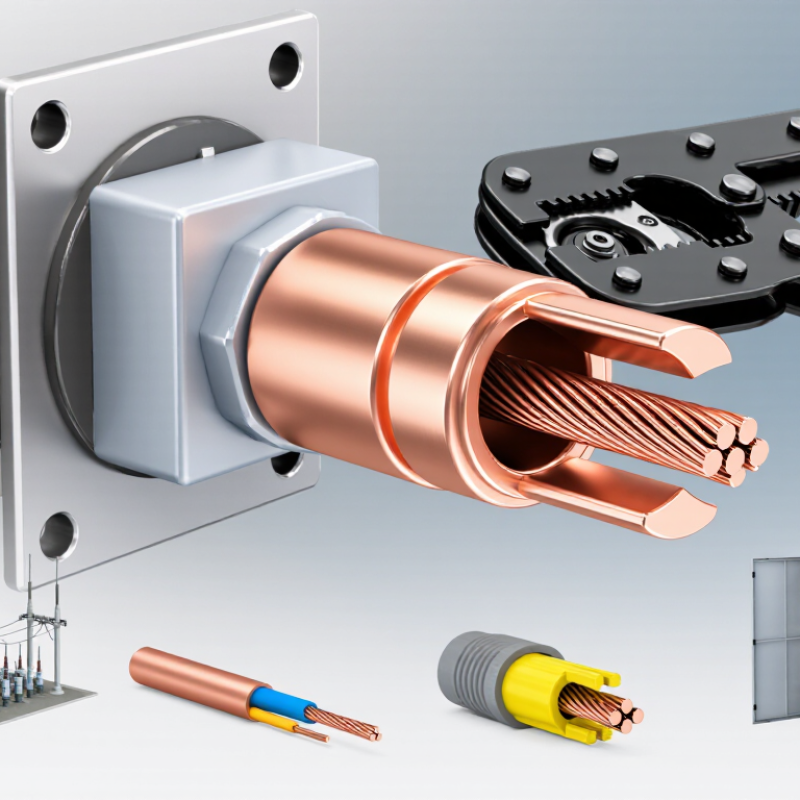
A properly selected lug can reduce resistance, limit heat buildup, and simplify maintenance. Picture a clean copper barrel, a fully inserted conductor, and a calibrated crimp tool. Small details matter.

Still, choosing a Cable Lug by price alone is risky. Engineers must verify standards, temperature ratings, conductor compatibility, and installation conditions. A strong connection is designed, installed, and inspected—not merely purchased.
Why Choose Cable Lugs for Electrical Connections?

What Are Cable Lugs and How Do They Work?

Cable lugs are conductive fittings that connect a cable to equipment, busbars, or another prepared connection point. They usually have a barrel for the stripped conductor and a flat palm with a bolt hole. The barrel holds the wire, while the palm transfers current into the terminal surface. That path must remain tight, clean, and mechanically stable. Some lugs are crimped; others use set screws or compression bolts. Each method depends on the lug design and conductor size.

During installation, a technician strips insulation without cutting conductor strands. The cable enters fully, then the correct die compresses the barrel at specified positions. A proper crimp should show firm deformation, not loose edges or cracked metal. For bolted lugs, contact surfaces need cleaning, alignment, and the specified tightening torque. Small details matter. An under-tightened joint can heat under load, while excessive force may damage threads or deform the lug. It is easy to assume a tight bolt means a sound joint. That assumption can be wrong.

Cable lugs are chosen for more than convenience. Their material must suit the conductor and surrounding environment. Copper-to-aluminum combinations may require approved transition hardware or joint compound. Outdoor, damp, or vibrating equipment needs suitable plating and strain control. In field work, the common mistake is treating every lug as interchangeable. It is not. Checking the cable cross-section, lug rating, crimp tool, and applicable electrical requirements prevents avoidable failures. A qualified electrician may also verify torque and inspect temperature under load.

How Cable Lugs Improve Electrical Connections

Why Choose Cable Lugs for Electrical Connections?

How Cable Lugs Improve Electrical Connections

Cable lugs improve electrical connections by creating a stable termination between a conductor and a terminal. In practical panel work, a properly fitted lug keeps copper strands together under pressure. This improves contact area and helps limit resistance, heat, and unwanted voltage drop. Small detail. A loose strand can weaken the joint.

The connection becomes more dependable when the lug matches conductor size, metal type, and terminal design. Crimping requires the correct die and even compression. Compression lugs also need clean surfaces and the specified torque. Installers often find overheated terminals caused by rushed preparation, not faulty cable. Visual inspection helps, but it cannot confirm every internal crimp. Pull testing or calibrated tooling may be necessary in critical installations.

Cable lugs also support maintenance. Technicians can trace conductors more easily, retighten approved connections, and replace damaged ends without disturbing the entire cable run. However, a lug is not a cure-all. Moisture, corrosion, wrong plating, and repeated vibration can still damage a joint. Heat-shrink protection and suitable sealing may help in harsh areas. The honest lesson is simple: better hardware cannot compensate for poor stripping, incorrect torque, or skipped inspection. Review the installation against applicable electrical standards and the lug maker’s instructions before energizing equipment.

Why Choose Cable Lugs for Electrical Connections? - How Cable Lugs Improve Electrical Connections

Connection Dimension How Cable Lugs Help Relevant Technical Consideration Practical Result
Electrical Contact Area Creates a defined metal-to-metal interface between the conductor and the terminal. The lug barrel must match the conductor material and cross-sectional area. More consistent current transfer than a loosely formed or unsupported wire connection.
Contact Resistance A correctly crimped lug produces a mechanically stable electrical interface. Crimping must use the specified die, tool, conductor size, and procedure. Helps limit unwanted voltage drop and resistive heating at the connection point.
Mechanical Strength Transfers pulling and vibration forces to the lug instead of directly stressing individual conductor strands. The crimp must provide adequate pull-out resistance for the installation. Reduces the likelihood of conductor strand damage and accidental disconnection.
Thermal Performance Maintains a stable connection when the conductor expands and contracts during load changes. Current rating depends on conductor size, lug material, installation method, and applicable standards. Supports reliable operation under the circuit's designed load conditions.
Vibration Resistance Provides a fixed termination point for cables exposed to movement or vibration. The terminal fastener must be tightened to the specified torque, with suitable locking provisions where required. Improves connection stability in vehicles, industrial equipment, and control panels.
Installation Consistency Provides a repeatable termination method using calibrated crimping equipment. The completed crimp should be inspected for correct positioning, deformation, and conductor insertion. Reduces variation between installations and simplifies quality inspection.
Corrosion Control Allows the use of materials and plating selected for the electrical environment. Copper and aluminum conductors require compatible lug materials or approved transition methods to reduce galvanic corrosion. Helps preserve contact quality in humid, outdoor, or chemically exposed locations.
Cable Flexibility and Routing Separates the flexible cable body from the rigid termination point. The cable should be supported so that bending forces are not transferred to the lug or terminal. Makes cable routing and termination neater while reducing strain on the connection.
Inspection and Maintenance Creates a visible termination that can be checked for looseness, corrosion, overheating, or damage. Maintenance should follow the equipment manufacturer's procedures and applicable electrical codes. Makes troubleshooting and preventive maintenance more straightforward.
Safety and Compliance Supports standardized termination practices for power, grounding, and control circuits. Selection and installation should comply with applicable standards, conductor ratings, clearance requirements, and local codes. Helps reduce the risk of loose connections, overheating, and unintended electrical faults.

Which Types of Cable Lugs Suit Different Applications?

Why Choose Cable Lugs for Electrical Connections?

Cable lugs create a stable interface between conductors and terminals. They reduce loose-strand damage and support repeatable tightening.

The International Energy Agency’s Electricity 2024 report forecasts global electricity demand growth of about 3.4% annually through 2026. More current means less tolerance for weak connections.

Copper compression lugs suit copper conductors in switchboards, motors, and distribution panels. They require the correct die, conductor size, and compression sequence.

Aluminum lugs suit aluminum cables, but oxide removal and approved joint compound matter. Bimetallic lugs are better where aluminum cables connect to copper busbars. They reduce galvanic corrosion risk.

Small detail, major consequence.

Mechanical shear-bolt lugs work well during retrofits or remote repairs. They need less specialized crimping equipment. However, bolt head failure does not prove a perfect conductor interface.

That deserves reflection. Pin and tubular lugs fit compact control wiring, especially where terminals accept narrow entry points.

For vibration-prone equipment, choose designs with documented pull-out and thermal-cycle performance. IEC 61238-1-3 provides qualification methods for compression and mechanical connectors, while UL 486A-486B covers many wire connector applications. NETA’s 2023 Maintenance Testing Specifications also emphasizes verified torque, inspection, and connection testing.

A suitable lug is not selected by size alone. Conductor material, environment, current, access, and installation tools must agree.

How to Choose the Right Cable Lug

Why Choose Cable Lugs for Electrical Connections?

Choosing the right cable lug begins with the conductor, not the toolbox. Match the lug to the cable material, cross-sectional area, and strand construction. A copper cable usually needs a compatible copper lug, while aluminium requires suitable treatment and an approved connector. Check the rated current and voltage before installation. A lug that fits physically may still be electrically unsuitable. That mistake can create heat at the joint.

Measure carefully.

For reliable results, select the correct lug type for the connection. Ring lugs suit studs and bolts, while fork lugs allow faster placement but may need stronger retention. Consider the barrel length, inspection window, and available installation space. In damp or corrosive areas, sealed designs and appropriate plating can reduce oxidation. The lug should also match the crimping die specified for its size. Using pliers is not a proper substitute. I have seen loose crimps pass a quick visual check and fail under vibration.

After crimping, inspect the joint for cracks, uneven compression, and exposed strands. A light pull test can reveal poor contact, but it cannot replace the manufacturer’s installation requirements or applicable electrical standards. Keep records of cable size, lug type, crimp tool, and inspection results. I would not rely on color alone, because markings can fade or be misread. No selection is perfect without considering temperature, movement, and maintenance access. Recheck the choice when the installation conditions change.

Why Choose Cable Lugs for Electrical Connections?

Cable lugs provide a secure, low-resistance connection between a conductor and a terminal. Selecting the correct lug starts with matching the conductor cross-section and then confirming the stud size, lug material, crimp range, and applicable installation standard.

The chart uses copper resistivity of approximately 0.0175 Ω·mm²/m at 20°C. Voltage drop is calculated for a 10 A load across a 10 m one-way conductor length, excluding connection resistance. Larger conductor cross-sections generally reduce resistance and voltage drop, but the cable lug must still match the conductor size and terminal hardware.

  • Choose a lug barrel that matches the conductor cross-section and crimping method.
  • Confirm that the palm hole matches the terminal stud, such as M6, M8, or M10 hardware.
  • Use compatible lug and conductor materials to reduce corrosion and galvanic interaction.
  • Follow the applicable electrical standard and the crimp manufacturer's installation requirements.

How to Install and Maintain Cable Lugs Safely

Why Choose Cable Lugs for Electrical Connections?

Cable lugs create a firm connection between conductors and terminals. They reduce strain and help prevent loose, overheated joints. Safe installation begins with isolation. Switch off the circuit, lock the disconnect, and verify zero voltage with a tested meter. Select a lug that matches the cable size, conductor material, and terminal type. Remove insulation carefully. Do not nick the copper strands. Insert the conductor fully, then use the correct crimping tool and die. A hammer is not a reliable substitute. Apply the specified torque to the terminal bolt. An under-tightened joint may loosen, while excessive force can damage threads.

Tips: Keep the work area dry and well lit. Wear suitable gloves and eye protection. Mark completed connections. A second inspection catches small mistakes.

Maintenance

Maintenance requires regular visual checks, especially in hot, damp, or vibrating locations. Look for discoloration, melted insulation, corrosion, cracked sleeves, or exposed strands. A warm lug deserves attention. Use a thermal camera when available, but never touch a suspected live connection. Recheck torque only under an approved maintenance procedure. Clean corrosion with a suitable method, then replace damaged parts instead of hiding them. Heat-shrink protection can seal moisture, but it cannot repair a poor crimp. Cable lugs are dependable when installed correctly. Still, even experienced workers can miss one loose strand. Review the job before energizing.

crossmenu linkedin facebook pinterest youtube rss twitter instagram facebook-blank rss-blank linkedin-blank pinterest youtube twitter instagram